




Gold Framed Equine Portrait
A gold framed equine portrait captures the nobility of horse and rider, rendered in oil on canvas and set within ornate gilt wood.
Gold Framed Equine Portrait
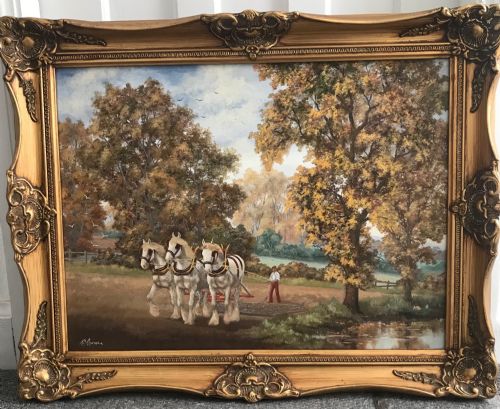
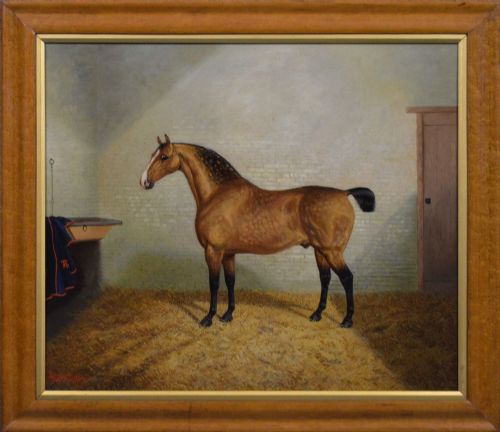
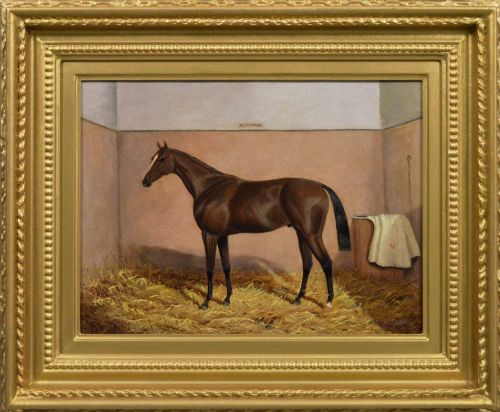
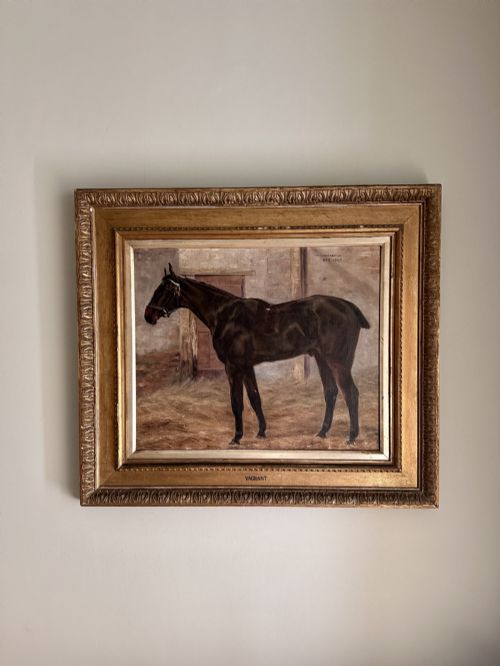
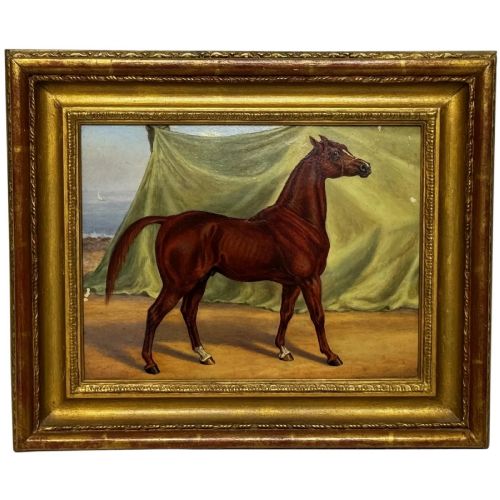
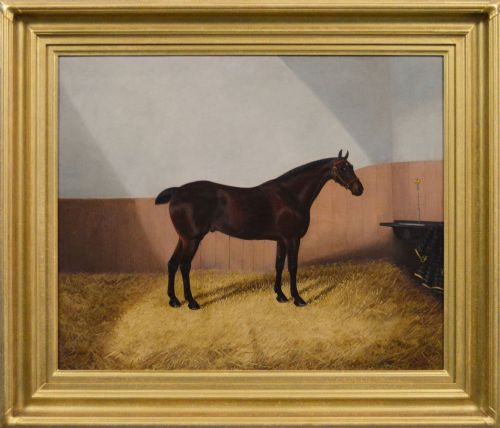
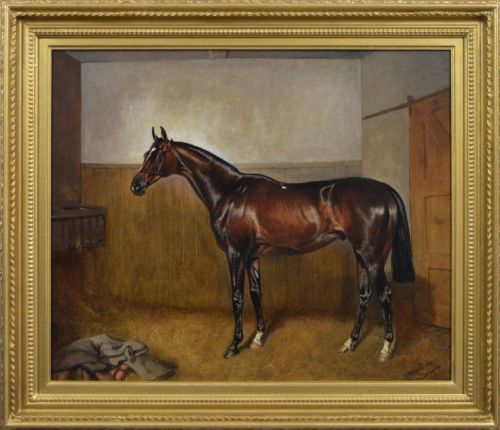
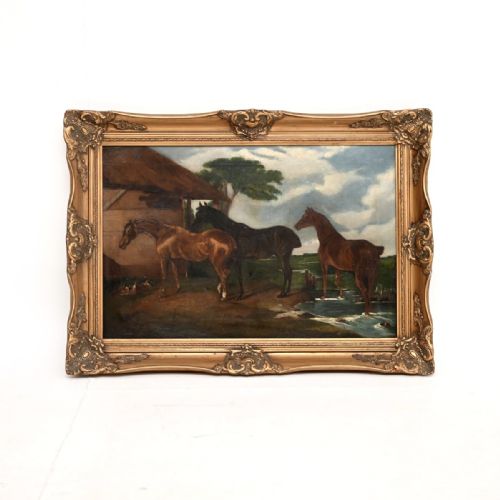
A gold framed equine portrait captures horses in varied settings, from ploughing fields and stable interiors to racecourses and river landscapes. These works span multiple eras, including the Georgian period, the Victorian era, and into the twentieth century, reflecting a long tradition of British sporting art.
Buyers will encounter representations of renowned racehorses like Flying Fox and Persimmon alongside working shires and hunters, often bearing specific provenance linking them to historic estates or stables. The framing typically consists of period gesso and giltwood, complementing the oil paint on canvas.
The compositions range from intimate head studies in stables to sweeping rural landscapes featuring hay wagons and village life. Such pieces embody both traditional realism and Victorian equestrian artistry, preserving the likeness of celebrated animals and rural scenes.
How they were made
Artists applied oil paint to stretched canvas or wooden panels, building up layers of pigment to capture the sheen of a horse's coat and the play of light in a stable or landscape. The handling of the brushwork varies from tight academic realism to looser, more atmospheric strokes.
The frames are constructed from wood, often embellished with moulded gesso before receiving layers of gold leaf or gilt finish. These frames protect the canvas while adding visual weight that suits the traditional subject matter.
Listings feature oil on canvas works spanning from the Georgian period through the Victorian era into the twentieth century.
What varies in quality
The skill of the anatomy and the precision in rendering the horse's musculature and expression distinguish finer paintings from more standard workshop productions. Master painters convey movement and character with authority.
The preservation of the original gilt frame and the clarity of the oil surface significantly influence the overall standing of a piece. Finer examples retain their original canvas and untouched paint layers.
Albert Clark·Fred Fitzpatrick·John Alfred Wheeler·John Ferneley Senior·Alfred Moginie Bryant·Abraham Cooper RA·James Barenger·William Shayer Snr
The Gold Framed Equine Portrait Glossary
- Oil on Canvas
- A painting medium where pigments bound in drying oil are applied to a woven fabric support. This combination allows for rich colour depth and subtle blending.
- Gesso
- A plaster-like mixture applied to wood frames as a base for gilding. It is often moulded into decorative patterns before the application of gold leaf.
- Giltwood
- Timber that has been coated with gold leaf or a gold-coloured finish. It provides the characteristic bright border seen on these traditional frames.
- Victorian Sporting Art
- Artwork produced during the nineteenth century focusing on horses, hounds, and rural sports. This genre places a high value on accurate anatomical depiction.
Gold Framed Equine Portrait: Frequently Asked Questions
What subjects do these portraits show?
The artworks depict named racehorses, working shires, hunters, and rural scenes featuring horses in stables or landscapes. Each canvas captures a specific animal or working environment.
Many pieces document famous thoroughbreds with notable owners, while others record everyday rural life and agricultural work across Britain and beyond.
How do I date a gold framed equine portrait?
Dating relies on stylistic clues in the painting, the costume of any figures depicted, and the construction of the canvas and frame. Victorian and Georgian works each display distinct aesthetic choices.
Inscribed titles, artist signatures, and biographical records of the horses or owners provide further chronological markers for the piece.
How were these paintings displayed?
Historically, such portraits hung in country houses, estate offices, and the reception rooms of owners and breeders. Their scale and rich frames suited formal domestic interiors.
Today, they function well in traditional studies, hallways, or living spaces, adding a layer of equestrian heritage to a room.
What materials make up the frames?
The frames generally comprise a wooden core shaped and finished with gesso and gilt wood. This construction provides structural stability while allowing for ornate decorative moulding.
The gold leaf finish gives the distinctive metallic sheen that complements the dark tones of traditional oil paintings.