




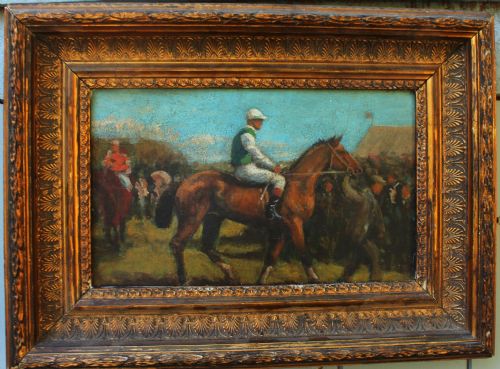


Oil Painting of Racehorse
An oil painting of racehorse brings the pulse of the turf and the power of nineteenth and early twentieth century thoroughbreds directly onto the wall.
Oil Painting of Racehorse
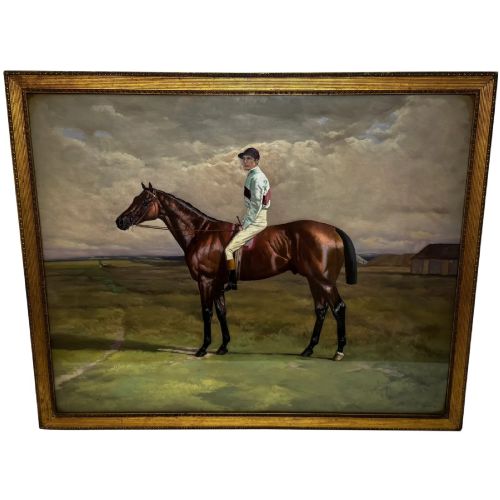
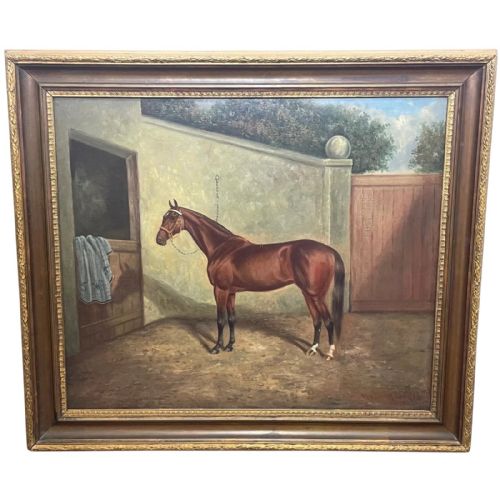
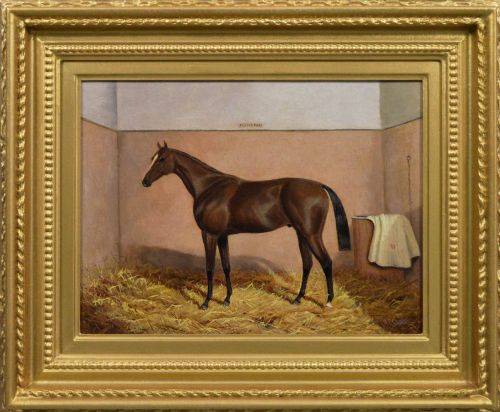
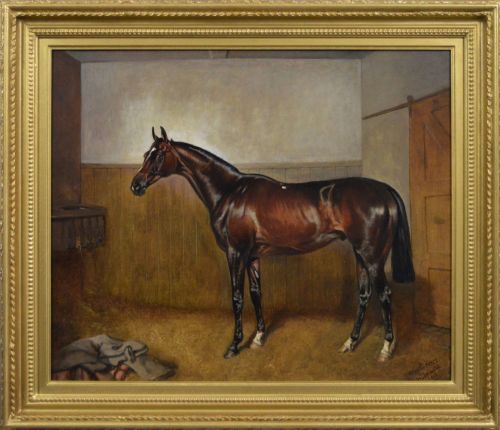
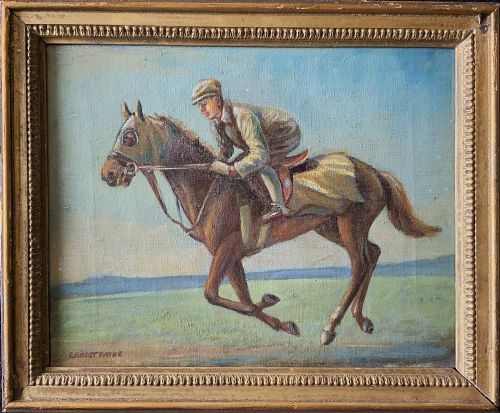
When you search for an oil painting of racehorse, you encounter works spanning the nineteenth century, the Victorian and Edwardian eras, through to the nineteen-thirties. These pieces focus on celebrated winners, stable portraits, and paddock scenes featuring named horses like Spion Kop, Flying Fox, and Persimmon.
You are most likely to meet canvases depicting famous thoroughbreds with their jockeys up, often identified by specific silks and historic racecourses such as Epsom, Newmarket, and Kempton Park. The tradition encompasses formal equine portraiture as well as looser paddock studies capturing the atmosphere before the start.
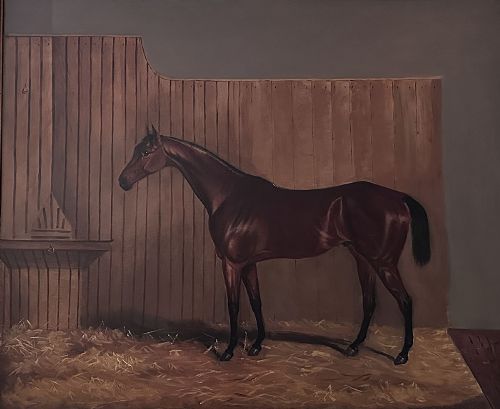
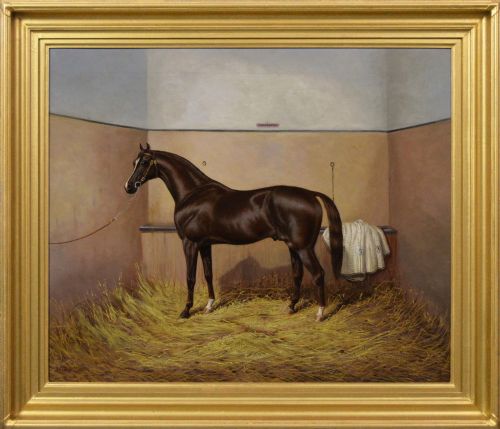
The subjects range from solitary studies of bay racehorses to detailed compositions recording specific historic victories and royal runners. These works preserve the lineage and appearance of legendary horses through the observant eye of contemporary sporting artists.
Materials and technique
These works are painted in oil paint on canvas, utilising the traditional medium of the period to build rich layers of colour and texture in the depiction of horse muscle and coat sheen. The ground of the canvas provides a stable support that allows the subtle blending necessary to render the light on equine anatomy.
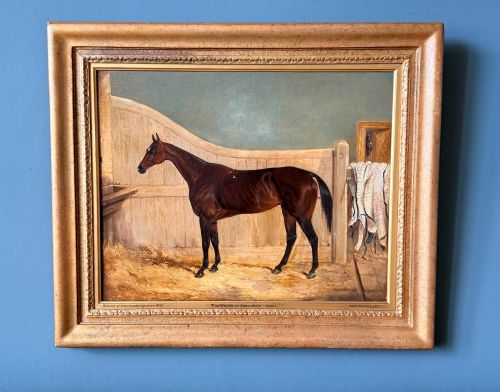
Many of the surviving works are housed in their original giltwood frames, frequently accented with gold leaf to complement the warm tones of the oil palette. The combination of oil on canvas with a period frame defines the physical presence of these sporting artworks.
Oil Painting of Racehorse Retail Price Guide 2026
Typical asking prices for oil painting of racehorse among the pieces listed under this phrase on Sellingantiques today, from the lower quarter to the upper quarter. They describe what is for sale here now, not the wider market.
Several canvases record the exact moment a winner returned triumphant, ensuring famous nineteenth-century horses are immortalised alongside their jockeys.
Factors of quality
Quality in these works rests upon the artist's precise understanding of equine conformation and movement, distinguishing a convincing portrait of a thoroughbred from a stiff formulaic rendering. The best examples capture the distinct individuality of the animal and the tension of the jockey and mount before the race.
The provenance and documentation attached to the piece elevate its standing, particularly when the horse, jockey, owner, and race are historically recorded on the canvas or frame. Superior execution is also evident in the handling of light across the coat and the integration of the figure within the landscape or stable interior.
Albert Clark·Ernest Payne·John Alfred Wheeler·Thomas Walker Bretland·Samuel Spode·Isaac Cullin·Walter Herbert Wheeler·John Parker Davis·Frank Giggs·H C Evans
The Oil Painting of Racehorse Glossary
- Canvas
- A heavy woven fabric stretched across a wooden frame to serve as the foundation for oil painting. It provides the slight give and texture characteristic of traditional paintings.
- Giltwood
- Wood carved and covered with a thin layer of gold leaf or metallic paint to create a decorative frame. These frames are period-appropriate complements to nineteenth-century canvases.
- Equine realism
- An artistic style dedicated to the accurate and lifelike representation of horses. This approach prioritises correct anatomical proportions over idealized forms.
- Jockey up
- A term used when a jockey is depicted mounted on the horse ready for the race. It often indicates a specific historical race meeting or winning combination.
Oil Painting of Racehorse: Frequently Asked Questions
How do I identify the horse in an oil painting of racehorse?
Many canvases include contemporary inscriptions on the canvas, stretcher, or frame detailing the name of the winning thoroughbred, the jockey, and the race.
Archival research into nineteenth-century racing records and owners' silks often confirms the specific event and year depicted.
Where were these racing paintings originally displayed?
These works were traditionally commissioned by owners, trainers, and patrons to commemorate significant turf victories in country houses and estate antechambers.
Today they suit studies, libraries, and living spaces where traditional equestrian art creates a focal point.
What is the difference between a paddock study and a formal portrait?
A formal portrait typically presents the racehorse in profile, standing statically to display its conformation and winning attributes clearly to the viewer.
Paddock studies capture movement, atmosphere, and the nervous energy of horses and jockeys before the start of a race.
How do I date an antique oil painting of racehorse?
Dating relies upon a combination of the artist's active period, costume details of the jockeys, and the canvas construction methods.
Inscribed titles referencing specific historical race winners provide a definitive earliest possible date for the composition.