



Traditional Horse Stable Artwork
Traditional horse stable artwork brings the rich heritage of nineteenth-century equestrian life directly into your home through authentic period paintings.
Traditional Horse Stable Artwork
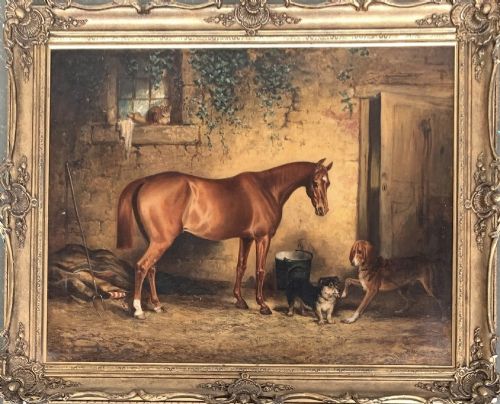
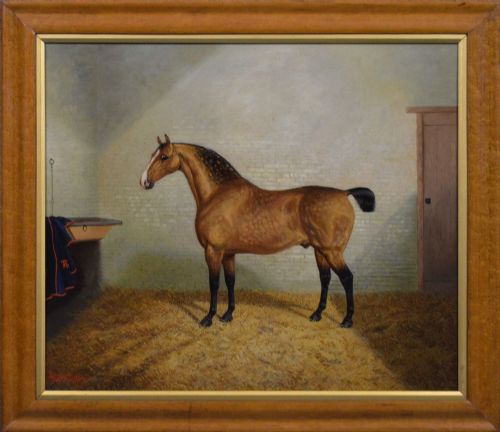
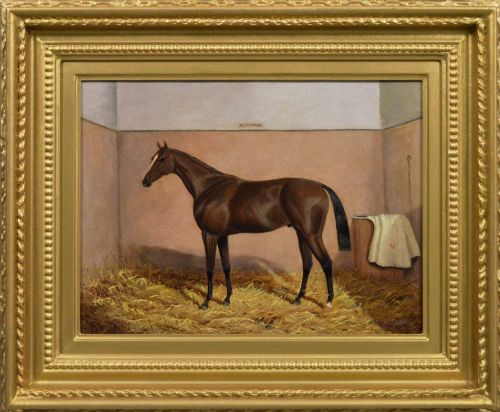
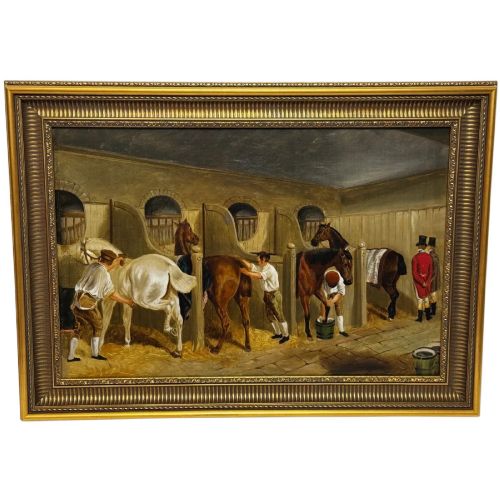
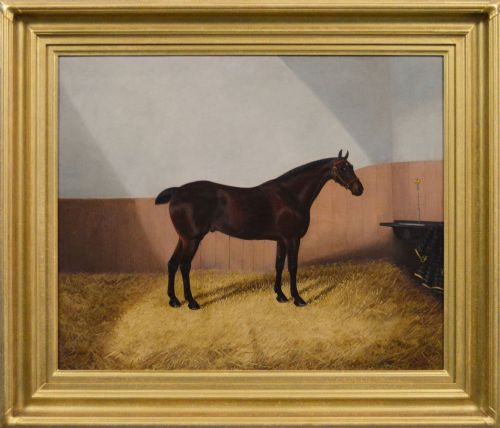
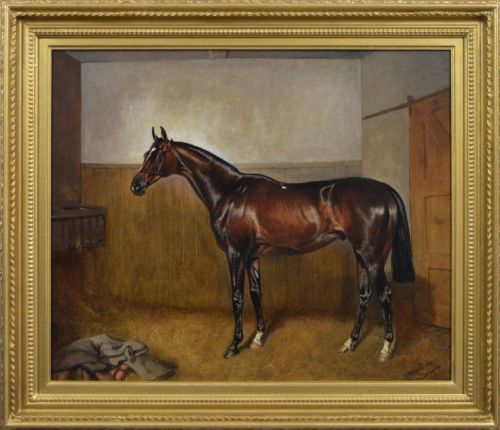
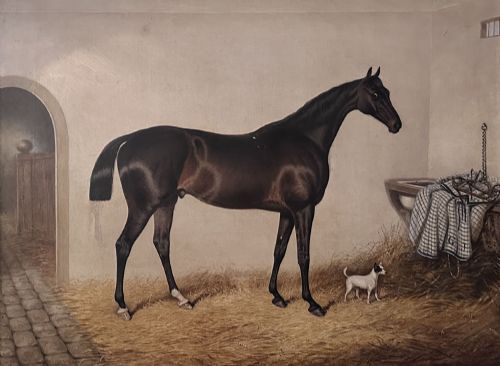
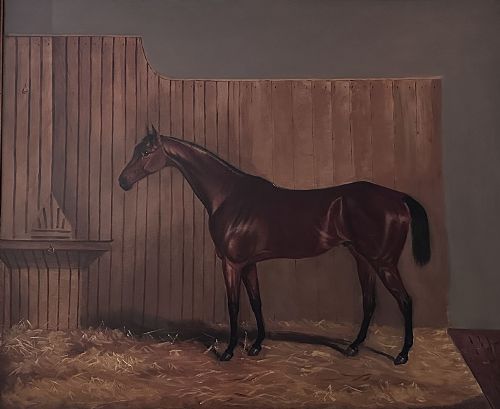
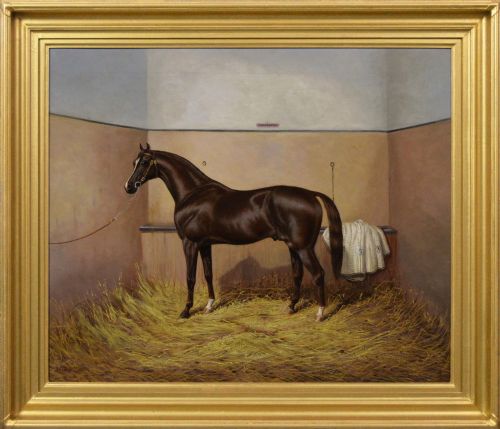
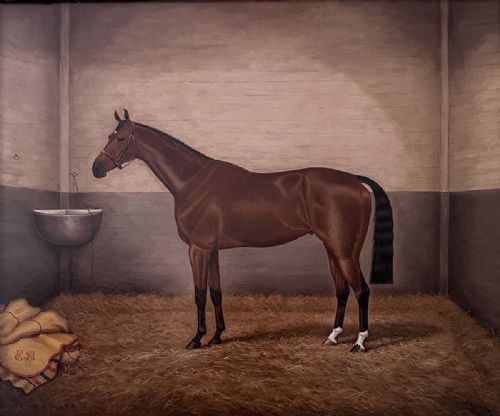
Traditional horse stable artwork captures the dignity of horses and the atmosphere of nineteenth-century yards through historical oil paintings and watercolours. You will frequently encounter nineteenth-century and Victorian depictions showing bay hunters, racehorses, and stable interiors.
The works span several decades from the early nineteenth century through to the early twentieth century. Painters focused on specific animals, often recording the names of celebrated racehorses and hunters alongside their grooms.
How they were made
Artists worked primarily with oil paint on canvas, applying rich pigments to capture the coat textures of horses and the shadowed depths of stable interiors. Watercolour and gouache on paper also appear across the selection, offering a lighter medium for detailed animal studies.
Many of these historic works retain their original wood, gilt, and gold leaf frames. These gilded surrounds complement the warm tones of the equestrian paintings.
Keep an eye out for small terriers hiding near the horse's hooves, patiently waiting in the straw for their equine companions.
What varies in quality
Quality rests in the anatomical precision of the horse and the atmospheric depth of the stable setting. Master artists rendered muscle structure, light falling through doorways, and equine expression with notable conviction.
The handling of the background elements and the preservation of the original canvas and gilt frame contribute to the overall standard of each piece.
Henry Barraud·Albert Clark·John Alfred Wheeler·George E Sharpe·Benjamin Cam Norton·Edwin Frederic Holt·Alfred Grenfell Haigh·Charles Bilger Spalding·John Nost Sartorius·John Ferneley Jnr·William Shayer Snr
The Traditional Horse Stable Artwork Glossary
- Oil on Canvas
- Pigments bound in a drying oil medium applied to a stretched woven fabric support. This traditional method allowed artists to build rich layers of colour and texture.
- Giltwood
- Wood carved and coated with gold leaf or metallic powder. It provides the ornate framing typical of Victorian fine art.
- Watercolour
- Paint consisting of water-soluble pigments used on paper. It creates transparent washes often finished with opaque gouache highlights.
- Equestrian Art
- Depictions of horses and their interaction with humans. This genre encompasses racing, hunting, and stable portraits from the nineteenth century.
Traditional Horse Stable Artwork: Frequently Asked Questions
What subjects appear in these paintings?
The works depict named racehorses, hunters, and stable yards. Many pieces focus on individual animals housed within traditional rural settings.
Associated figures such as grooms and terriers also feature alongside the horses.
How do I date a horse painting?
Dating relies on stylistic evidence, artist signatures, and framing materials. Nineteenth-century works often display specific Victorian aesthetic traits in their construction.
Inscription details on the canvas or stretcher can also provide specific historical markers.
Where should I hang these artworks?
These paintings suit traditional studies, libraries, or living rooms with classic decor. Their warm oil palettes complement wood panelling and heritage wall colours.
Direct sunlight should be avoided to protect the canvas and pigments over time.
What framing is typical?
Gilt wood frames are common for nineteenth-century oil paintings. These decorative surrounds enhance the depth of the canvas.
Watercolours usually appear behind glass within period wooden mounts.