





Gilded Convex Mirror
A gilded convex mirror catches the light of a room and curves it back to you in miniature, bringing focus and depth to a wall.
Gilded Convex Mirror
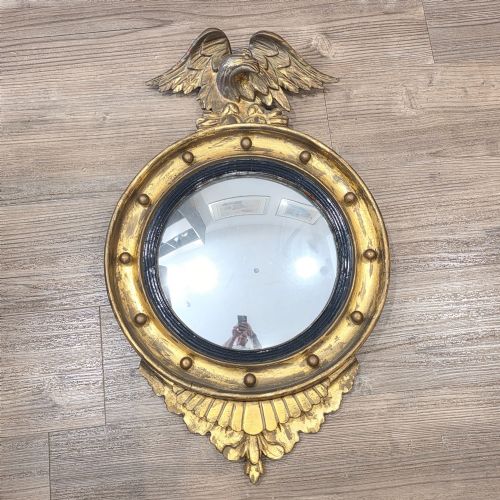
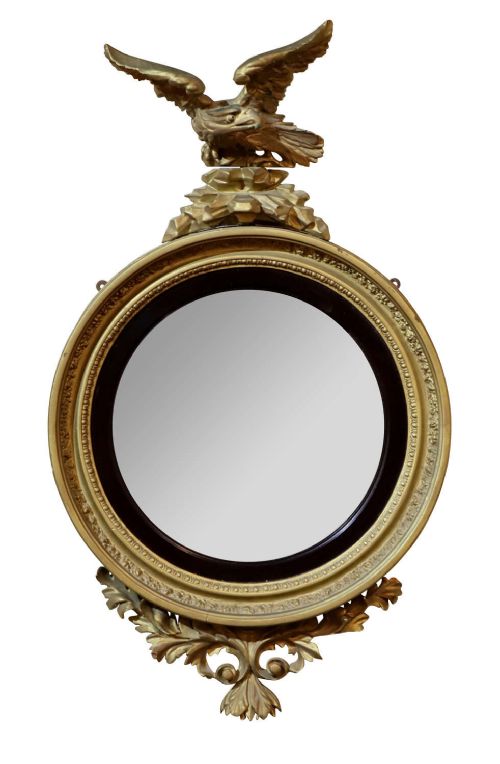
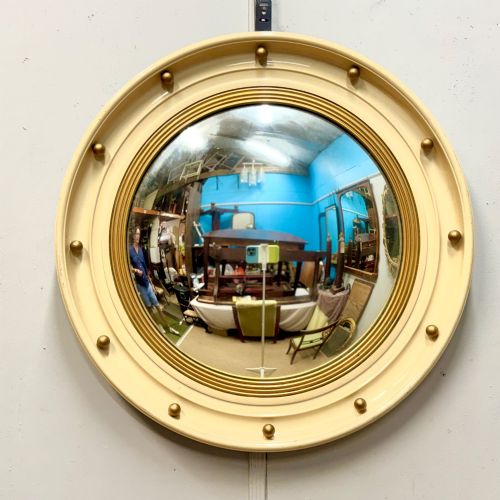
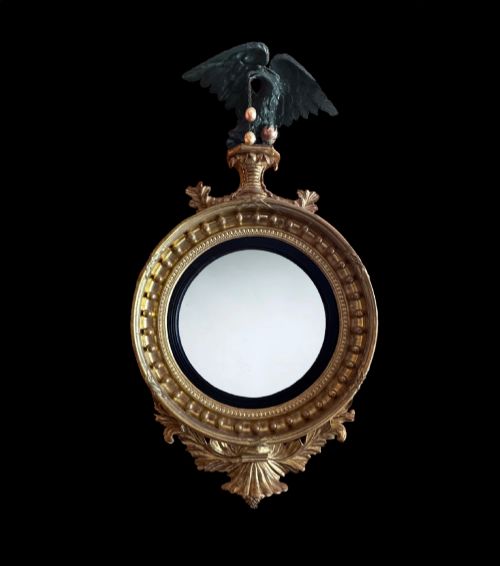
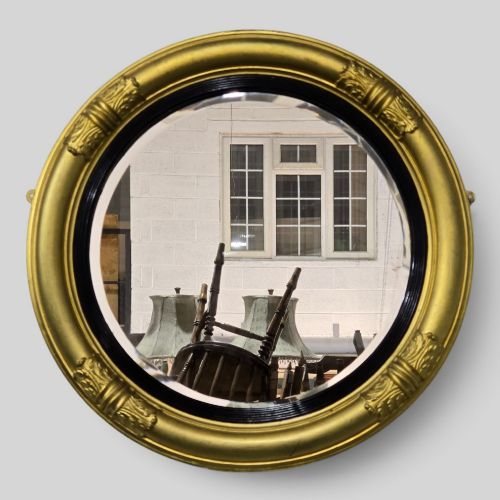
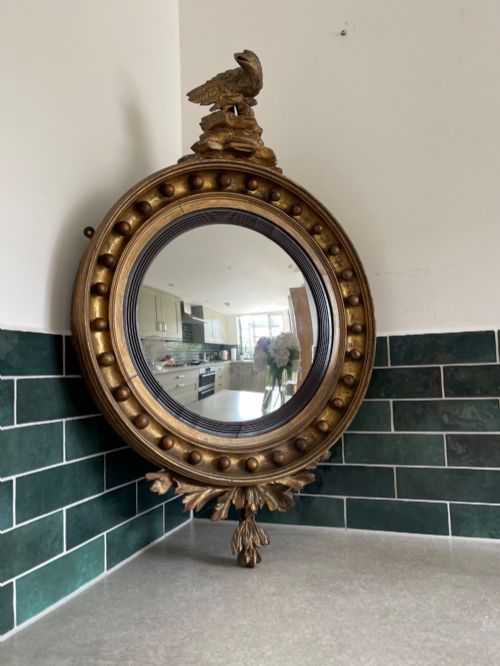
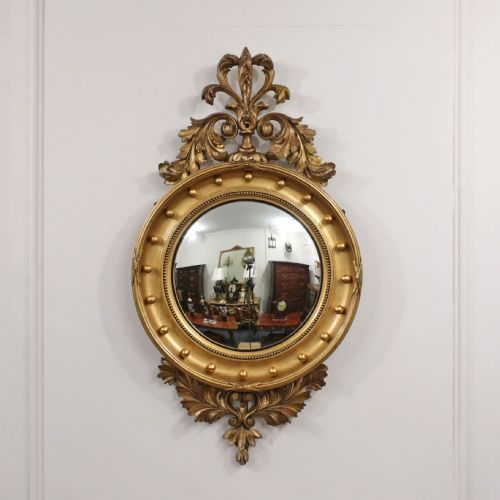
When you search for a gilded convex mirror, you look at circular wall pieces that distort reflections into a wide fish-eye view of an interior. Most examples found here date from the Regency period and the nineteenth century, though later revivals also appear.
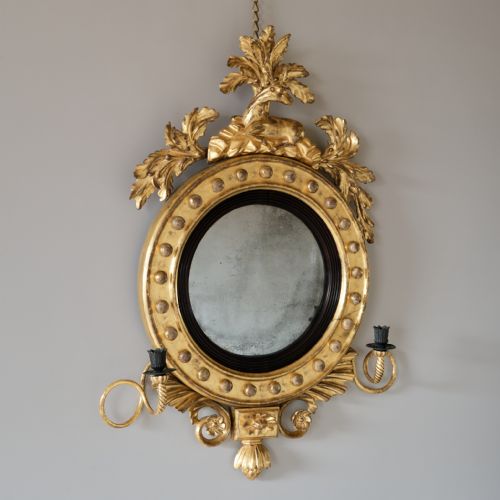
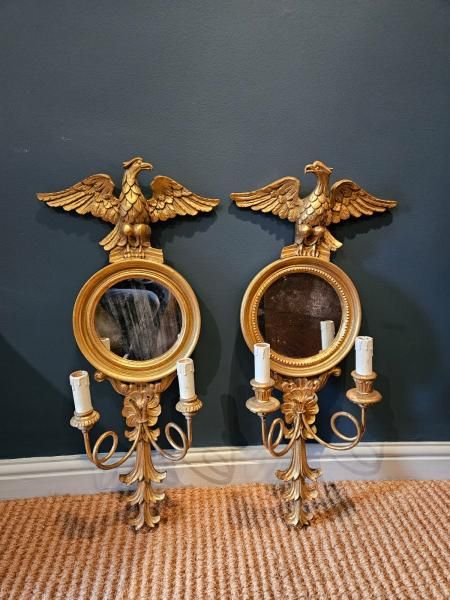
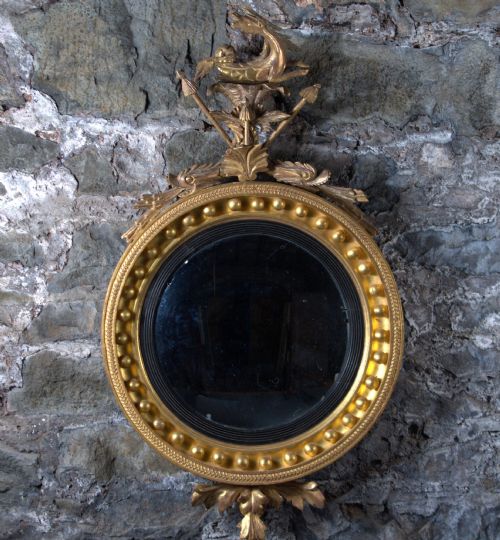
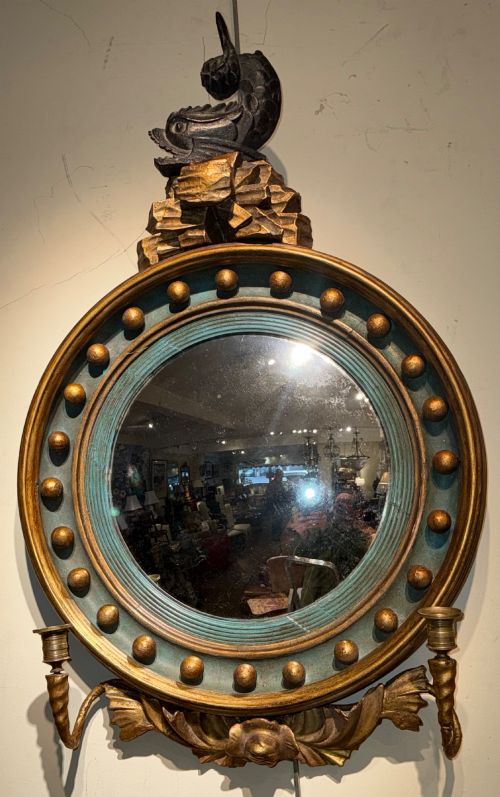
The form typically involves a round glass plate held within a heavy wooden frame, often finished with giltwood and sometimes topped with a carved eagle or paired with candle sconces.
How they were made
Frames are constructed from wood and gesso, carved and then covered in gold leaf or paint to achieve a brilliant metallic shine. Ebonised wood slips are frequently inserted inside the main frame to create contrast against the gilt surface.
The mirror glass itself is curved by blowing or slumping techniques before being silvered, which produces the characteristic bulging reflection that gathers light from across a chamber.
Historical butlers used these wide-angle mirrors to keep a watchful eye on multiple dining table conversations at once without turning around.
What varies in quality
The depth and clarity of the original gilding dictate much of the visual success of the piece, with hand-carved wooden details outshining later cast plaster substitutes. Crispness in the carving of surmounted eagles or dragons shows the hand of a skilled maker.
The preservation of the curved mirror glass without excessive foxing or modern replacement determines whether the piece retains its historical integrity.
The Gilded Convex Mirror Glossary
- Convex glass
- A curved glass plate that bends outward, creating a wide-angle reflection of the surrounding room. This curved form was designed to help servants monitor activity across a dining hall.
- Giltwood
- Timber coated with a thin layer of gold leaf over a prepared gesso ground. It provides a warm, reflective metallic surface that catches candlelight.
- Ebonised slip
- A thin inner ring of wood stained black to resemble ebony. It sits between the frame and the mirror glass to create a sharp optical border.
- Girandole
- A wall mirror fitted with attached candle sconces or arms for branching lights. The candles multiply their illumination by reflecting in the curved glass.
- Surmount
- An ornamental carving placed at the very top of a mirror frame, such as a spread eagle. These decorative additions elevate the status and height of the piece.
Gilded Convex Mirror: Frequently Asked Questions
Where should I hang a convex mirror?
These pieces suit spaces where they can draw light from windows and reflect an entire room, such as above a fireplace mantel or in a hallway.
Because the curved glass shrinks the reflection, position the mirror at eye level where viewers can easily inspect the distorted perspective.
How do I date a convex mirror?
Examine the construction of the wooden frame, the composition of the gesso, and the silvering behind the curved glass. Regency examples often feature hand-carved frames and heavy ebonised slips.
Later nineteenth-century revivals and twentieth-century pieces tend to use simpler plaster mouldings or machine-turned details rather than deep hand carving.
Why do some mirrors have eagles?
The eagle surmount became a prominent stylistic choice during the Regency period, often symbolising strength and patriotism. These carved birds perched atop the frame add significant height and architectural presence to the wall.
Not all pieces carry them, as simpler circular frames and girandoles with candle branches were also common alternatives.
How do I clean the glass safely?
Dust the gilded frame gently with a soft dry brush to protect the delicate gold leaf surface from moisture and abrasion. Avoid chemical sprays near the wood.
Clean the curved glass sparingly with a soft cloth dampened with water or mild glass cleaner, taking care not to let liquid seep behind the edges.