





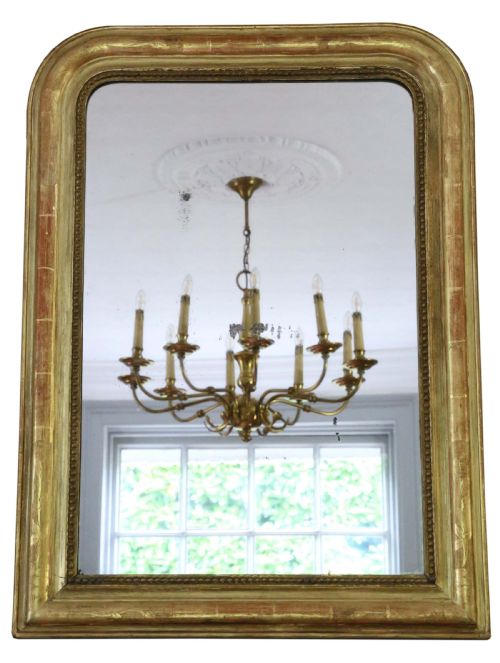

Large Round Gilt Mirror
A large round gilt mirror brings scale and brilliant reflection to a room, channelling centuries of decorative craft in a single sweeping circular frame.
Large Round Gilt Mirror
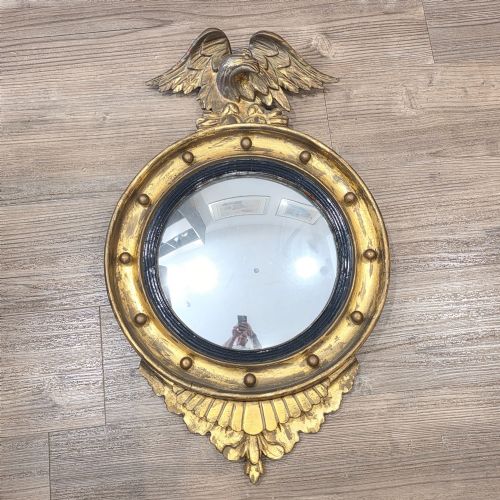
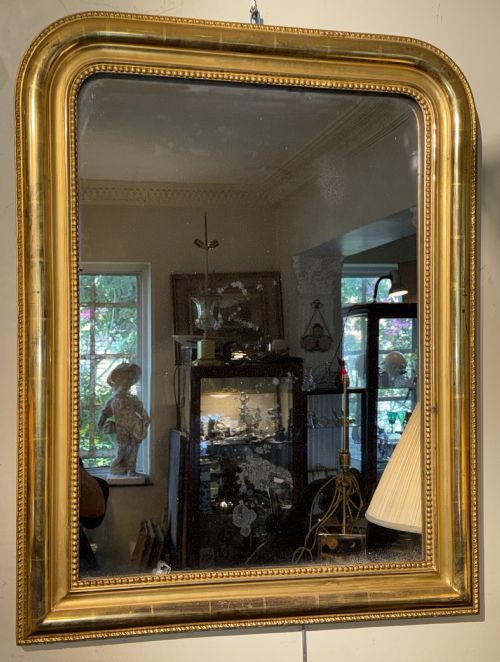
A large round gilt mirror serves as a commanding focal point in any interior scheme, drawing the eye with its sweeping circular geometry and reflective depth. When searching for a large round gilt mirror, buyers encounter grand convex formats adorned with eagles or ebonised slips alongside restrained French Louis Philippe plates.
The selection ranges from early nineteenth century Regency pieces with substantial circular proportions to later revival interpretations. These wall hanging objects function equally well above a mantlepiece or as a principal feature in a hallway.
Materials and construction
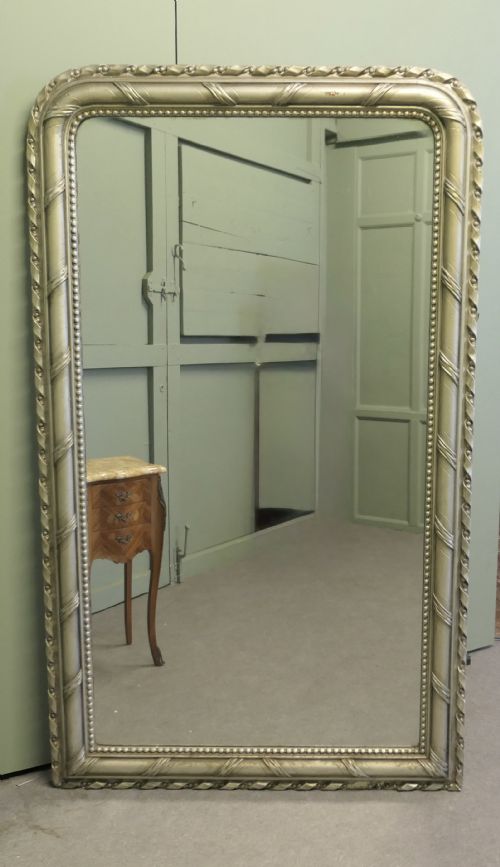
Master craftsmen built these frames using carved wood and plaster over which they applied delicate layers of gold leaf, silver leaf, or gesso. The resulting metallic surface provides the characteristic luminous warmth expected from period gilding.
Convex glass plates are set within deep circular wooden rims, sometimes featuring an ebonised slip to create a sharp optical border. These construction methods ensure the glass remains secure while projecting light outward across the room.
Assessing craftsmanship and proportion
The distinction between standard examples and exceptional pieces lies in the crispness of the hand-carved wood and the purity of the gilt finish. Finer specimens display deeply modelled ornamentation, such as spread eagles or intricate foliate details, rather than flat cast decoration.
The integrity of the original glass plate and the weight of the underlying wooden or gesso frame also determine the standing of an individual piece. Superior examples maintain balanced proportions across their large diameter, ensuring the circular symmetry remains undisturbed.
The Large Round Gilt Mirror Glossary
- Giltwood
- Wood that has been coated in gold leaf or silver leaf to create a brilliant metallic surface. This material forms the primary structure of many classical wall mirrors.
- Convex
- A curved mirror glass that bulges outward to provide a wide-angle, panoramic reflection of the interior space. It is frequently paired with circular gilt frames.
- Gesso
- A plaster mixture applied to wood frames as a smooth base for subsequent gilding. Its build-up allows artisans to carve intricate decorative details.
- Ebonised slip
- A dark, black-finished inner moulding that sits between the mirror glass and the outer gilt frame. This technique adds visual contrast to nineteenth-century designs.
- Overmantle
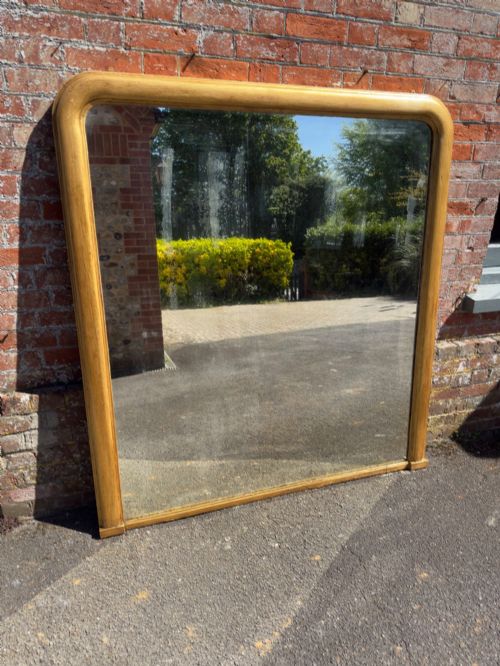
- A large mirror designed specifically to hang above a fireplace mantel. These pieces often feature broader proportions to match the scale of the hearth.
Large Round Gilt Mirror: Frequently Asked Questions
How do I hang a heavy gilt mirror?
These substantial frames require robust wall fixings anchored directly into structural studs or masonry to support their considerable weight safely. Professional installation is strongly recommended for larger nineteenth-century formats.
Position the mirror at a height where the centre of the glass aligns comfortably with eye level. This ensures the maximum reflective benefit and balances the scale of the surrounding furniture.
What is the difference between convex and flat mirrors?
Convex mirrors bulge outward to capture a panoramic view of the entire room within a circular frame. They were historically placed to monitor spaces and distribute ambient daylight.
Flat mirror plates provide a direct, undistorted reflection of whatever stands immediately opposite. They are more commonly found in rectangular overmantle or Louis Philippe formats.
How do I clean antique gilt surfaces?
Dust the gilded wood gently using a soft, dry ostrich feather brush or a clean microfibre cloth. Avoid all commercial cleaning sprays or water, which can damage aged gold leaf.
Clean the glass plate sparingly with a mild glass cleaner applied to a cloth rather than directly onto the glass. This prevents any liquid from seeping behind the plate and harming the original backing.
Are these mirrors suitable for bathrooms?
Period giltwood and gesso frames are sensitive to moisture and humidity fluctuations. Placing them in steamy environments can cause the plaster and gold leaf to deteriorate.
Keep these pieces in dry reception rooms, hallways, or bedrooms where the atmospheric conditions protect the delicate nineteenth-century materials.