
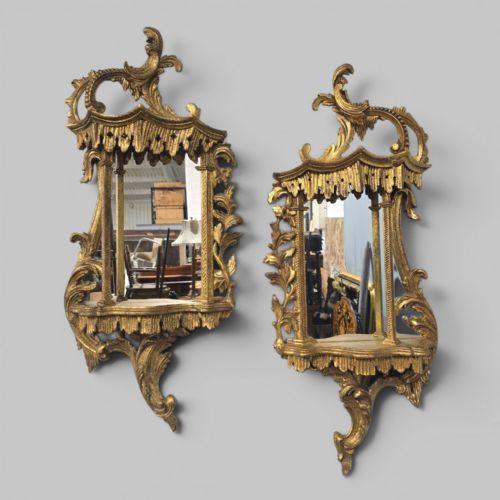

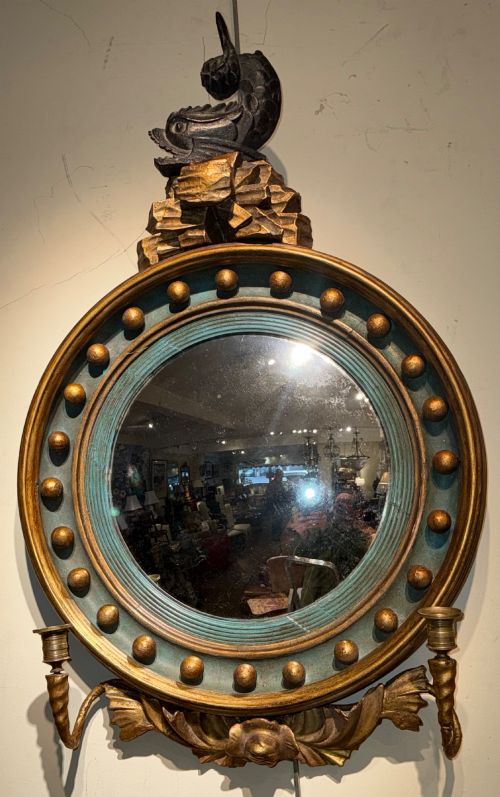

Giltwood Sconce Mirror
A giltwood sconce mirror brings warm candlelight and reflected depth to a room, combining carved woodwork with functional wall lighting.
Giltwood Sconce Mirror
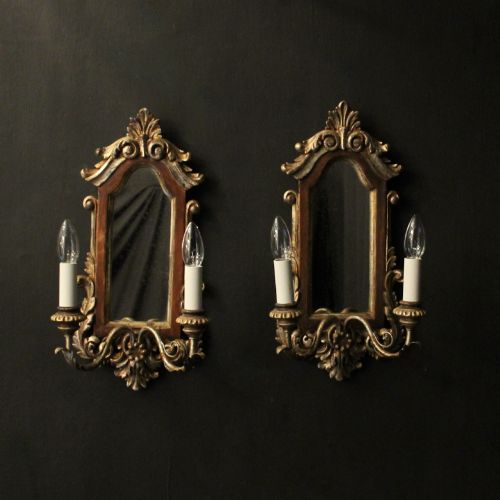
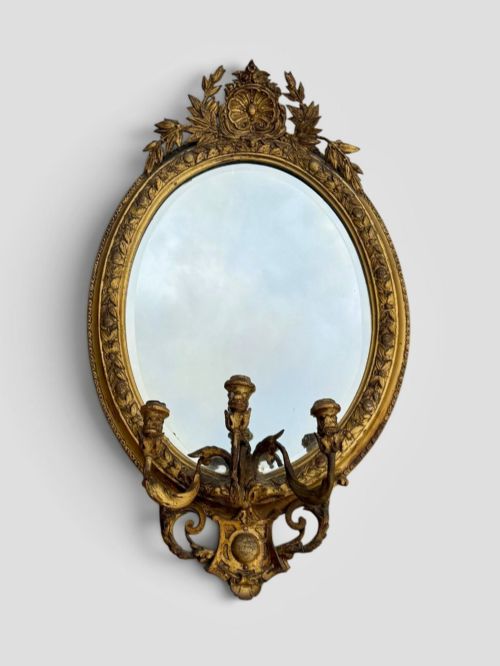
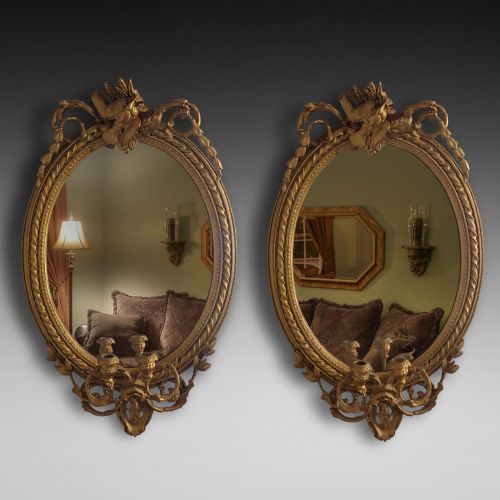
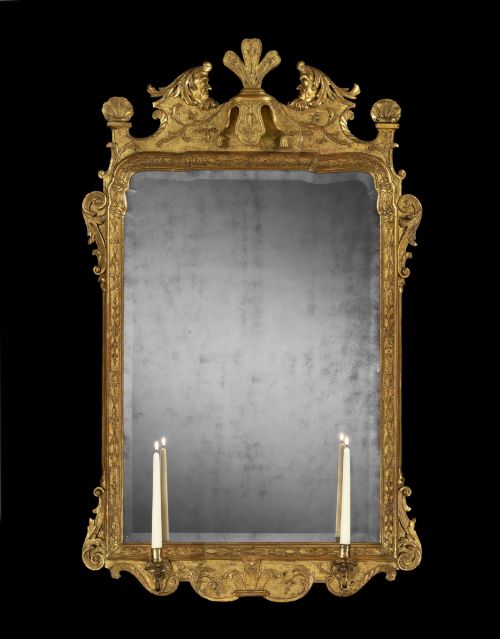
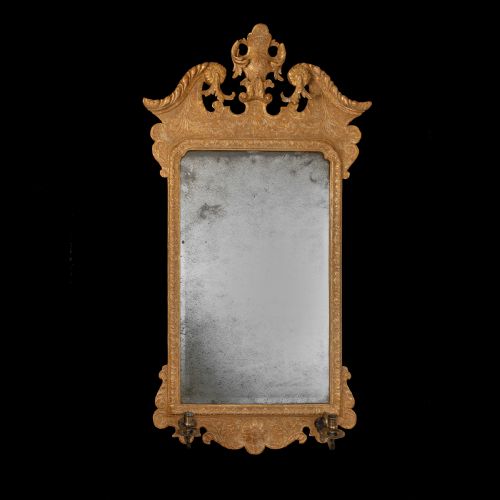
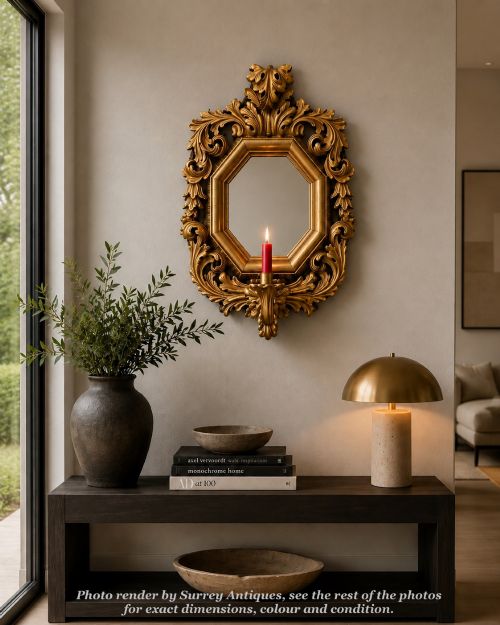
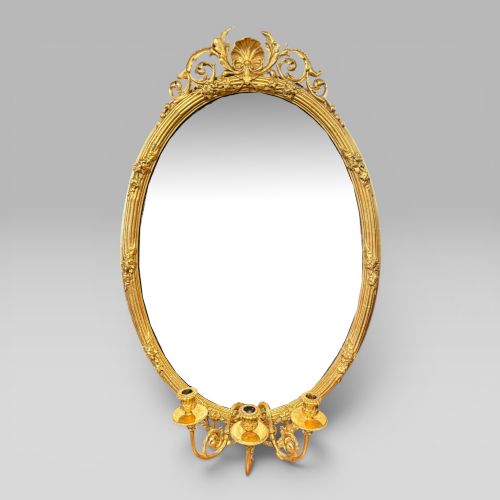
A giltwood sconce mirror combines a reflective glass surface with integrated candle arms, forming a functional light source and decorative wall piece. When searching for a giltwood sconce mirror, collectors encounter forms ranging from compact wall brackets to large overmantels.
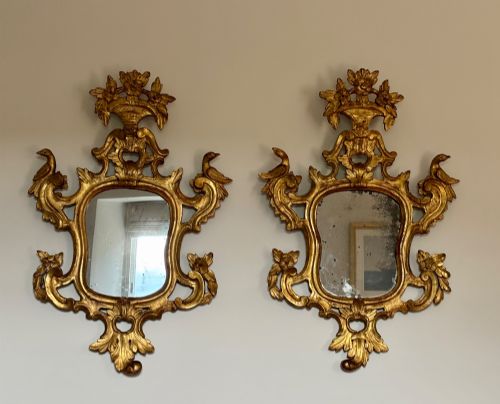
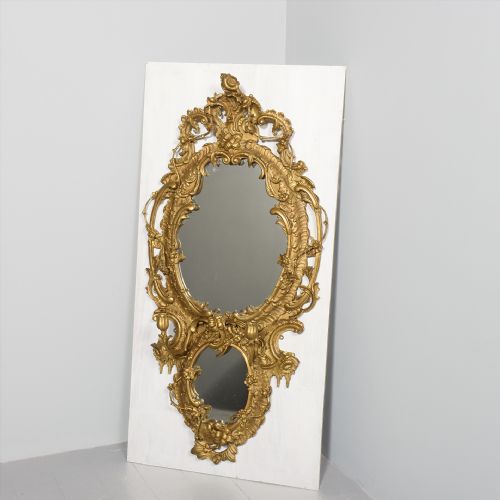
The selections span centuries of craftsmanship, featuring Georgian, Regency, and Victorian periods alongside later interpretations. Italian, French, and English workshops each contributed distinct regional interpretations to this enduring design.
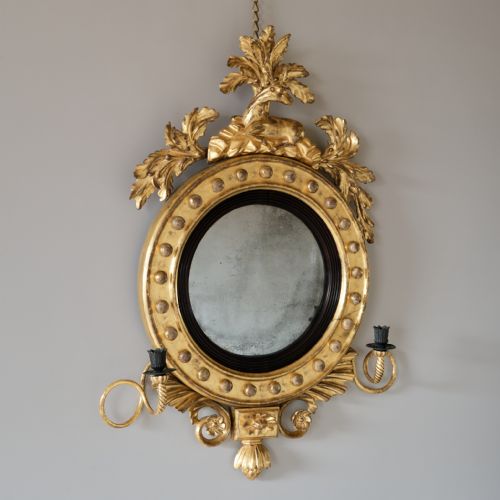
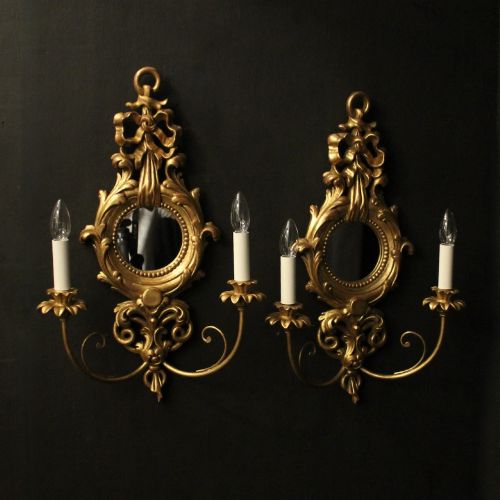
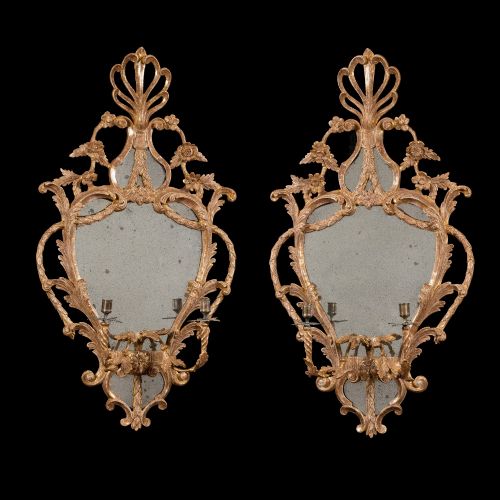
Many examples incorporate girandole elements, featuring mirrored glass plates paired with branching sconces that multiply the flickering candle flame. Others present convex glass within circular frames or traditional rectangular plates suited for pier glass placement.
Materials and construction
Carvers shaped soft woods such as pine or lime before applying layers of gesso to build up intricate relief decoration. Artisans then laid delicate sheets of gold leaf onto the prepared surface, burnishing portions to achieve a brilliant metallic sheen.
Mirrored glass plates, often hand-silvered, were secured within the wooden rebates using traditional methods. Brass candle arms and metal fixings were integrated securely to support the weight of burning tapers without straining the gilded frame.
Several girandoles retain their original candle sockets, designed to multiply light across dark historic drawing rooms.
Assessing quality and craftsmanship
The crispness of the carved detail distinguishes superior examples from standard production, as master carvers achieved remarkable depth and undercut definition in the gesso and wood. Softer, rounded contours often indicate later revival pieces or hurried workshop output.
The integrity of the original gilding surface dictates much of the visual character, with authentic wear revealing the warm red bole beneath the gold leaf. Heavy overpainting or crude regilding obscures the subtle texture built up by historical artisans.
Benjamin Goodison
The Giltwood Sconce Mirror Glossary
- Giltwood
- Wood decorated with gold leaf applied over a prepared gesso ground. This finish provides a warm, reflective surface that catches natural and candlelight.
- Girandole
- A branched wall sconce holding candles, frequently placed in front of a mirror to amplify light. These fixtures often feature elaborate carved frames in Rococo or neoclassical styles.
- Gesso
- A mixture of gypsum and size used as a base for gilding and relief carving on wood frames. It allows artisans to model sharp, intricate ornamental details before applying gold leaf.
- Convex mirror
- A round mirror with a curved glass surface that reflects a wide, distorted field of view. Regency examples frequently incorporate this optical form within heavy gilded frames.
- Ebonised wood
- Timber treated to resemble ebony, providing a dark contrast against gilded ornament. This treatment appears on specific frames from the nineteenth century.
Giltwood Sconce Mirror: Frequently Asked Questions
How do I hang a heavy giltwood mirror?
These substantial wall objects require secure fixing directly into masonry or reinforced wall studs using appropriate brackets.
Professional installation ensures the weight of the carved wood and glass distributes safely without damaging the frame.
Where should I place a sconce mirror?
Position the piece opposite a window to maximise natural daylight, or above a mantelpiece to reflect ambient room lighting.
Candle arms function effectively in hallways or dining spaces where supplementary illumination enhances the atmosphere.
How do I clean antique giltwood?
Dust the carved surfaces gently with a soft, dry brush to prevent accumulation within the intricate gesso relief work.
Avoid liquid cleaners, abrasives, and chemical solvents, which strip the delicate gold leaf and historical finish.
How can I date a giltwood mirror?
Examine the construction methods of the wooden frame, the composition of the gesso, and the characteristics of the glass plate.
Stylistic cues such as Regency convex profiles or Victorian Rococo Revival ornamentation offer clear chronological markers.