


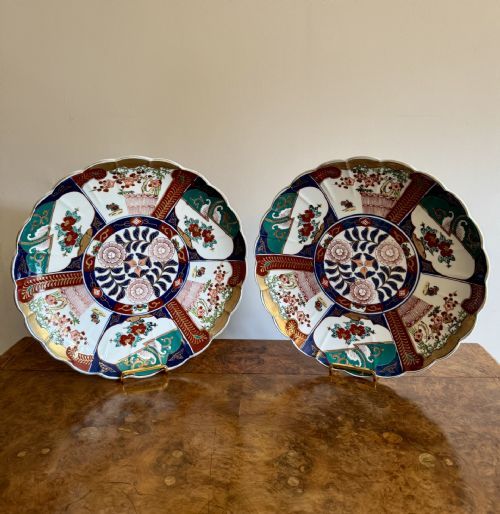


Gilded Cobalt Porcelain Platter
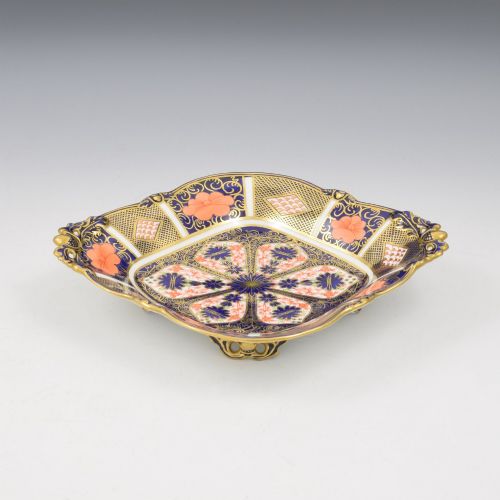
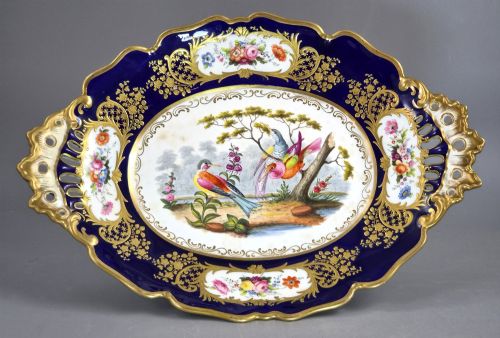
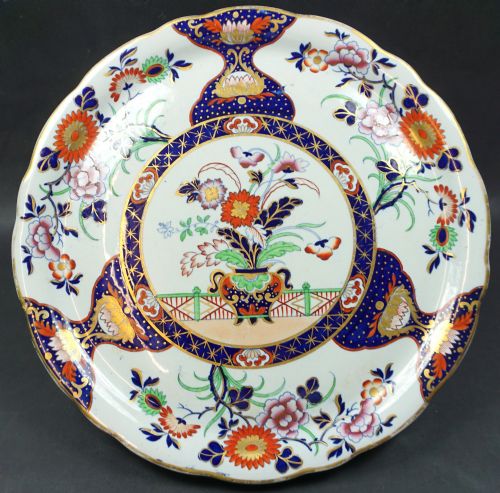
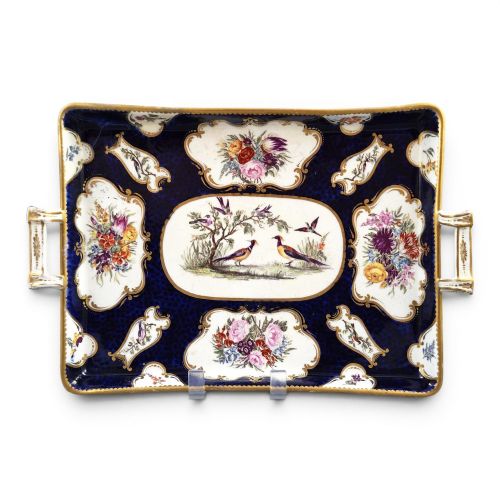
A gilded cobalt porcelain platter brings together rich blue hues and lustrous metallic accents across plates, chargers, and serving dishes.
Gilded Cobalt Porcelain Platter
When searching for a gilded cobalt porcelain platter, buyers encounter an array of decorative chargers, serving dishes, and plates originating from English potteries, French houses, Vienna workshops, and Japanese kilns. The pieces span the nineteenth century, including Victorian, Regency, and Meiji periods, showcasing diverse regional interpretations of deep blue and gold decoration.
English examples frequently display intricate hand-painted bird motifs, botanical studies, or Imari patterns derived from earlier traditions. French and Austrian pieces introduce fine portrait work, historical scenes, and elaborate moulded borders.
Japanese Imari wares provide large scalloped plates and chargers featuring vibrant cobalt underglaze combined with rich gilding. These varied forms function primarily as decorative chargers and serving trays within domestic settings.
Materials and construction techniques
The foundation of these objects relies on hard-paste porcelain, bone china, ironstone, and ceramic bodies shaped into plates, trays, and chargers. Potters applied cobalt oxide pigments beneath transparent glazes to achieve the characteristic deep blue coloration before firing.
Gold leaf and liquid gilding were then added by hand, often over subsequent low-temperature firings to bond the metallic details to the glazed surface. Enamel colours were frequently incorporated alongside the gilding to build complex, multi-toned patterns.
Some nineteenth-century makers decorated plates with surprisingly fierce exotic birds peering out from cobalt foliage.
Craftsmanship and artistic execution
Quality separates through the precision of the hand-painting, particularly in complex bird scenes, botanical studies, and figurative subjects. Finer pieces demonstrate superior control in the application of enamel colours and the crispness of the moulded porcelain forms.
The execution of the gilding itself marks a distinct tier, with heavier, burnished gold leaf indicating superior workmanship compared to flat, printed metallic applications. The clarity of the cobalt underglaze and the balance of the composition across large charger surfaces further distinguish the higher end of the range.
The Gilded Cobalt Porcelain Platter Glossary
- Imari
- A style of Japanese porcelain decorated in underglaze blue, iron red, and gilt, which heavily influenced European potteries during the nineteenth century. English and continental makers produced their own interpretations of this distinctive aesthetic.
- Charger
- A large decorative plate or platter traditionally used for serving or display. These substantial pieces provide a wide surface area for complex cobalt and gilt decoration.
- Bone china
- A porcelain variety containing animal bone ash, resulting in a strong, slightly translucent body. It allows for thin, delicate vessel walls while retaining structural stability.
- Glaze
- A glassy coating fused to ceramic bodies through firing to render them waterproof and glossy. It protects the underlying cobalt pigment and provides a smooth base for gilding.
Gilded Cobalt Porcelain Platter: Frequently Asked Questions
How were these platters used originally?
Many of these pieces served as dessert dishes, large serving platters, or decorative chargers placed on dining tables and sideboards during formal meals.
Over time, larger chargers and plates transitioned primarily into decorative display objects intended to showcase intricate cobalt and gold patterns on walls or cabinets.
How do I identify a Japanese Imari piece?
Japanese Imari items typically feature distinct deep cobalt blue underglaze paired with burnt orange enamel and generous gold leaf detailing. The forms often include scalloped edges, fan shapes, or large chargers produced during the Edo and Meiji periods.
European factories also produced imari patterns, but Japanese works generally display characteristic paste textures and specific brushwork styles distinct from English or French interpretations.
What is the difference between porcelain and ironstone?
Porcelain is a fine, vitrified ceramic material known for its hardness, smooth texture, and occasional translucency when held to the light. It forms the base of most fine Victorian and Regency decorative plates.
Ironstone is a heavier, opaque earthenware variant designed for durability while maintaining a refined appearance suitable for everyday dining and serving tasks.
How should I care for gilded porcelain?
Gilded surfaces require gentle handling to preserve the delicate gold leaf and enamel decorations applied over the glaze. Hand washing with mild soap and avoiding abrasive sponges protects the metallic lustre from wearing away.
Displaying pieces securely on padded plate hangers or stable stands prevents accidental slips and surface scratching.