





Royal Vienna Charger
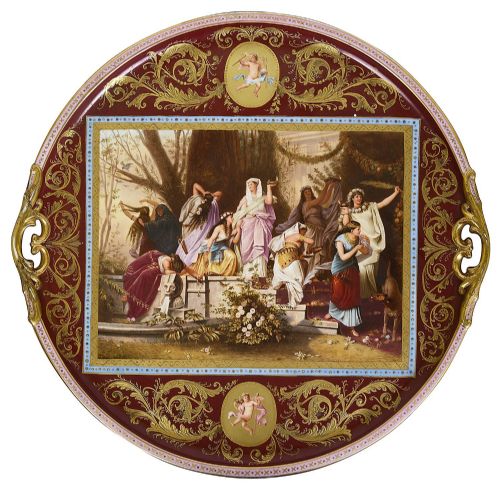
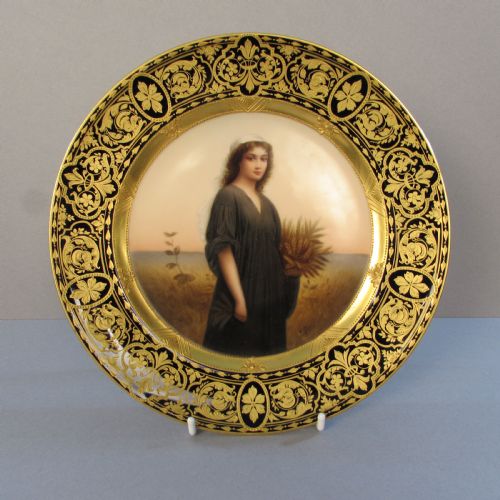
A royal vienna charger offers grand hand-painted mythological and historical scenes framed by rich cobalt and gold.

Royal Vienna Charger
When someone searches for a royal vienna charger, they encounter large porcelain decorative plates and cabinet plates dating from the nineteenth century. These pieces span historical revival styles, including neoclassical, grand regency, and vienna historicism.
The most common form on this page is the large display charger, often measuring forty to sixty centimetres in diameter. These works showcase detailed figurative narratives drawn from classical mythology, literature, and history.
Makers and artists sign many of these porcelain pieces, recording names such as Wagner, Sibl, and S. Stanley. The execution leans heavily into nineteenth-century vienna style production, focusing on ornate pictorial surfaces.
How they were made
The foundation of every piece is hard-paste porcelain, shaped into large chargers, trays, and cabinet plates. Artisans then applied detailed enamel painting by hand to create elaborate figurative scenes.
Gilding and gold leaf frame the central paintings, often combined with deep cobalt glaze backgrounds. This rich application of gold gilt creates the characteristic opulent border associated with the style.
Bacchus and Ariadne occasionally share shelf space with Caesar and classical virgins.
What varies in quality
The skill of the hand-painted narrative scene dictates the standing of an individual charger. Works signed by known artists or featuring complex multi-figure compositions represent the finest tier of production.
The richness and preservation of the surrounding gilding and cobalt glaze determine visual depth. Dense application of gold leaf and intricate border detailing distinguish superior items from simpler plates.
S. Stanley·Sibl·Wagner
The Royal Vienna Charger Glossary
- Charger
- A large decorative plate intended for display rather than dining. These substantial ceramic pieces serve as focal points for painted scenes.
- Cobalt glaze
- A rich blue metallic oxide applied beneath or over the glaze to provide a deep background colour. It contrasts sharply with white porcelain and gold gilding.
- Gilding
- The application of gold leaf or gold paint to the surface of the porcelain. This technique highlights borders and adds reflective warmth to the piece.
- Cabinet plate
- A smaller porcelain plate manufactured for display in a cabinet or on a wall. These items prioritize artistic painting over practical utility.
- Hard-paste porcelain
- A dense, vitrified ceramic material fired at high temperatures. It provides a durable, smooth white canvas for detailed enamel painting.
Royal Vienna Charger: Frequently Asked Questions
What is a royal vienna charger?
A royal vienna charger is a large decorative porcelain plate featuring hand-painted classical or historical artwork.
These nineteenth-century pieces typically display rich cobalt blue and heavy gold gilding around detailed figurative central scenes.
How were these decorative plates used?
These items were made for display in cabinets, on walls, or on specialised stands rather than for table service.
Their large scale and elaborate narrative paintings positioned them as focal points in nineteenth-century interiors.
How do I date a vienna porcelain piece?
Dating relies on stylistic clues, historical revival periods, and specific artist signatures recorded on the porcelain surface.
Most examples on this page originate from the nineteenth century, reflecting neoclassical and historicism movements.
Who painted these porcelain scenes?
Specialist artists executed the detailed mythological and historical tableaus by hand onto the fired porcelain surface.
Signatures such as Wagner, Sibl, or S. Stanley occasionally appear on the face or reverse of the plates.