
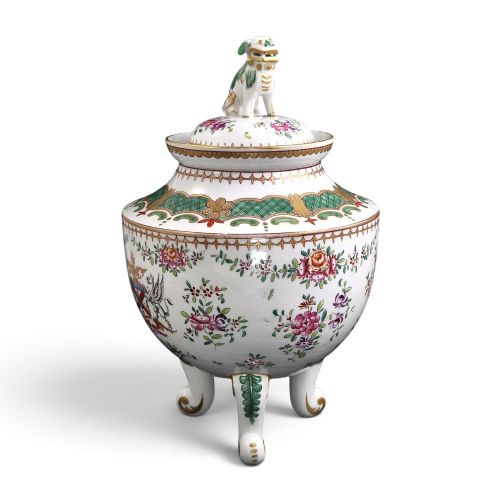
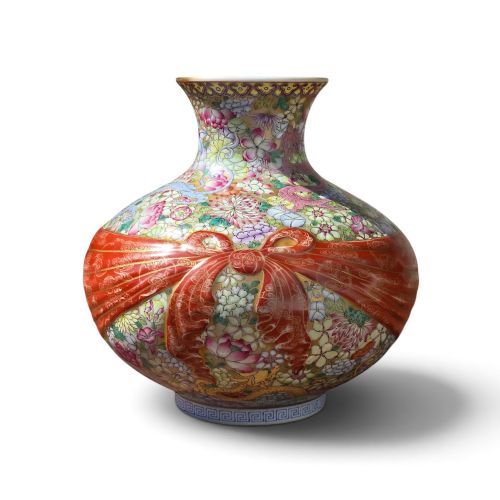
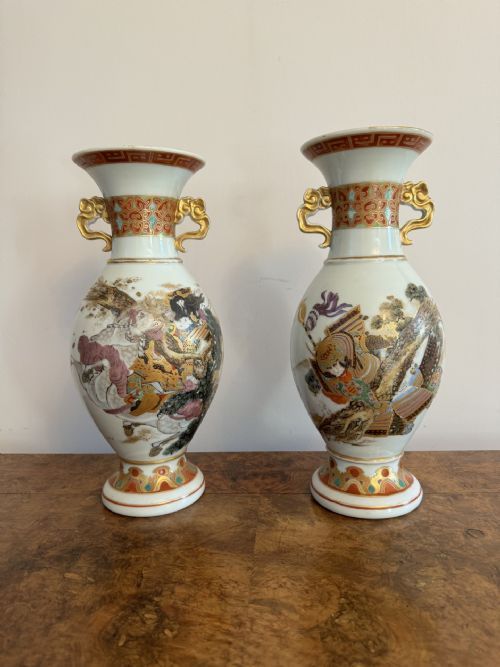
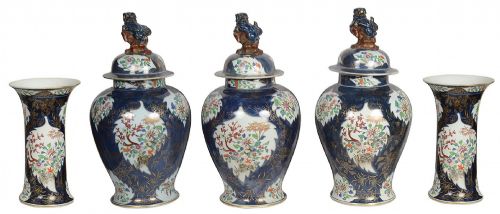




Gilded Chinese Ceramic Vases
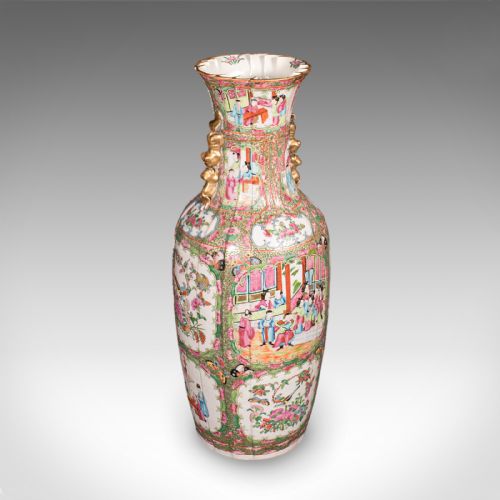
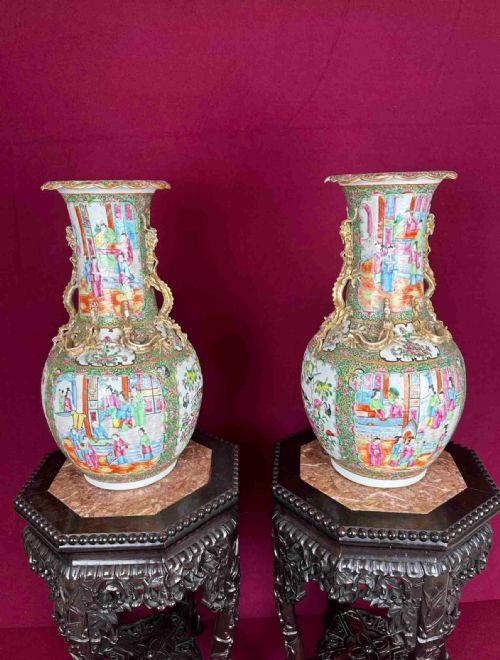
These gilded chinese ceramic vases bring vibrant palette work and metallic leaf embellishment directly from late nineteenth century production centres into the modern interior.
Gilded Chinese Ceramic Vases
When searching for gilded chinese ceramic vases, collectors encounter diverse forms spanning the nineteenth century, including large centrepieces, ginger jars, and garniture sets. These ceramics frequently reflect Qing Dynasty aesthetics, Chinese Export traditions, and French Chinoiserie interpretations designed for Western markets.
Many examples from this era double as table lamps, having been wired for modern utility while retaining their original ceramic bodies and decorative mounts. Canton and Rose Medallion patterns dominate the selection, bringing hand painted narrative scenes and dense floral panels into view.
The aesthetic bridges traditional Eastern craftsmanship with Victorian taste, often incorporating ormolu, brass, or gilt metal mounts alongside standard ceramic bodies. Pairs of vases and single decorative urns appear frequently across these listings.
Assessing Quality
Quality rests upon the precision of the hand painting and the complexity of the enamel work, particularly in dense compositions like millefleurs and Famille Rose schemes. Superior pieces display crisp brushwork, balanced figural detailing, and rich, unblemished gilding across the ceramic surface.
The integration of metal mounts also dictates standard; cast ormolu or heavy brass fittings show superior craftsmanship compared to simpler base metals. Additionally, the crispness of the porcelain paste and the brilliance of the underlying glaze separate standard production from finer workshops.
Several vases moonlight as table lamps, shedding light on the Victorian penchant for turning fine porcelain into functional room illumination.
Samson Paris
The Gilded Chinese Ceramic Vases Glossary
- Famille Rose
- A major palette of Chinese ceramic enamels featuring opaque pink or rose colours, introduced during the Qing Dynasty. This style allows for subtle tonal gradations in floral and figural depictions.
- Canton
- A style of Chinese export porcelain decorated in vibrant colours, typically featuring panels of figures and birds surrounded by dense floral borders. Production centred on the port city of Guangzhou for Western export.
- Chinoiserie
- European decorative style reflecting Chinese artistic influences, popular in various periods including the nineteenth century. It encompasses both direct imports and Western adaptations like Samson of Paris ceramics.
- Ormolu
- Gilded bronze mounts applied to furniture, clocks, and ceramic vases. This decorative technique enhances the sculptural quality of nineteenth century decorative arts.
- Millefleurs
- A dense decorative pattern meaning thousand flowers, covering the entire ceramic surface with intricate floral motifs. The style requires exceptional precision from the enamel painter.
Gilded Chinese Ceramic Vases: Frequently Asked Questions
Are these vases functional or purely decorative?
These pieces serve primarily as decorative objects or large centrepieces, with many nineteenth century examples having been converted into table lamps.
Their substantial porcelain bodies and painted surfaces make them visual focal points rather than vessels for cut flowers.
What is the difference between Canton and Rose Medallion?
Canton porcelain encompasses a broad category of hand painted export wares featuring distinct panels of figures and botanicals.
Rose Medallion is a specific subset of Canton ware defined by its segmented medallions containing people and birds, set against a dense green and gold floral ground.
How do I identify nineteenth century pieces?
Dating relies on stylistic markers such as the specific vibrancy of the Famille Rose enamels, the application of gold leaf, and the nature of any metal mounts.
Many pieces align with late Qing production or Victorian export standards, often corroborated by specific stylistic crossovers with French Chinoiserie.
Can converted lamp bases be restored to original vases?
Conversion typically involves drilled bases or fitted metal collars designed to hold electrical wiring without destroying the ceramic body.
Reversing the process depends on the specific mounting method used, though many collectors choose to retain the lamp functionality.