
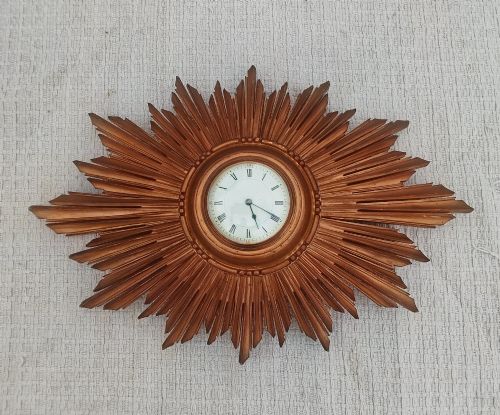


Gilded Bronze Wall Clock
A gilded bronze wall clock brings French design and precise timekeeping together, making a strong visual statement in any room.
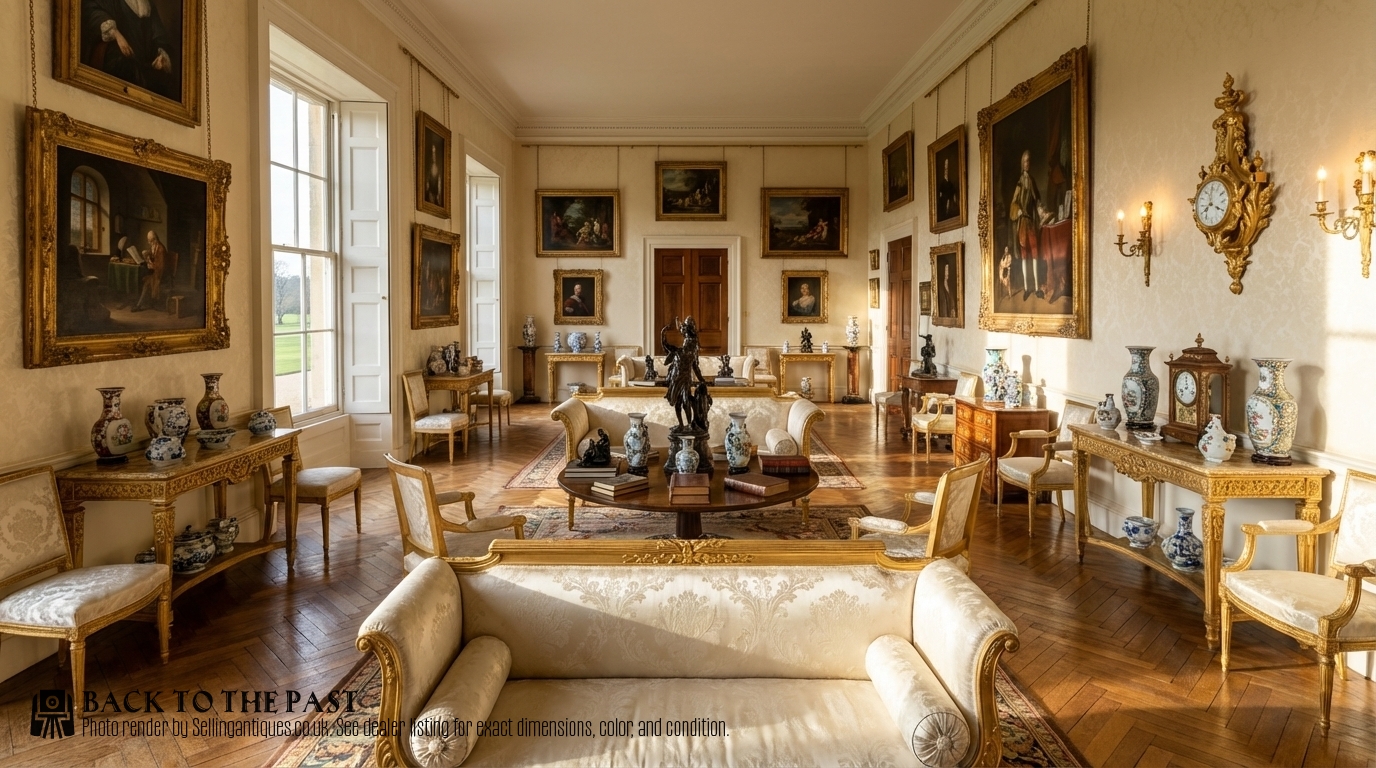
Gilded Bronze Wall Clock
The most common form you will meet is the cartel wall clock, often constructed from cast bronze with gilt or ormolu finishes. These pieces display classical architectural motifs, asymmetrical scrollwork, or starburst designs depending on the specific revival period.
Originating largely from the nineteenth century and extending into the early twentieth century, these timepieces combine metalwork with enamel dials and protective glass covers. The integration of patinated bronze and giltwood elements adds further variety to the forms available on this page.
Materials and construction methods
Maker workshops produced these timepieces by casting bronze into intricate shapes before applying a layer of mercury gilding, known as ormolu, or standard gilt finishes. This metalwork is frequently paired with contrasting materials such as ebonised wood or glass.
Enamel is utilised for the clock faces, providing a clean white background for painted numerals that remain legible within ornate metal bezels. Structural elements often combine solid bronze castings with secondary woods like giltwood for brackets and carved frames.
Listings for this phrase span the nineteenth century and the early twentieth century, incorporating materials like gilt bronze, enamel, glass, and patinated bronze.
Judging the quality of the work
Quality in these pieces rests upon the crispness of the bronze casting and the depth of the subsequent gilding. Finer examples display sharp chasing work where human hands have refined the raw cast metal before finishing.
The sophistication of the movement and the fidelity of the stylistic revival also separate standard production from exceptional work. Pieces attributed to documented makers demonstrate superior handling of proportion and decorative detail.
Henri Dasson
The Gilded Bronze Wall Clock Glossary
- Cartel clock
- A wall-mounted clock housed in an ornate frame made of metal, wood, or porcelain. These decorative timepieces were designed to hang securely in domestic interiors.
- Ormolu
- Finely ground high-carat gold applied to a bronze object using a mercury amalgamation technique. This historic process creates a durable and luminous golden surface.
- Giltwood
- Timber, often carved gessoed wood, covered with a thin layer of gold leaf or gilt paint. It appears frequently on frames and associated wall brackets.
- Enamel
- A glassy substance fused to a metal substrate through firing, used here to create smooth and durable clock dials. It provides a crisp surface for painted numerals.
- Patinated bronze
- Bronze that has been treated chemically or naturally to alter its surface colour. This technique highlights relief details by contrasting dark areas with polished highlights.
Gilded Bronze Wall Clock: Frequently Asked Questions
How do I hang a heavy bronze wall clock?
These substantial timepieces require secure anchoring directly into wall studs or masonry using heavy-duty fixings rated for the weight of the metal and bronze case.
Avoid hanging them on standard plasterboard without proper structural support, as the combined weight of the bronze and movement places constant strain on the wall.
What is the difference between ormolu and gilt bronze?
Ormolu specifically refers to historic mercury gilding applied to bronze objects, producing a deep and lasting golden lustre characteristic of nineteenth-century French pieces.
Gilt bronze is a broader term that can include various modern or historical methods of applying gold finish to a bronze base metal.
How do I identify a Louis XVI style wall clock?
Louis XVI style clocks are characterised by classical symmetry, straight lines, architectural urn motifs, and restrained neoclassical ornamentation.
They stand in visual contrast to the flowing, asymmetrical curves and naturalistic scrollwork found in French Rococo examples from the same era.
Do wall brackets always accompany these clocks?
Wall brackets are designed to support specific cartel clocks, matching their materials, period styles, and gilding techniques.
While some clocks are listed with their matching brackets, many pieces were manufactured and mounted independently on walls.