



Gilded Brass Carriage Clock
These heavy travel timepieces combine precise movement with substantial metalwork, offering both mechanical interest and desk presence.
Gilded Brass Carriage Clock
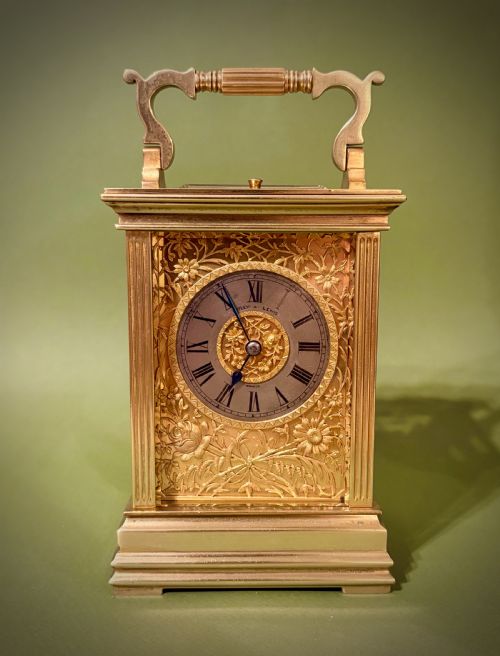
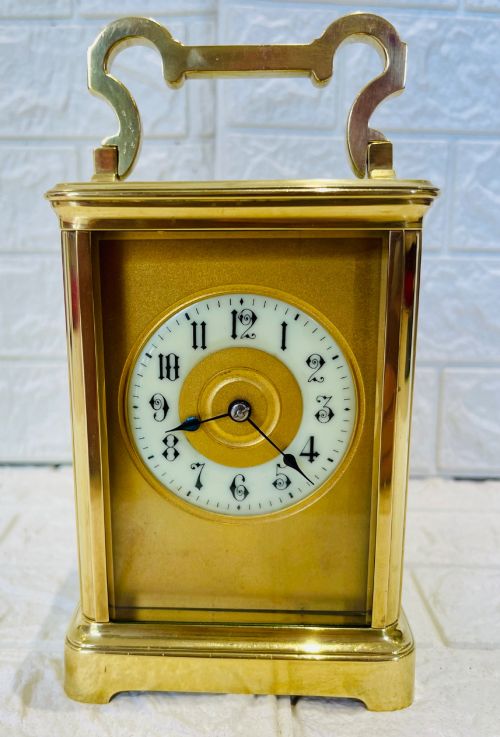
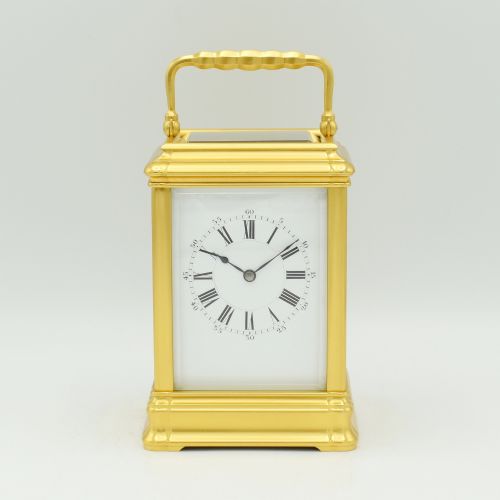
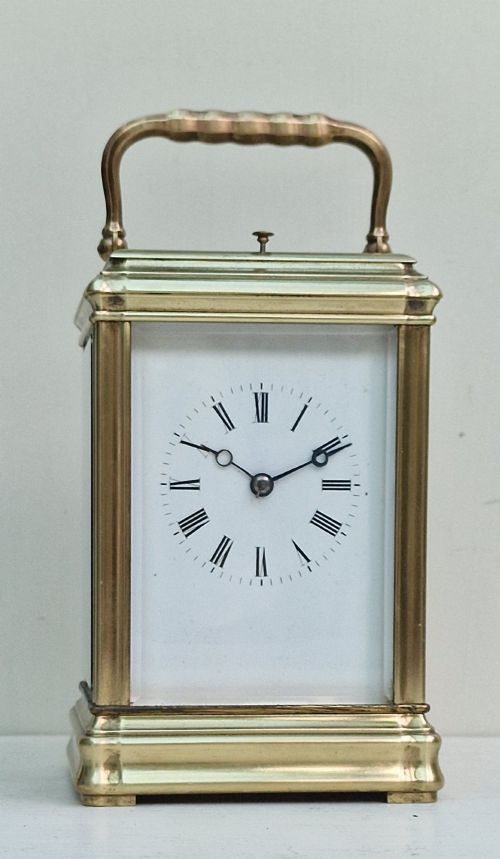
A gilded brass carriage clock combines a portable mechanical timekeeper with a glazed brass housing designed for travel and domestic use. Buyers encounter these primarily in nineteenth-century French variants, spanning periods from the eighteen-fifties through to nineteen hundred, with Victorian and Belle Epoque examples appearing frequently.
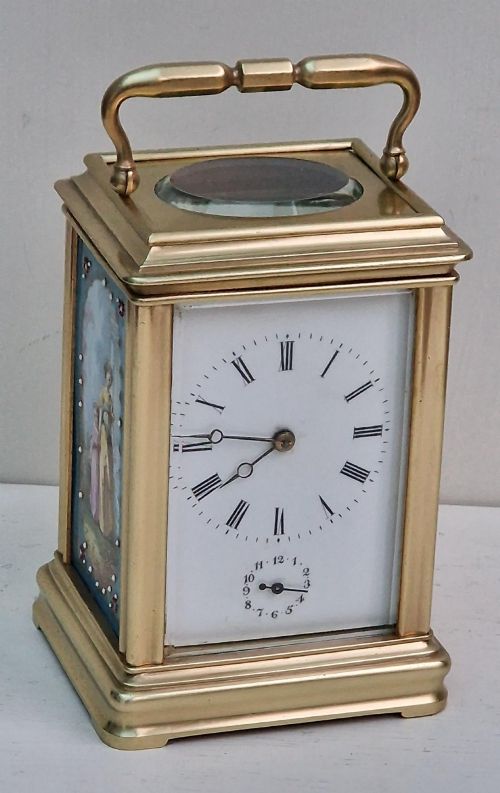
The casing styles range from plain gorge frames to elaborate engraved, chiseled, or enamel-panelled housings. Formats include standard rectangular carriage clocks, smaller bedside models, and four-glass mantel versions, alongside specialised ticking devices with repeating functions or alarms.
Materials and construction
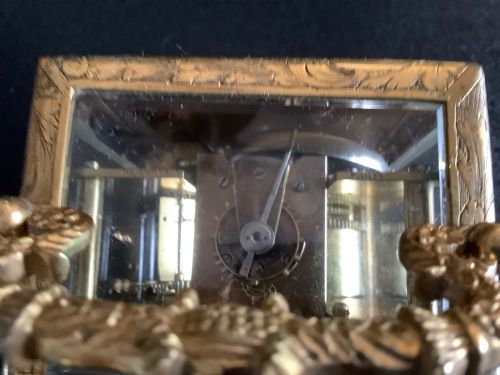
Makers constructed the primary framework from brass, applying surface gilding, ormolu, or gilt bronze to achieve a rich golden lustre. Bevelled glass panels fitted into the top and sides protect the movement while allowing light to reach the internal escapement.
Dials utilise white enamel painted with numerals, often complemented by subsidiary porcelain panels or decorative brass masks. Steel components form the internal gears and springs, housed within robust cases designed to withstand movement.
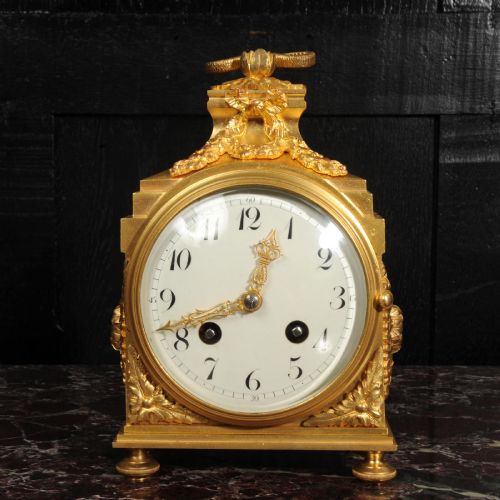
Listings feature brass, gilt bronze, and ormolu housings paired with white enamel dials and bevelled glass panels.
Assessing craftsmanship
Quality separates through the crispness of case casting and the depth of the hand engraving on the brass panels. Superior examples retain their original heavy mercury gilding rather than later plating, and display crisp bevelling on every glass window.
Internal complexity dictates distinction, moving from standard time-only movements to those with striking mechanisms, alarms, repeating functions, or calendar complications. Maker attribution to established French workshops further elevates a piece.
Henri Jacot·C. Detouche Paris·Margaine Of France·SAMUEL MARTI·Drocourt·Paul Garnier·Le Roy of Paris
The Gilded Brass Carriage Clock Glossary
- Gorge case
- A specific rectangular brass case style featuring stepped mouldings to the top and bottom frame. This design defines many nineteenth-century French travel clocks.
- Repeating movement
- A mechanism that chimes the hours and quarters on demand when a button or lever on the case is pressed. This complication required intricate internal gearing.
- Ormolu
- Finely chopped high-karat gold amalgamated with mercury, applied to a bronze base and fired. The process leaves a deep, matte golden finish.
- Pendule d'officier
- An early military-style carriage clock form originally intended for officers on campaign. These often feature distinctive round cases and swing handles.
- Sonnerie
- A complex striking train that automatically chimes the hours and quarters as they pass without requiring manual activation.
Gilded Brass Carriage Clock: Frequently Asked Questions
How do I wind a carriage clock?
Insert the appropriate winding key into the arbors located on the underside or back plate of the movement. Turn the key gently until firm resistance indicates the mainspring is fully tensioned.
Avoid over-winding, as this can strain the internal steel springs. Most standard examples require winding approximately once a week.
What is the difference between petite and grande sonnerie?
A petite sonnerie strikes the hours on the hour and only the quarters when the current quarter passes. A grande sonnerie strikes both the hours and the elapsed quarters at every quarter hour.
Both systems represent high-grade horological engineering. They are typically found in heavier, more complex nineteenth-century French housings.
How do I date a carriage clock?
Examine the style of the case, the layout of the enamel dial, and any maker signatures stamped on the back plate. French pieces from the mid-nineteenth century often feature simpler gorge frames, while late-century examples incorporate elaborate engraved masks or porcelain panels.
Serial numbers stamped inside the movement can sometimes be cross-referenced with known workshop production ledgers.
Why does my clock have a platform escapement?
The platform escapement mounts the balance wheel and hairspring on a small removable platform visible through the glass top panel. This innovation allowed portable clocks to keep accurate time while moving.
Earlier domestic clocks relied on pendulums, which required a stationary surface to operate correctly.