
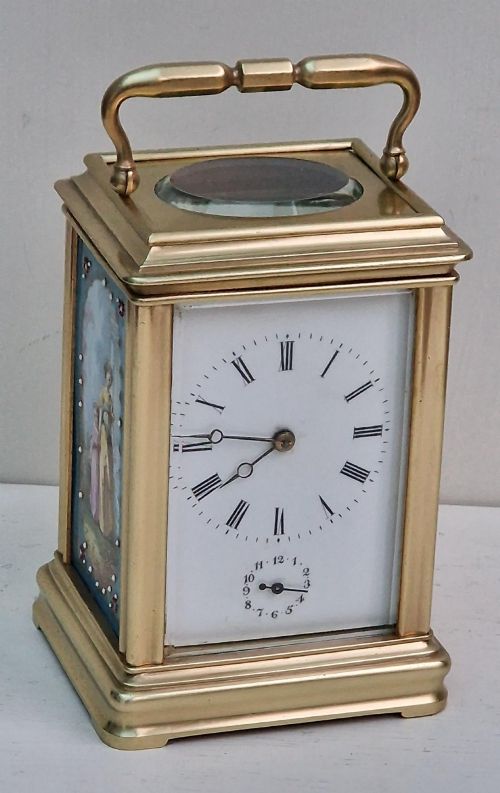


Hand Painted Enamel Clock
These hand painted enamel clock examples offer intricate artistry and precise brass or ormolu framing for domestic interiors.
What they are
A hand painted enamel clock brings together traditional timekeeping and delicate miniature painting from the late nineteenth century. Buyers searching this phrase often encounter carriage clocks, table clocks, and mantel clocks dating from the 1880s and 1890s.
Most pieces seen here originate from French workshops adhering to Victorian, Rococo Revival, or Louis XVI styles. These items combine functional mechanics with ornate bronze, ormolu, porcelain, or alabaster mountings.
Carriage clocks with repeating mechanisms sit alongside small timepieces on bronze plinths and large mantel clocks. Each variation displays distinct painted dial work executed on enamel or porcelain surfaces.
How they were made
Maker workshops utilised heavy metals such as ormolu, gilt brass, bronze, and gilt bronze to form structural cases and plinths. Alabaster and white marble also appear as foundational housing materials for movement mechanisms.
Dials and decorative panels feature hand-painted enamel or porcelain surfaces requiring careful kiln firing. Artisans applied fine pigments to create detailed miniature scenes and numeric markers.
Mechanical assemblies included eight-day bell striking trains and repeating escapements housed within glass-fronted or open bronze frameworks.
Retail Price Guide 2026
Typical UK retail prices for hand painted enamel clock, calculated from the Sellingantiques database of over a million retail prices indexed since 2003. This retail price guide relies exclusively on Sellingantiques data; no external sources or auction records are used, so the figures do not describe the wider market.
Listings feature items from the 1880s and 1890s utilising enamel, porcelain, ormolu, and bronze.
What varies in quality
The refinement of the hand-painted enamel dial sets exceptional pieces apart from standard productions. Fine brushwork and precise pigment application indicate superior artisan skill.
The choice of housing materials influences the overall character and weight of the clock. Solid ormolu and gilt bronze mounts demonstrate greater durability and cost than simpler brass or alabaster alternatives.
The complexity of the internal movement, such as repeating complications or bell striking functions, distinguishes higher-grade carriage and mantel clocks from basic timepieces.
LE ROY & FILS LONDON & PARIS
The Hand Painted Enamel Clock Glossary
- Ormolu
- Gilt bronze mounted decoratively on furniture and clock cases. This technique involves applying a gold amalgam to bronze.
- Carriage clock
- A portable spring-driven timepiece designed for travel during the nineteenth century. These clocks typically feature a glass-panelled brass case and a folding handle.
- Limoges enamel
- Glassy pigment fused to a metal base through firing, associated with French craftsmanship. This technique creates smooth, glossy miniature painted scenes.
- Repeater
- A clock mechanism that chimes the hours and quarters upon pressing a button. This complex addition was valued for checking time in darkness.
- Timepiece
- A clock that indicates the time without striking hours or quarters. These simpler movements focus purely on visual presentation and dial tracking.
Frequently Asked Questions
What is a carriage clock?
A carriage clock is a portable spring-driven timepiece developed for travel in the nineteenth century. They are housed in brass or ormolu frames with glass panels.
These clocks often feature a handle on top and delicate hand-painted enamel dials for daily reading.
How do I wind these clocks?
Winding requires a matching key inserted into the winding squares on the backplate or dial face. Care must be taken not to over-wind the mainspring.
Most surviving examples operate on a weekly cycle or run for shorter durations depending on the movement size.
Where were these clocks made?
The majority of these pieces originate from French workshops operating during the Victorian era. Parisian makers produced many of the ormolu and enamelled carriage clocks.
Retailers in London and Paris often retailed these luxury items to international buyers.
What materials make up the cases?
Cases incorporate metals such as ormolu, gilt bronze, brass, and bronze. Some designs include marble or alabaster plinths for added stability.
Glass panels protect the internal mechanical movements and allow visibility of the escapement.