


Georgian Wrought Iron Copper
Georgian wrought iron copper pieces are utilitarian vessels and fireside accessories shaped by hand to last centuries.
Georgian Wrought Iron Copper
When buyers search for georgian wrought iron copper, they encounter heavy domestic items spanning cookware and fireside containers. These pieces hail from the eighteenth century, the nineteenth century, and the year 1800, representing a period of robust kitchen and hearth equipment.
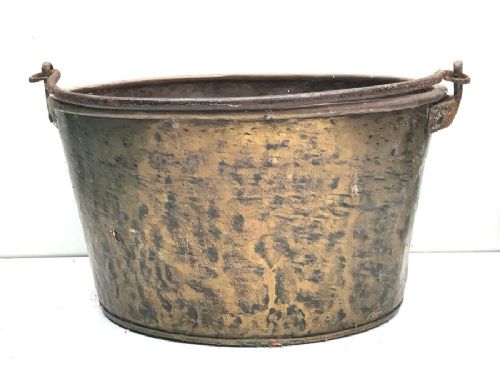
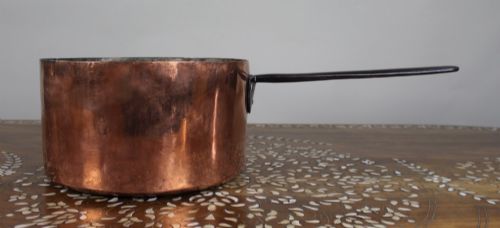
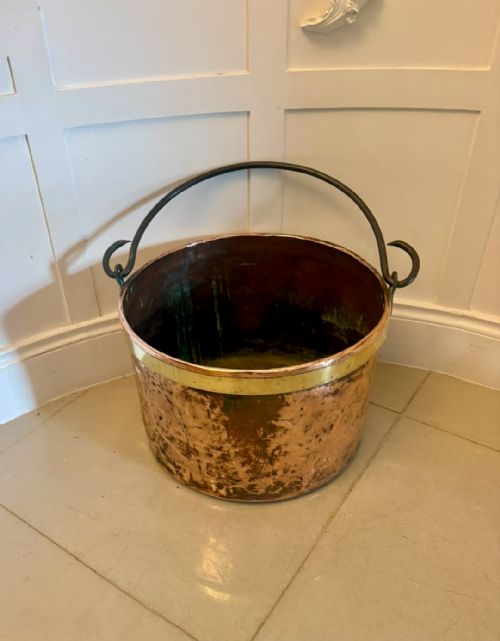
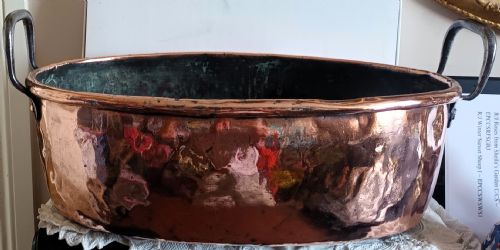
The objects listed on this page comprise cooking pots, large saucepans, cream setting pans, cauldrons, water urns, log bins, and fireside buckets. Most items combine a copper body with iron handles or fittings, utilised for heavy daily labour in domestic kitchens and large hearths.
Kitchenware and cookware dominate the forms, alongside large copper log bins and coal buckets suited to the fireside. Buyers regularly meet substantial pans and cauldrons designed to hold liquids or fuel over open fires.
How they were made
The construction of these items relies on hammered copper sheets joined and shaped by hand into pots, pans, and urns. Wrought iron and iron form the structural handles, lugs, and swinging bails attached firmly to the copper bodies.
Makers occasionally incorporated brass details alongside the dominant copper and iron materials to secure handles and rims. The marriage of wrought iron handles with heavy copper plating provided the strength required for lifting boiling water and hot coals.
The listings on this site combine copper and iron across periods spanning the eighteenth and nineteenth centuries.
What varies in quality
Quality in these domestic objects rests upon the thickness of the hammered copper and the heft of the wrought iron handle. Thicker metal plates endure heavier fires and show greater resilience across centuries of use.
Proportion and scale separate ordinary kitchen vessels from exceptional display pieces like large hanging water urns or substantial log bins. The finesse of the ironwork and the clean shaping of the copper body distinguish finer pieces from plain utilitarianware.
The Georgian Wrought Iron Copper Glossary
- Cauldron
- A large metal pot with a swinging iron handle, designed for boiling contents over an open hearth fire. These heavy vessels saw daily service in large kitchens.
- Cream setting pan
- A wide, shallow copper vessel used in dairies to let cream rise to the surface of milk. These pans require wide flat bases for even cooling.
- Water urn
- A large container fitted with a tap or designed for suspension, used to store and heat water near the fireplace. The hanging varieties allowed hot water access in busy kitchens.
- Wrought iron
- Iron beaten and shaped by hand on an anvil, creating durable handles and fittings with distinct surface textures. This material resists bending under heavy loads.
- Log bin
- A large container placed by the hearth to hold firewood and coal. These sturdy copper buckets combined practical storage with polished metal display.
Georgian Wrought Iron Copper: Frequently Asked Questions
What were georgian copper pans used for?
These heavy copper pans served for boiling, stewing, and general food preparation in large domestic kitchens. Their metal composition allowed for rapid and even heat distribution over open hearths.
Saucepans and cauldrons handled large volumes of liquid, while cream setting pans performed dairy tasks. Every piece was built for heavy physical labour rather than mere display.
How do I care for antique copper?
Antique copper benefits from gentle cleaning to maintain its natural metallic surface without stripping centuries of handling. Avoid harsh chemical abrasives that scratch the softer metal.
Keep the pieces in dry environments to protect the iron handles from active rust. Regular dusting preserves the character of the aged metal.
Are these items safe for modern cooking?
Most of these historic pieces were lined with tin for food safety, which wears away over long periods of use. Cooking requires checking the interior lining condition.
Many buyers choose to display these items as kitchenware or fireside containers instead of daily cooking tools. Their decorative and historical value makes them striking focal points in a room.
How can I date georgian iron and copper?
Dating relies on observing construction methods, handle attachments, and the hammer marks left by the maker. Pieces attributed to the eighteenth century or around 1800 often feature hand-beaten seams joined by dovetailing or early riveting.
Comparing the form to documented kitchenware helps narrow the period. Material thickness and iron shaping also offer clues to the age of the piece.