


Georgian Copper Bucket
A georgian copper bucket brings heavy metalwork and fireside utility together, offering robust containers shaped for coal, logs, and wine.
Georgian Copper Bucket
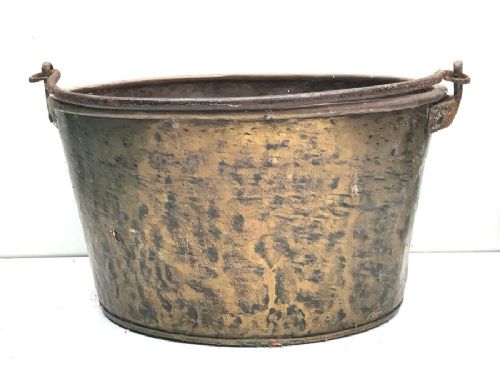
When you search for a georgian copper bucket, you encounter heavy-gauge metal vessels designed primarily for fireside use, holding coal, logs, and peat beside the hearth. These pieces date from the eighteenth century into the nineteenth century, often reflecting George III periods or Victorian country utility.
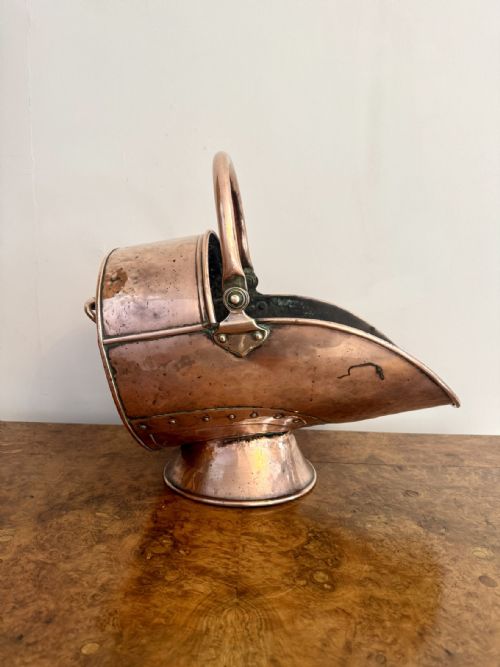
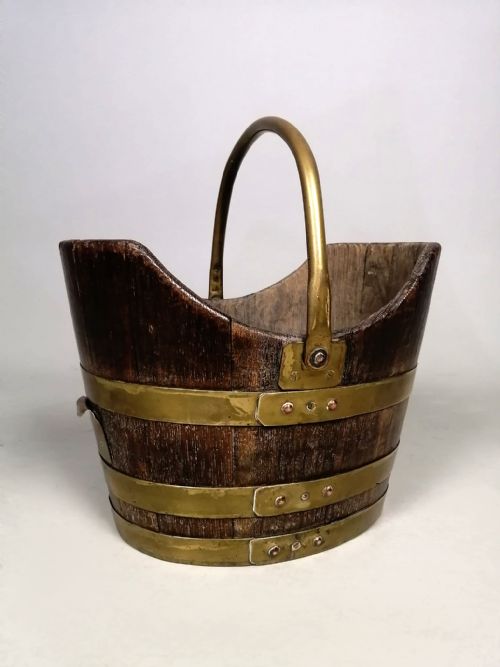
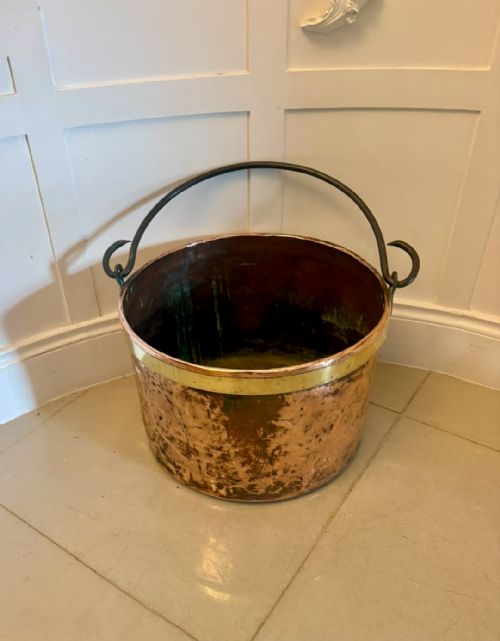
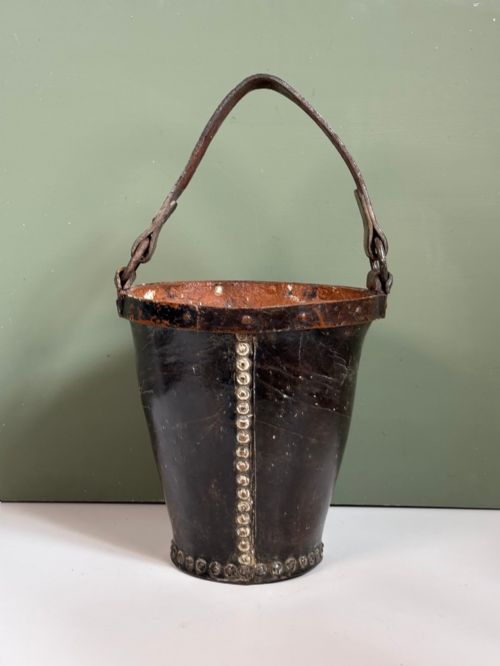
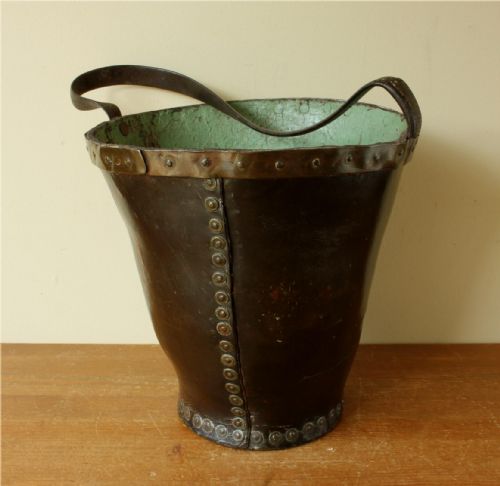
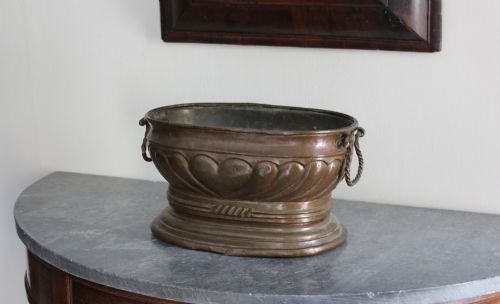
The most common forms on this page include helmet-shaped coal scuttles, round log bins, cauldrons, and wine coolers. Alongside pure metal examples, you will find boiled leather buckets studded with copper and wood-coopered peat buckets with brass bands.
Makers fashioned these utilitarian objects for substantial country houses and domestic interiors, where they served practical duties before transitioning into decorative planters and waste paper baskets.
How they were made
The construction relies heavily on sheet copper beaten and formed into robust bodies, joined by visible rivets that secure the seams. Workshops integrated brass handles, swing bails, and iron mounts, attaching them with sturdy fastenings to bear the weight of heavy fuel.
Leather versions utilise boiled leather strengthened with copper studs, while coopered wooden buckets use oak or walnut staves bound with brass or iron hoops. Metal surfaces show hand-hammered marks from the workshop bench, reflecting period fabrication techniques.
What varies in quality
Quality rests in the thickness of the copper sheet and the integrity of the original joints and handles. Heavy-gauge metal maintains its structural form without excessive denting, while lighter vessels show more distortion from active hearth service.
The presence of matching brass mounts, swing handles, and period fixtures distinguishes superior examples from altered pieces. Original surface patination and honest wear through decades of use separate genuine domestic items from later reproductions.
The Georgian Copper Bucket Glossary
- Coal scuttle
- A container designed to hold solid fuel near a fireplace, frequently formed with a shaped helmet lip for pouring.
- Log bin
- A deep cylindrical vessel used for storing firewood beside the hearth. These pieces often feature brass banding or riveted copper bodies.
- Wine cooler
- A vessel intended for chilling bottles at the dining table, constructed in copper, brass, or silvered copper.
- Boiled leather
- A stiffened leather technique used to create durable water and fire buckets, often reinforced with copper studs.
- Coopered
- A method of construction using wooden staves bound together with metal hoops, typical of peat buckets and tea buckets.
Georgian Copper Bucket: Frequently Asked Questions
What were these buckets used for?
These vessels served practical functions around the home, primarily holding coal, logs, and peat for domestic firesides. Others functioned as wine coolers during dining or served as water buckets.
Over time, many of these containers transition into decorative roles as planters, jardinières, and waste paper baskets within country house interiors.
How do I tell a log bin from a coal scuttle?
A log bin typically presents as a deep, straight-sided or slightly tapered round container designed to hold heavy firewood. These often feature drop handles or heavy brass banding.
A coal scuttle usually incorporates a shaped helmet lip or a hinged scoop mechanism intended for pouring small fuel directly into a grate.
Are leather buckets period pieces?
Leather fire buckets date to the Georgian and Victorian eras, constructed from thick boiled leather and reinforced with copper studs. They originally hung in corridors for quick access during house fires.
Today, surviving examples appear alongside metal vessels as fireside accessories or decorative interior bins.
How should I clean copper buckets?
Living with these pieces involves preserving the dark, warm patination that accumulates over centuries of handling and hearthside use. Most collectors prefer to leave the natural oxidation untouched rather than polishing the metal to a bright shine.
A soft, dry cloth removes dust, while aggressive metal cleaners strip away the historical surface character.