
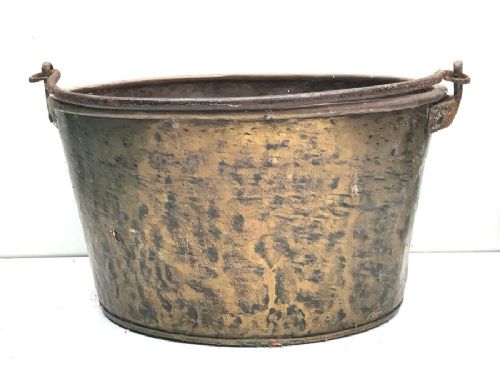


Antique Copper Washing Pan
These heavy metal vessels, known as an antique copper washing pan, bring genuine warmth and industrial heritage into modern living spaces.
Antique Copper Washing Pan
Buyers browsing this selection will most frequently encounter substantial 19th-century copper cooking vessels and dairy pans. These larger forms typically feature generous proportions designed for heavy-duty household tasks rather than delicate display.
Construction and materials
The primary material across these listings is heavy copper, frequently paired with iron, wrought iron, and brass fittings. Makers utilised these durable metals to withstand intense daily use in kitchens and dairies.
Structural elements such as swing handles required robust wrought iron to support the heavy copper bowls when filled. Surfaces display original patina developed through decades of hard service and exposure to hearth environments.
Current listings exclusively feature 18th and 19th-century pieces, utilising copper, iron, wrought iron, brass, and tin in utilitarian forms.
Assessing quality
Quality in these pieces is dictated by the thickness of the metal and the integrity of the original construction. Heavier gauges of copper indicate vessels built for demanding commercial or estate use rather than light domestic tasks.
The preservation of original surface patination significantly influences desirability, as untouched metal surfaces retain their historical character. Furthermore, the presence of original iron handles and fittings adds notable authenticity to the piece.
The Antique Copper Washing Pan Glossary
- Cream setting pan
- A shallow vessel designed for holding milk to allow cream to rise to the surface before skimming. These items often feature wide rims and generous diameters.
- Cauldron
- A large metal pot with a swing handle, traditionally used for boiling over an open fire. They possess deep bellies and sturdy bases.
- Grain measure
- A standardised cylindrical container utilised for bulk dry goods measurement in agricultural settings. These cylindrical vessels often bear numerical stamps indicating capacity or size.
- Patina
- The surface sheen and colour variation developed naturally over decades of use and oxidation. This layer acts as a visual record of the object's age and history.
- Wrought iron
- Iron that has been heated and shaped with tools by a blacksmith, producing a fibrous structure. This material appears on swing handles and structural attachments.
Antique Copper Washing Pan: Frequently Asked Questions
What were antique copper washing pans used for?
These robust vessels served heavy-duty domestic and agricultural functions, ranging from boiling laundry and heating water to dairy processing and large-scale food preparation.
Their substantial capacities made them essential equipment in large households, country estates, and farmhouses where everyday tasks required durable, heat-conductive containers.
How do I clean an antique copper pan?
Most collectors prefer to leave the original patination untouched, as the dark, oxidized surface represents the age and history of the piece.
If you choose to brighten the metal, use a mild, non-abrasive copper cleaner and wash with warm soapy water afterwards, avoiding harsh scouring pads that scratch the surface.
How do I tell Georgian copper from Victorian copper?
Georgian pieces generally date from the 18th century up to eighteen-twenty, often displaying hand-beaten construction marks and simpler, utilitarian forms.
Victorian items from the nineteenth century tend to show more standardised manufacturing techniques while retaining heavy-gauge materials and functional iron handles.
Can I use these old copper pots for cooking today?
While these vessels were originally made for culinary use, antique pieces frequently lack modern food-safe linings and may have absorbed impurities over centuries.
It is best to enjoy them as decorative items, planters, or storage vessels in the home rather than exposing them to modern cooking heat.
How do I style a large copper cauldron at home?
These striking metal vessels work exceptionally well as floor-standing planters for large indoor foliage or as storage bins for logs and blankets.
Positioning them near a fireplace or in a country-style kitchen highlights their warm metallic tones and historical texture.