
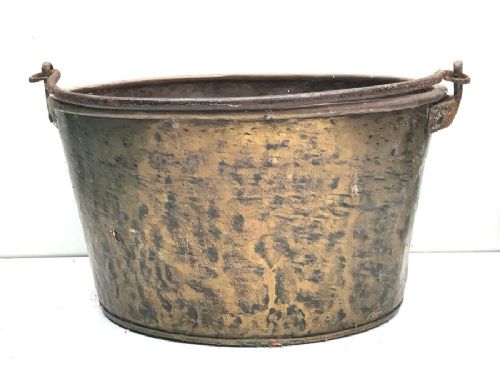


Georgian Copper Cauldron
These heavy georgian copper cauldron pieces bring warmth and robust utility to a fireside, prized for their rich metal tones and honest construction.
Georgian Copper Cauldron
When you search for a georgian copper cauldron, you encounter sturdy vessels originating primarily from the eighteenth century and the early nineteenth century. These items include large fireside log bins, heavy coal scuttles, and deep cooking pots fashioned for domestic service.
The version you are most likely to meet on this page is a substantial domestic container, often adapted over time from utilitarian kitchen cookware to a fireside log bucket. They appear in varied forms, including lidded pots, swing-handled brass pans, and riveted apple butter cauldrons.
Makers designed these objects for heavy labour, utilising durable metals to withstand intense heat and constant handling. Their enduring appeal lies in this combination of industrial utility and rich decorative presence within a modern interior.
Materials and construction
The primary material is heavy sheet copper, shaped by hand and joined using traditional techniques such as dovetailed seams and visible riveting. These construction methods ensure structural integrity, allowing the metal to hold substantial weight without failing.
Makers incorporated contrasting metals for strength and handling, pairing the soft copper body with durable wrought iron handles, iron swing bail mounts, and occasional brass fittings. The interaction between the warm reddish copper and the dark forged iron defines their material character.
Several heavy pots bear the scars of open hearth flames, reminding us they once bubbled away behind dusty tavern doors.
Assessing quality
Quality rests in the thickness of the metal sheet and the integrity of the hand-beaten form. Superior examples display clean dovetail seams and robust iron handles that remain securely fixed to the body.
The presence of early repairs or heavy wear tells a story of long utilitarian use without necessarily diminishing the piece. Collectors look for substantial scale and honest patination over excessive polishing.
The Georgian Copper Cauldron Glossary
- Cauldron
- A deep round pot with a large mouth and a handle, traditionally used over an open fire for cooking or heating water.
- Dovetailed seam
- A joint method where interlocking fingers of metal are hammered together and sealed, often reinforced with brazing.
- Log bin
- A large container placed beside a fireplace to store firewood, a common secondary use for retired agricultural and domestic copper pots.
- Wrought iron
- Tough, malleable iron worked by hand while hot, commonly used for the sturdy drop handles and mounts on heavy vessels.
Georgian Copper Cauldron: Frequently Asked Questions
How were these cauldrons used originally?
These vessels served demanding domestic tasks such as boiling water, preparing large quantities of food over hearth fires, or rendering fruit preserves like apple butter.
Over decades of service, many transitioned from the kitchen to the hearthside as practical containers for coal and firewood.
Can I use a copper cauldron for firewood?
A sturdy georgian copper cauldron makes an ideal fireside companion for holding logs, kindling, or coal scuttles. Their robust iron handles and thick metal bases easily withstand the daily weight of dry timber.
Ensure the interior is clean and free of rough edges to protect your flooring when moving wood near the hearth.
How do I clean antique copper?
Most collectors prefer to maintain a warm, aged patina rather than polishing the metal to a bright mirror finish. Gentle washing with mild soap and warm water removes dust without stripping the historic surface.
Avoid harsh chemical abrasives that can permanently damage the soft copper and erase the character accumulated over centuries.
How do I tell an 18th-century piece apart?
Look for hand-beaten surfaces, dovetailed seam construction, and heavy wrought iron fittings rather than uniform modern machine rolling. Eighteenth-century vessels often display irregularities that reveal the hand of the metalsmith.
Examine the mounting points for the handles, as earlier examples utilise hand-forged rivets and distinct joining techniques.