
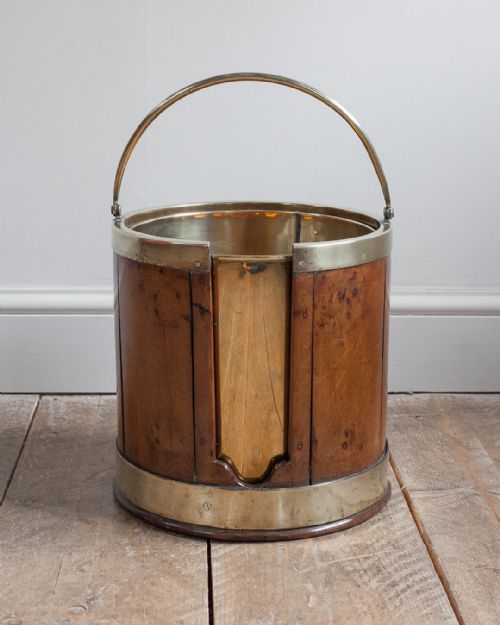


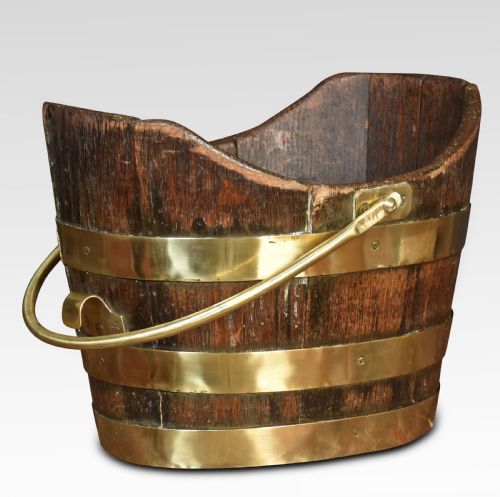


Georgian Wooden Peat Bucket
These georgian wooden peat bucket examples are functional hearth vessels designed for fuel storage, offering tactile warmth and period character to any fireside.
Georgian Wooden Peat Bucket
A georgian wooden peat bucket serves primarily as a fireside accessory, originating in domestic settings where fuel required tidy containment near the hearth.
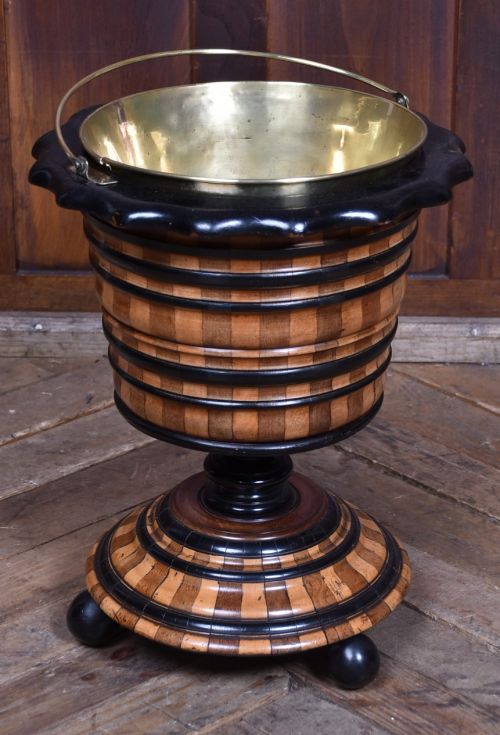
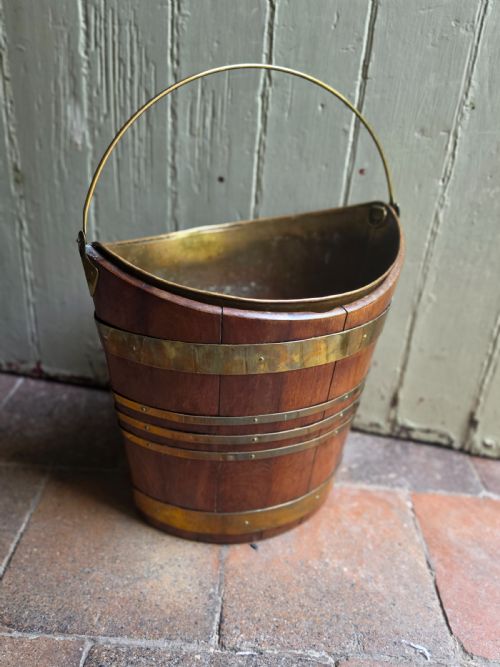
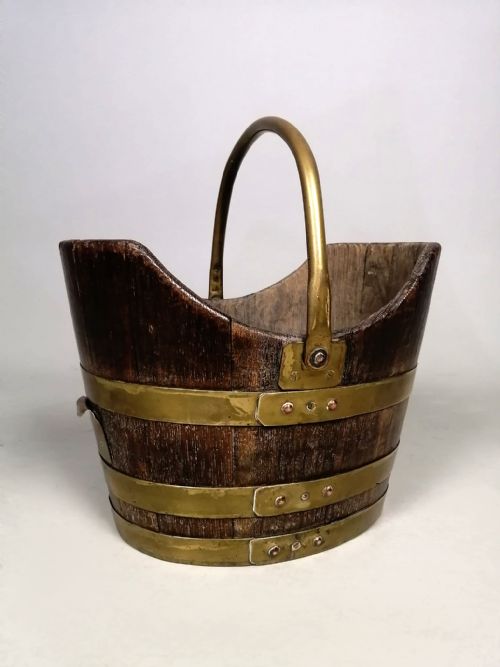
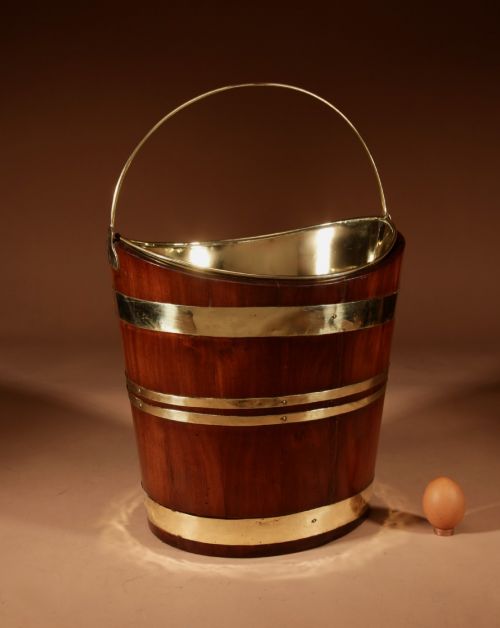
The selections available here span the eighteenth and nineteenth centuries, taking the form of traditional peat buckets, plate buckets, and boat-shaped tea stoves or jardinières.
Many items reflect Dutch traditions or George III styles, utilising timber construction reinforced with metal work to hold fuel or plants.
Build and Material Standards
The standard of timber selection and the precision of the cooperage determine the initial build quality, with finely figured mahogany and dense walnut marking the upper tier.
Originality of the metal bands, fixings, and liners dictates the historical integrity of each piece, distinguishing untouched examples from later adaptations.
Listings incorporate mahogany, oak, walnut, fruitwood, and mixed hardwoods combined with brass and iron bands.
The Georgian Wooden Peat Bucket Glossary
- Coopered
- Constructed using narrow wooden staves bound together by metal hoops, similar to barrel-making techniques.
- Teestoof
- A Dutch footwarmer or small stove container often adapted or shaped similarly to small peat vessels.
- Jardinière
- An ornamental pot or stand for holding plants or flowers, a common alternative function for these vessels.
- Plate bucket
- A deep cylindrical container traditionally used for transporting or storing dining plates rather than fuel.
Georgian Wooden Peat Bucket: Frequently Asked Questions
What were peat buckets used for?
These vessels held dry peat or coal beside the hearth for domestic fires.
They kept the fuel tidy and accessible within the living quarters.
How do I style a peat bucket at home?
Place them beside a fireplace as intended, or repurpose them to hold magazines or large indoor plants.
Their timber tones complement both traditional and contemporary interiors.
Are these buckets waterproof?
Original examples generally feature metal liners if intended to hold damp materials like plants.
Unlined wooden staves may leak if exposed to standing water directly.
How do I tell an 18th-century bucket apart?
Eighteenth-century pieces typically exhibit specific timber ageing, hand-beaten brass bands, and period construction methods.
Later revival pieces often display machine-rolled metalwork and lighter secondary woods.