

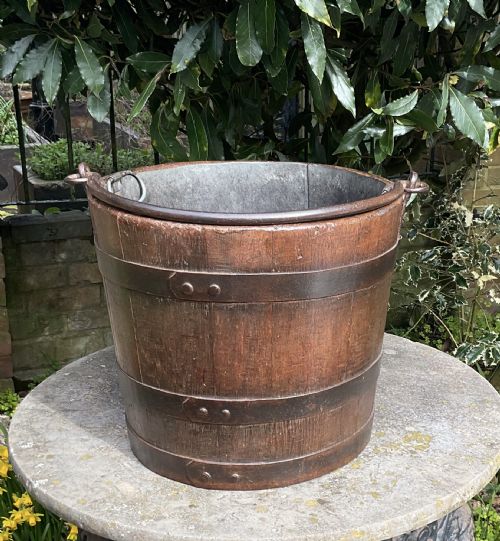


Brass Liner Bucket
These brass liner bucket pieces bring period character to firesides and reception rooms, offering practical containment for fuel or plants with enduring material warmth.
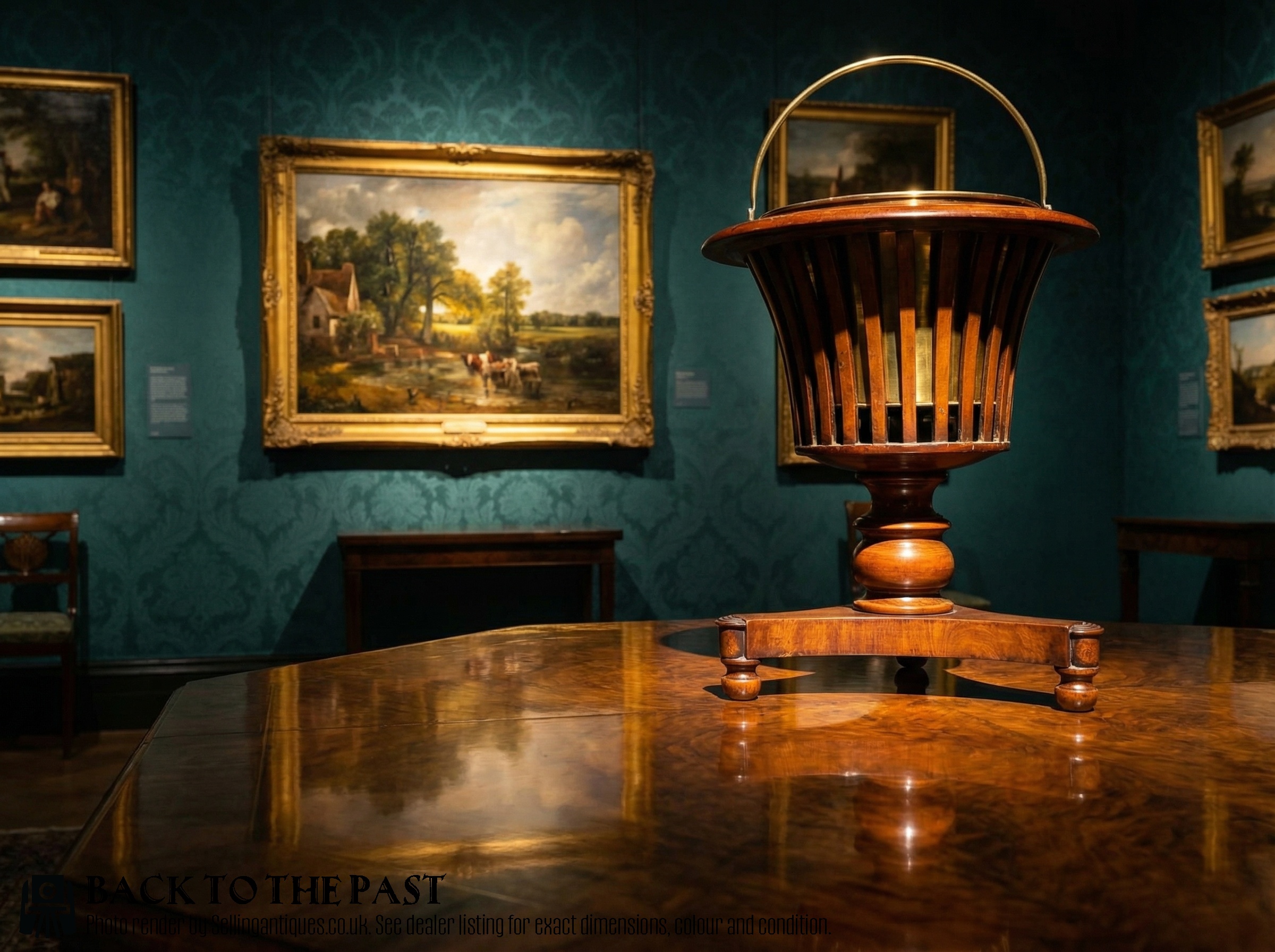
Brass Liner Bucket
When you search for a brass liner bucket, you encounter versatile vessels spanning the Georgian, Victorian, and Edwardian eras, encompassing both fireside accessories and decorative jardinieres.
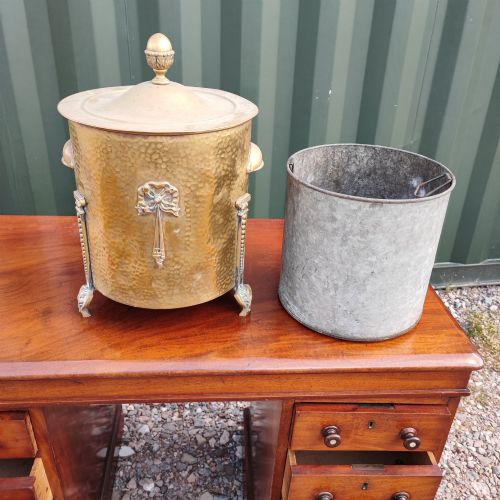
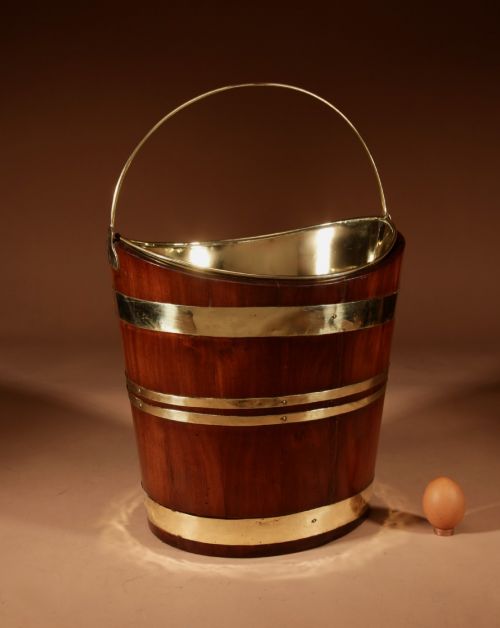
The evidence shows forms ranging from coopered oak and mahogany tea stoves to boat-shaped peat buckets and metal log bins, with liners intended for containment.
You are most likely to meet 19th-century and Victorian examples in timbers such as mahogany, oak, and walnut, often paired with brass bands and fittings.
Materials and construction
Maker construction relies heavily on traditional coopering techniques, binding solid woods like oak, mahogany, and walnut with metal hoops.
Brass is utilised extensively for structural bands, handles, feet, and internal drop-in liners, providing a durable contrast to dark timber bodies.
Secondary elements include iron, ebonised wood, and galvanised metal, particularly within functional hearthside coal bins and log baskets.
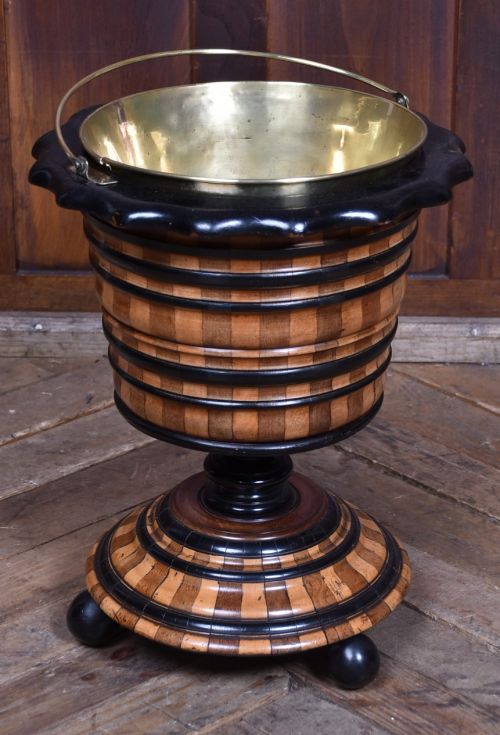
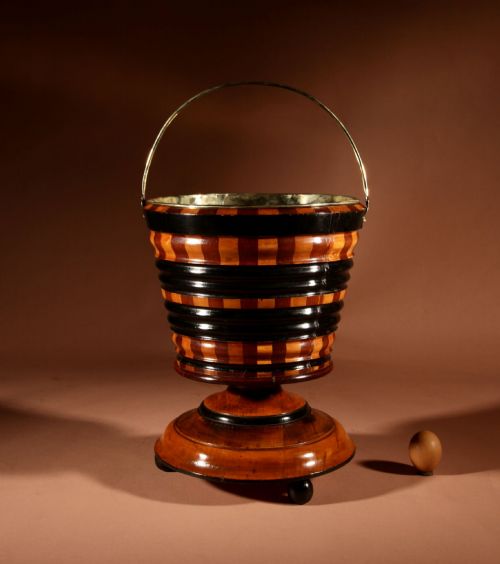
Historic Dutch peat buckets occasionally double as tea stoves, proving that historical heating accessories possessed remarkably adaptable ambitions.
Distinctions in quality
Quality rests on the integrity of the timber selection and the precision of the coopered staves, where tighter joints indicate superior craftsmanship.
The weight and gauge of the brass liner and its mountings distinguish utilitarian pieces from finer decorative wine coolers and tea stoves.
Proportion and decorative detail, such as spindle galleries or finely cast handles, separate standard utilitarian containers from exceptional examples.
The Brass Liner Bucket Glossary
- Coopered
- Constructed from curved staves of wood joined together edge-to-edge and bound with metal hoops, much like a traditional barrel. This method provides robust structural strength for holding fuel or moisture.
- Teestoof
- A Dutch term for a tea stove or foot warmer, frequently adapted as a small bucket or jardiniere. These often feature pierced or solid wooden bodies with internal metal vessels.
- Purdonium
- A specific Victorian term for a coal box or scuttle designed to store fuel beside the fireplace. They typically incorporate an integrated shovel and a removable metal liner for cleanliness.
- Jardiniere
- An ornamental pot or receptacle, usually ceramic or metal-lined, designed to hold live plants or flowers. In period pieces, these frequently share forms with coal and peat buckets.
- Schuitje
- A boat-shaped vessel or container, sometimes referenced in descriptions of peat buckets. The distinctive hull-like curve offers stability and visual elegance.
Brass Liner Bucket: Frequently Asked Questions
What were these buckets originally used for?
These vessels served diverse domestic functions, ranging from holding peat and coal for firesides to cooling wine or housing indoor plants.
Many examples functioned as tea stoves or jardinieres, adapting easily between utility and ornamental display within period reception rooms.
How do I care for the brass and timber?
Maintain the timber surfaces with appropriate wax polishes to preserve the finish of the mahogany, oak, or walnut without building up heavy residues.
Clean the internal brass liners carefully depending on whether you prefer a bright polished finish or a settled historical patina.
Can I use them as planters today?
The presence of original metal liners makes many of these pieces suitable for holding potted plants or floral arrangements.
Ensure that you protect interior surfaces from prolonged standing moisture if the historical liner shows signs of wear or separation.
How do I distinguish Georgian from Victorian pieces?
Georgian and Regency pieces tend to favour refined mahogany and walnut construction with restrained brass banding and classical proportions.
Victorian and Edwardian items often introduce broader material varieties, including ebonised wood, galvanised components, and more robust coal purdoniums.