

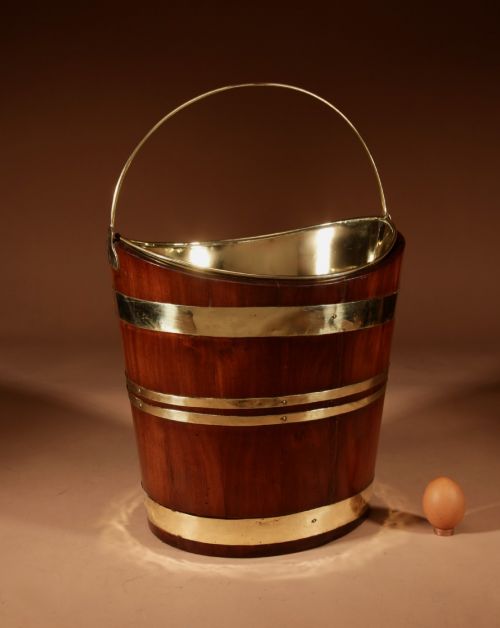
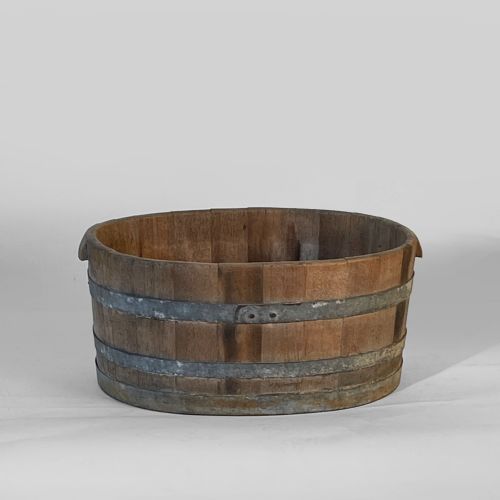

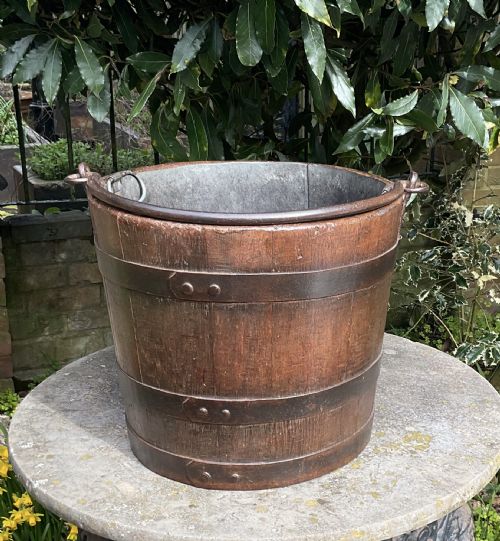


Wooden Wine Tub
A wooden wine tub brings period craftsmanship into a room, serving as a versatile container for plants, ice, or bottles.
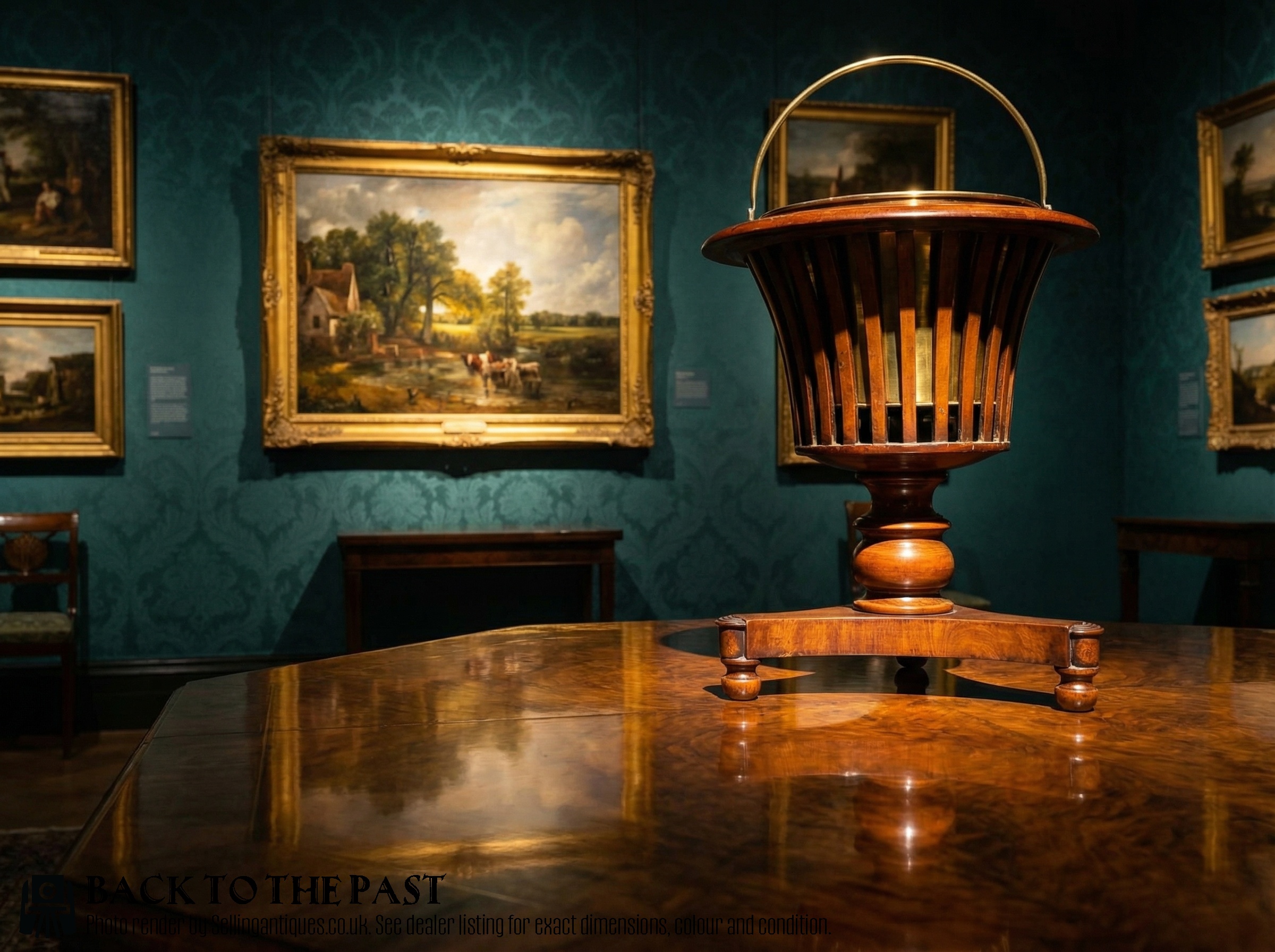
Wooden Wine Tub
A wooden wine tub encompasses coopered vessels, cellarettes, and buckets originating from the Georgian, Edwardian, and nineteenth-century periods. These items were originally built to hold bottles, cool wine, or store peat, evolving over time into decorative planters and jardinières.
The versions most frequently found on this page are mahogany or oak pieces featuring brass bands, along with coopered pine and walnut examples from the eighteenth and nineteenth centuries.

What varies in quality
The standard of a wooden wine tub depends largely on the selection of timber and the precision of the coopering work. Finely figured mahogany and well-fitted staves indicate superior craftsmanship.
Original metal mounts, such as brass bands and drop handles, alongside intact interior liners, elevate the integrity of the piece compared to later replacements.
Lister and Co
The Wooden Wine Tub Glossary
- Coopered
- Constructed from wooden staves bound together with metal hoops, a method traditionally used for barrels and buckets.
- Cellarette
- A lockable container or box designed to hold wine bottles, often standing on legs or a dedicated base.
- Jardinière
- An ornamental pot or stand used for holding plants and flowers, a common later adaptation for these vessels.
- Treen
- Small handmade wooden domestic objects and utensils, representing a category of turned or carved items.
- Schuitje
- A boat-shaped vessel or container, sometimes referenced in descriptions of tea stoves or peat buckets.
Wooden Wine Tub: Frequently Asked Questions
How were wooden wine tubs used historically?
These vessels were kept in dining rooms to chill wine bottles in ice or water during meals. Some variations held peat near the hearth or served as storage.
Over time, many of these containers transitioned into decorative planters or jardinières for domestic interiors.
Can I use an antique tub for plants?
Many examples are suitable for holding plants, particularly those equipped with metal or zinc liners. Care should be taken to protect antique wood from excess moisture.
Checking for a secure liner helps preserve the interior staves from water damage during regular plant watering.
How do I identify a Georgian piece?
Georgian pieces typically feature dense mahogany timber, hand-cut dovetails, and substantial brass binding. The proportions reflect the classical furniture designs of the eighteenth century.
Examining the construction methods underneath reveals hand-tool marks consistent with period workshop practices.
What is a coopered oyster bucket?
An oyster bucket is a stave-built wooden container originally intended for gathering or serving oysters. They share construction techniques with wine coolers but often feature simpler forms.
These pieces demonstrate the utilitarian side of nineteenth-century coopering before becoming decorative items.