





Cabriole Leg Wine Cooler
A cabriole leg wine cooler is a formal serving piece designed for chilling bottles at table, combining structural grace with practical function.

Cabriole Leg Wine Cooler
A cabriole leg wine cooler is a formal serving piece designed for chilling bottles at table, combining structural grace with practical function. When searching this phrase, buyers encounter examples originating primarily from the Georgian and Victorian eras, alongside Edwardian interpretations and Anglo-Indian colonial pieces. The forms span distinct types such as cellarettes, jardiniere stands, and planters, often sharing the characteristic curved support.
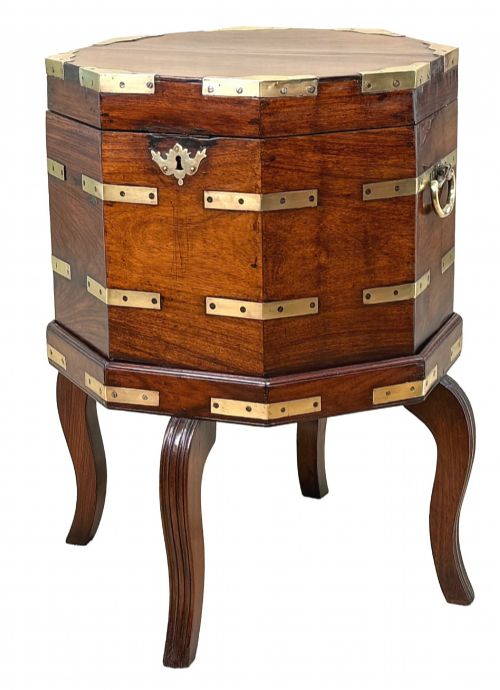
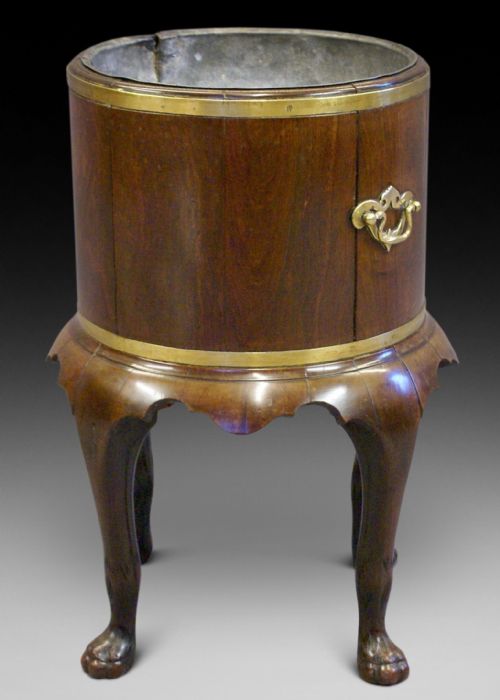
The version most frequently met on this page is the Georgian mahogany wine cooler, frequently dated to the eighteenth century. These pieces demonstrate the enduring popularity of rich timber combined with curved supports. Alongside these traditional forms, buyers also find burr walnut marquetry examples and occasional jardiniere tables serving the same function.
How they were made
Cabinet makers utilised dense timbers such as mahogany, padouk, and burr walnut to construct the body of each piece. These woods were chosen for durability and rich grain patterns, frequently enhanced through marquetry inlay or box tree details.
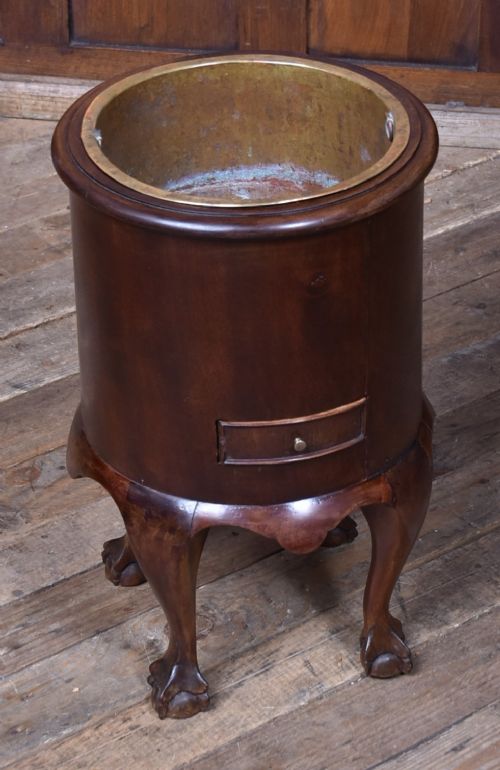
Internal linings of zinc or metal were fitted to hold ice and water securely for chilling wine. Exterior mounts of brass and ormolu provided structural reinforcement and decorative contrast to the timber.
Cabriole Leg Wine Cooler Retail Price Guide 2026
Typical asking prices for cabriole leg wine cooler among the pieces listed under this phrase on Sellingantiques today, from the lower quarter to the upper quarter. They describe what is for sale here now, not the wider market.
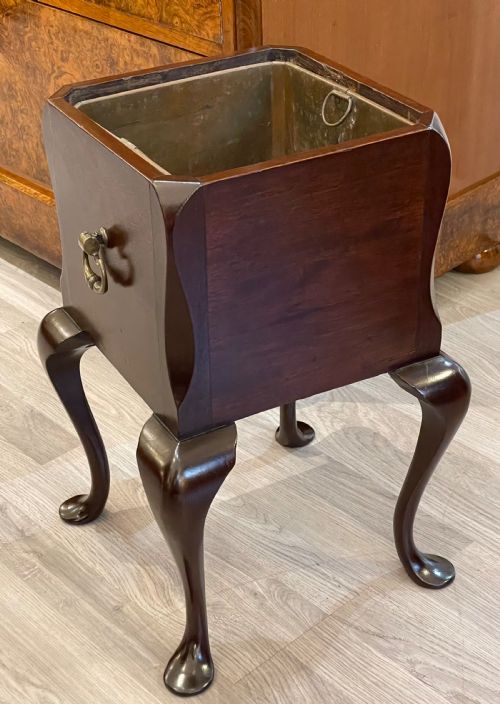
Object forms include traditional cellarettes alongside jardiniere stands and planters fitted with zinc or metal linings.
What varies in quality
The refinement of the carving on the cabriole legs sets the finest examples apart from standard workshop production. Smooth transitions from the knee to the foot demonstrate the skill of the maker.
The selection and matching of timber veneers, particularly on burr walnut and marquetry pieces, dictate the visual depth of the exterior. Subtle figuring and precise inlay indicate superior craftsmanship.
The Cabriole Leg Wine Cooler Glossary
- Cabriole leg
- A furniture support that curves outward at the knee and inward at the ankle, mimicking animal limbs. This form became central to eighteenth-century design.
- Cellarette
- A lockable container used for storing and chilling wine bottles in dining rooms. These pieces often sat beneath sideboards or stood independently on legs.
- Marquetry
- The art of applying decorative pieces of veneer to a structure to form intricate designs. Craftsmen utilised various coloured woods to create pictorial patterns.
- Ormolu
- Gilded bronze mounts applied to furniture for decorative enrichment. This technique added metallic contrast to dark wooden surfaces.
- Jardiniere
- An ornamental stand or receptacle designed to hold plants and flowers. Some iterations doubled in function as wine coolers.
Cabriole Leg Wine Cooler: Frequently Asked Questions
What is a cabriole leg wine cooler?
A cabriole leg wine cooler is a specialised container designed to hold wine bottles on ice during formal meals. These pieces are elevated on curved legs that provide both structural support and decorative elegance.
They appear across several historical periods, most notably the Georgian and Victorian eras, reflecting shifts in dining customs and interior decoration over time.
How were these coolers used historically?
These pieces were positioned near the dining table to keep wine bottles chilled and accessible during long meals. Servants would load the interior with ice and water to lower the temperature of the contents.
Beyond functional utility, they served as indicators of social status within prosperous households, showcasing fine cabinet making and costly imported timbers.
What materials were used in their construction?
Cabinet makers built the primary bodies using durable hardwoods such as mahogany, padouk, and burr walnut. These timbers provided strength and rich natural grain patterns.
Interiors typically featured metal or zinc linings to contain water and ice, while exterior surfaces occasionally incorporated brass mounts and marquetry inlay.
How do I distinguish between periods?
Georgian examples often display robust proportions in mahogany with carved cabriole supports, reflecting mid-eighteenth-century aesthetics. Victorian and Edwardian pieces introduce alternative woods like burr walnut and incorporate marquetry or different revival styles.
Examining the construction methods, interior metalwork linings, and secondary timbers helps establish the likely period of manufacture.