


Georgian Slatted Stand
These georgian slatted stand pieces are functional items built from mahogany and walnut, offering a practical way to hold magazines or plants in a traditional interior.
Georgian Slatted Stand
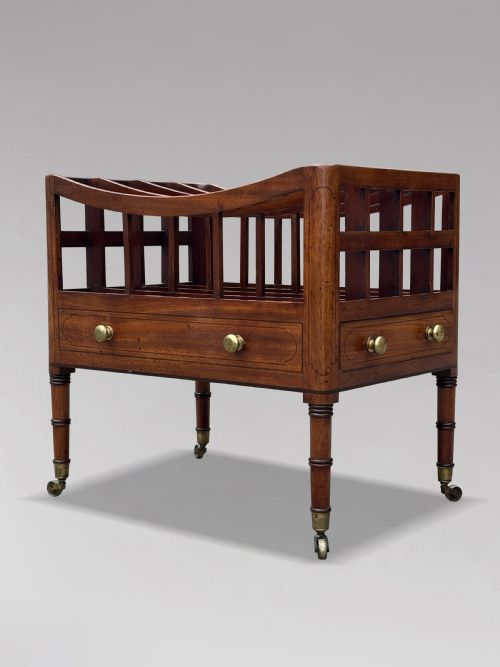
A georgian slatted stand typically takes the form of a mahogany or walnut canterbury, featuring open divisions designed to hold papers or folios. These pieces often include a low drawer beneath the slatted section, resting on short turned legs or castors.
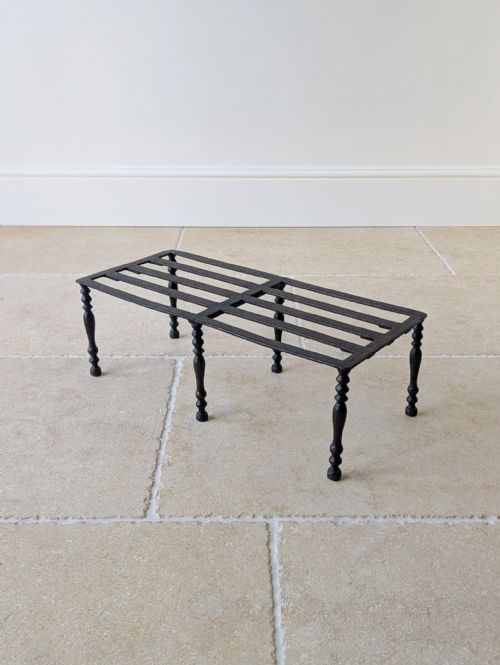
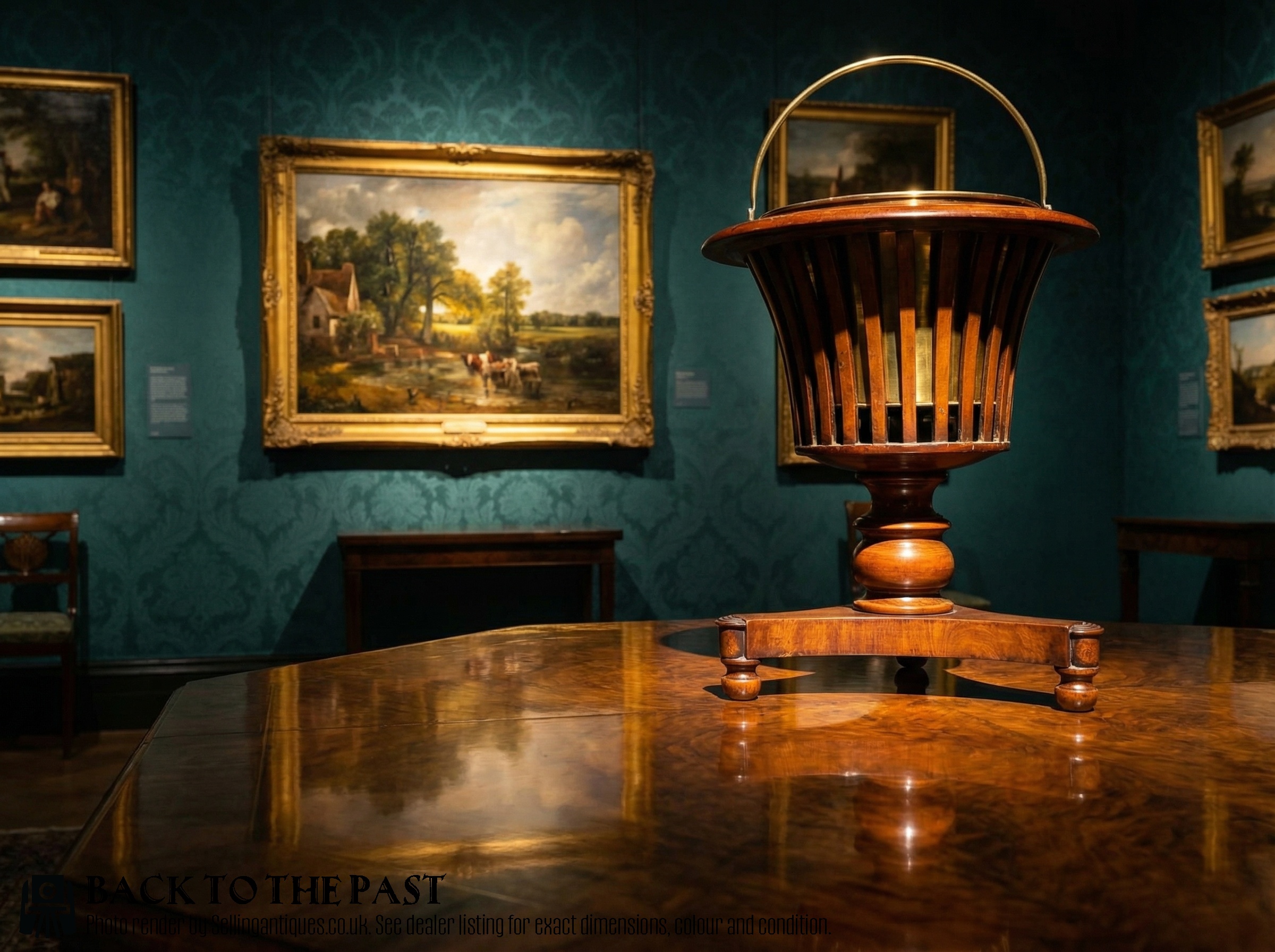
Buyers also encounter related forms under this search phrase, including boat-shaped canterburys, tea stoves, jardinières, hearth footmen in wrought iron, and pine food cupboards. The range covers domestic furniture from the eighteenth century through the Regency period.
Examples on this page span from country-house vernacular pieces in pine and wrought iron to finer Sheraton-period mahogany designs. While most date from the Georgian and Regency eras, occasional later interpretations appear.
Materials and construction
Makers relied heavily on solid mahogany and walnut for the primary structure of canterburys and jardinières, utilising timber thickness to provide stability for the slatted partitions. Pine appears in vernacular items such as food cupboards, where utility governed the choice of wood.
Brass fittings, including castors and handles, feature on many mahogany and walnut items, allowing these functional stands to move easily across carpets and floors. Wrought iron defines the hearth footmen, shaped by hand to withstand high temperatures.
Wrought iron hearth footmen brought a touch of sturdy culinary ambition right up to the eighteenth-century drawing-room fender.
Assessing quality in slatted stands
Quality reveals itself in the crispness of the turning on the legs and the neatness of the joinery where the vertical slats meet the base. Finer pieces demonstrate careful timber selection, with figured mahogany grain matched across the main body and drawer fronts.
Proportion and restraint distinguish better examples from simpler ones, particularly in how the divisions balance the lower section. Original brass castors and intact internal divisions elevate the standing of a piece considerably.
The Georgian Slatted Stand Glossary
- Canterbury
- A low stand with slatted or railed divisions, used originally for holding sheet music or books. It frequently incorporates a single drawer at the base.
- Jardinière
- An ornamental stand or container designed to hold growing plants or flowers. In this selection, examples appear in walnut and mahogany dating to the Regency period.
- Sheraton
- A neoclassical furniture style associated with the late eighteenth century, characterised by straight lines, tapered legs, and subtle inlay. Pieces from this period often display refined proportions.
- George III
- The period of British history from 1760 to 1820, encompassing major developments in cabinet making. Furniture from this era often utilises high-quality mahogany.
- Regency
- The stylistic period spanning the early nineteenth century, known for bolder forms and classical architectural motifs. Canterburys from this time often adopt boat shapes.
Georgian Slatted Stand: Frequently Asked Questions
What was a canterbury used for?
A canterbury served as a moveable stand for holding sheet music, folios, or books near a piano or seating area. The slatted divisions kept papers upright and sorted for easy access.
Over time, owners also utilised them to store newspapers and magazines, a function that continued well into the twentieth century.
How do I date a mahogany canterbury?
Dating relies on examining the secondary timbers, the style of the turning on the legs, and construction details like dovetailing in the drawer. Earlier pieces from the eighteenth century typically feature hand-cut joints and dense, heavy mahogany.
Later Regency and nineteenth-century examples often introduce bolder forms, such as boat-shaped bodies, or simpler turned supports without sophisticated carving.
Can I use a jardiniere for plants?
A period jardinière was designed to hold potted plants or floral arrangements within interior spaces. Lining them properly helps protect the historic wood from moisture.
Careful placement away from direct heat sources ensures the antique timber and polish remain stable over time.
What is the difference between a footman and a canterbury?
A footman is a wrought iron stand used by the hearth for warming plates or kettles beside an open fire. It belongs to the category of hearthware rather than furniture.
A canterbury is a wooden stand with slats for holding papers and sits in a living room or parlour, serving an entirely different domestic purpose.