

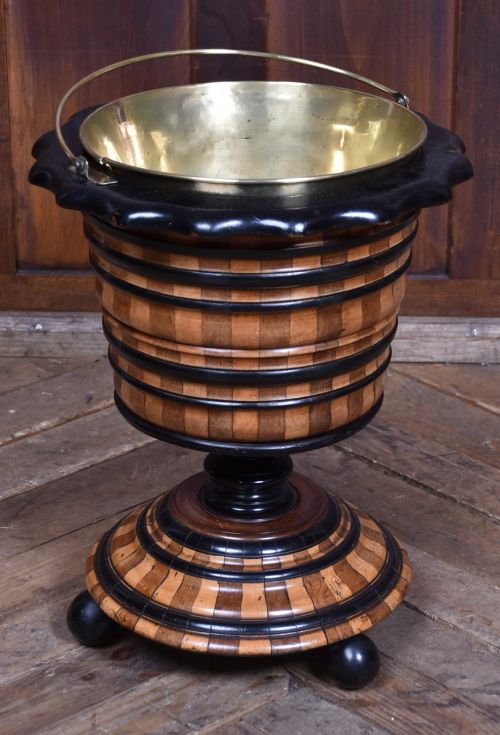


19th Century Peat Bucket
These 19th century peat buckets are practical fireside vessels made to hold fuel, offering tactile warmth and texture to a room.
19th Century Peat Bucket
A 19th century peat bucket serves as a traditional fireside container designed for holding peat or embers. These functional vessels bring historical texture and warmth directly to a hearth setting.
The pieces appearing on this page span the 19th century, including examples dated around 1860. Styles range across Georgian, Dutch Colonial, and Dutch Traditional forms.
Object types include specific fireplace accessories, fireside buckets, and general buckets. Collectors frequently encounter variations such as the well-shaped Dutch teestoof bucket.
How they were made
Maker construction relies on traditional timber selection, utilising materials such as mahogany, walnut, ebony, fruitwood, and oak. Coopered techniques shape these woods into sturdy, curved cylindrical vessels suitable for heavy use.
Metal components play an essential role in structural reinforcement and decoration. Brass handles, bands, and spindles are integrated alongside other unstated metals to secure the wooden staves.
19th Century Peat Bucket Retail Price Guide 2026
Typical asking prices for 19th century peat bucket among the pieces listed under this phrase on Sellingantiques today, from the lower quarter to the upper quarter. They describe what is for sale here now, not the wider market.
Materials documented across these listings include brass, mahogany, walnut, ebony, metal, oak, and fruitwood.
What varies in quality
Quality rests in the harmony between timber selection and metalwork integration. Richly grained woods like mahogany and ebony paired with substantial brass banding indicate superior construction.
Regional styling and decorative restraint define the finer examples. Well-shaped coopered bodies with balanced proportions separate standard utility vessels from more refined domestic pieces.
The 19th Century Peat Bucket Glossary
- Coopered
- A construction method utilising wooden staves bound together with metal hoops to form a watertight or sturdy vessel. This technique is standard for round wooden buckets.
- Teestoof
- A Dutch term referring to a type of foot stove or heating container used near the hearth. These pieces often feature specific cultural design traits.
- Spindle
- A turned piece of wood forming part of an openwork or decorative gallery on a bucket. These elements add architectural detail to the rim or body.
- Staves
- The narrow vertical strips of wood fitted together to make the sides of a coopered bucket. The quality of their taper dictates the vessel's overall shape.
19th Century Peat Bucket: Frequently Asked Questions
What were 19th century peat buckets used for?
These vessels served a primarily practical purpose beside the hearth, holding blocks of peat or glowing embers for domestic heating.
Over time, their sturdy construction and appealing materials transitioned them into decorative interior accessories.
How do I live with a peat bucket?
Place the bucket near a fireplace or in a reception room to ground the space with historical texture and natural wood tones.
They also function effectively as umbrella stands or planters when lined appropriately.
How can I tell Dutch styles apart?
Dutch colonial and traditional buckets often incorporate distinctive timbers like ebony and walnut alongside characteristic form shapes such as the teestoof.
British and Irish variants typically rely on mahogany, oak, or fruitwood paired with heavy brass banding.
What materials should I look for?
Common timbers include mahogany, walnut, ebony, fruitwood, and oak, frequently paired with brass mounts and handles.
Combinations of contrasting woods often signal higher decorative ambition in the piece.