

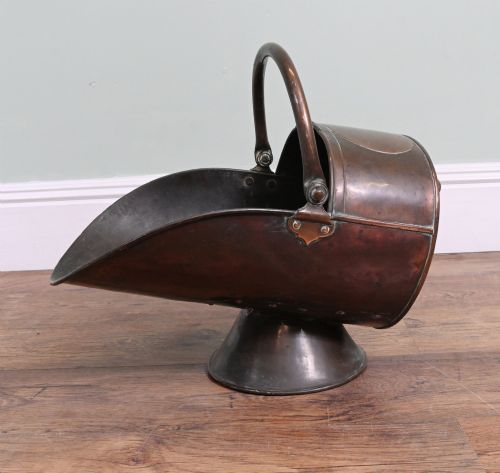


Pedestal Log Bucket
These pedestal log bucket pieces are fireside accessories designed to hold fuel, offering functional warmth and period metalwork.
Pedestal Log Bucket
When you search for a pedestal log bucket, you examine hearth containers designed for solid fuel storage beside an open fireplace. The inventory on this page centres primarily on Victorian and nineteenth century examples created as coal scuttles, coal buckets, and fireside hods.
Most items you encounter here take the form of metal helmets and cylindrical buckets raised on stands or feet. Alongside these practical vessels, the selection occasionally includes decorative bowls and Dutch colonial wooden buckets originating from the nineteenth century and earlier periods.
These items served the hearth in British homes, holding coal or logs within reach of the firegrate. The forms range from simple nineteenth century copper scuttles to polished brass containers reflecting Regency and Arts and Crafts design influences.
How they were made
Metals dominate the construction of these items, with copper and brass forming the primary sheets beaten, shaped, and joined by hand or early machine methods. Iron and polished brass provide structural reinforcement and decorative contrast, while wooden versions utilise walnut and ebony with turned elements.
Coopers and metalworkers utilised riveting, soldering, and hammering techniques to shape sheet metal into helmets, hods, and cylindrical buckets. Wooden examples incorporate traditional joinery and turning, matching the timber construction seen in Dutch colonial pieces from the nineteenth century.
Pedestal Log Bucket Retail Price Guide 2026
Typical asking prices for pedestal log bucket among the pieces listed under this phrase on Sellingantiques today, from the lower quarter to the upper quarter. They describe what is for sale here now, not the wider market.
Listings span the nineteenth and early twentieth centuries, incorporating Victorian, Regency, and Arts and Crafts styles made from copper, brass, walnut, and ebony.
What varies in quality
The standard of metalwork distinguishes superior examples from simpler utilitarian vessels, particularly in the crispness of hand-beaten surfaces and the weight of the brass or copper. Heavier gauge metal maintains its structural integrity better over generations of hearth use.
Detailing on handles, feet, and fixings reveals the maker's care, with cast brass mounts and dovetailed or riveted joints showing greater refinement than plain folded seams. The presence of matching shovels and original polished finishes further elevates the standing of a piece.
The Pedestal Log Bucket Glossary
- Coal scuttle
- A container designed for holding domestic coal near a fireplace, frequently shaped as a helmet with a hinged handle and a sloping mouth for pouring.
- Coal hod
- A deep metal container with a flat base and a handle, traditionally used for carrying fuel from an outdoor store to the hearth.
- Helmet scuttle
- A specific fireside vessel form featuring a flared rim and peaked back that resembles a traditional military helmet.
- Arts and Crafts
- A design movement spanning the late nineteenth and early twentieth centuries that emphasised handcraftsmanship, simple form, and visible construction methods.
- Regency
- An architectural and decorative style period dating from the early nineteenth century defined by neoclassical lines and classical restraint.
Pedestal Log Bucket: Frequently Asked Questions
What is a pedestal log bucket?
A pedestal log bucket is a fireside container raised on a base or feet, designed to store wood fuel near a fireplace.
These pieces combine utility with decorative metalwork or woodwork to complement domestic hearths.
How were these buckets used?
They sat beside the fireplace to hold coal or logs ready for replenishing the fire.
Servants or homeowners used them to transport fuel from storage areas into the main living rooms.
What materials are common?
Brass and copper form the majority of the metal vessels, often paired with iron components.
Some examples utilise wood such as walnut and ebony in structured bucket designs.
How do I identify a Victorian piece?
Victorian items frequently utilise heavy gauge copper or brass with riveted seams and helmet shapes.
Stylistic markers align with nineteenth century manufacturing techniques and revival design trends.