

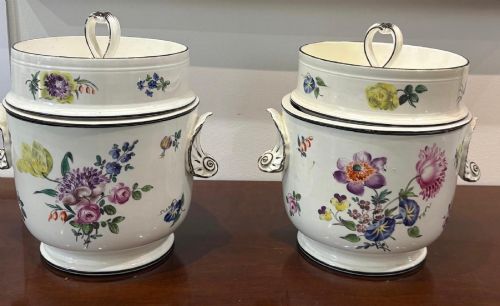

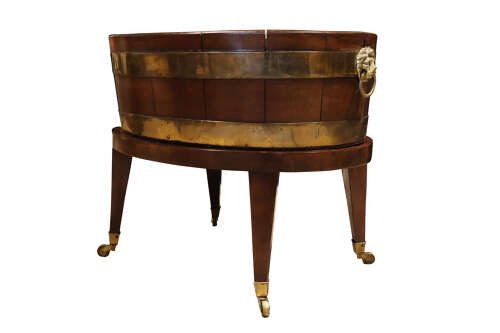


Early 19th Century Bucket
An early 19th century bucket brings tactile warmth to a room through traditional materials like coopered mahogany, riveted copper, and supple leather.
Early 19th Century Bucket
When you search for an early 19th century bucket, you encounter versatile vessels created for practical domestic tasks such as cooling wine, carrying coal, or housing plants.
The most common forms on this page include mahogany wine coolers with brass bands, copper hearth accessories, and leather fire buckets from the Regency and Georgian eras.
Makers of this period also produced Dutch 'teestoof' buckets and japanned tinware lidded wine coolers, showing a wide range of functional uses across different European traditions.
Materials and construction methods
Woodworkers utilised traditional cooperage techniques to build mahogany vessels, locking curved staves together and securing them with tight brass bands.
Metalworkers shaped copper and silver plate into campana designs and riveted seams together by hand, while others fashioned sturdy fire buckets from soft leather.
Early 19th Century Bucket Retail Price Guide 2026
Typical asking prices for early 19th century bucket among the pieces listed under this phrase on Sellingantiques today, from the lower quarter to the upper quarter. They describe what is for sale here now, not the wider market.
Leather fire buckets sometimes retain soot from actual nineteenth-century hearths, offering a quiet reminder of domestic life long ago.
Distinguishing quality across examples
Quality rests upon the integrity of the original construction, seen in the tight fit of mahogany staves and the precision of brass binding.
Finishing touches elevate finer pieces, such as the hand-painted decoration on japanned tinware and the crisp casting details on silver-plated wine coolers.
The Early 19th Century Bucket Glossary
- Coopered
- Built from narrow vertical wooden staves fitted together and bound by metal hoops. This method was essential for keeping liquid-holding wooden vessels watertight.
- Campana
- Shaped like an inverted bell with an everted rim. This classical form appears frequently on Regency silver-plated wine coolers.
- Japanned
- Coated in a hard, glossy lacquer finish inspired by Asian export goods. Tinware decorated this way often featured hand-painted motifs.
- Teestoof
- A Dutch foot warmer or small hearth bucket used during colder months. These domestic pieces form a distinct subset of early nineteenth-century vessels.
- Elliptical
- Oval-shaped with gently curving sides. This profile distinguishes certain mahogany wine coolers from round buckets.
Early 19th Century Bucket: Frequently Asked Questions
What were these buckets originally used for?
These vessels served various domestic chores ranging from chilling wine and champagne at the dining table to carrying peat or coal for the hearth.
Others functioned as planters, jardinieres, or protective leather fire buckets designed to be passed along a line during an emergency.
How do I maintain a leather fire bucket?
Leather items require stable room conditions away from direct heat sources and strong sunlight to prevent the material from drying out.
Applying a specialist leather conditioner periodically helps preserve the flexibility of the soft leather covering.
Can I use an antique mahogany bucket for plants?
Using a coopered mahogany bucket for live planting requires placing a protective liner inside to prevent moisture from damaging the historic wood and internal seams.
Direct contact with wet soil can warp the staves and corrode the original brass bands over time.
How do I identify a Regency period piece?
Regency items often display classical architectural influences such as campana contours, bold brass bindings, and refined mahogany grain.
Proportions tend to reflect early nineteenth-century neoclassical design standards popular between eighteen hundred and eighteen thirty.