



Georgian Wooden Cutlery Box
These georgian wooden cutlery box items keep silver secure and ready for the table, offering practical storage with period presence.
Georgian Wooden Cutlery Box
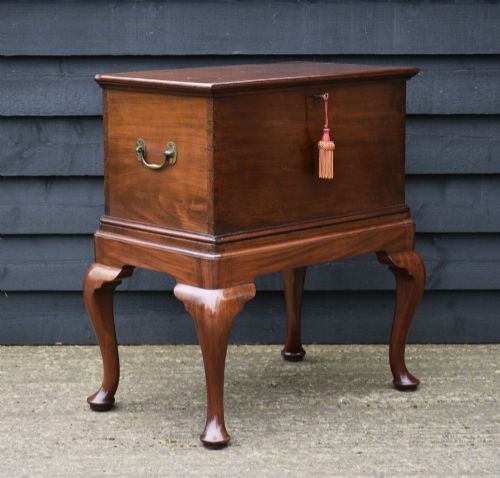
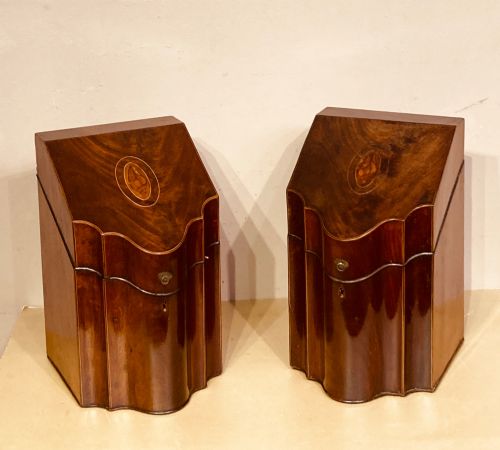
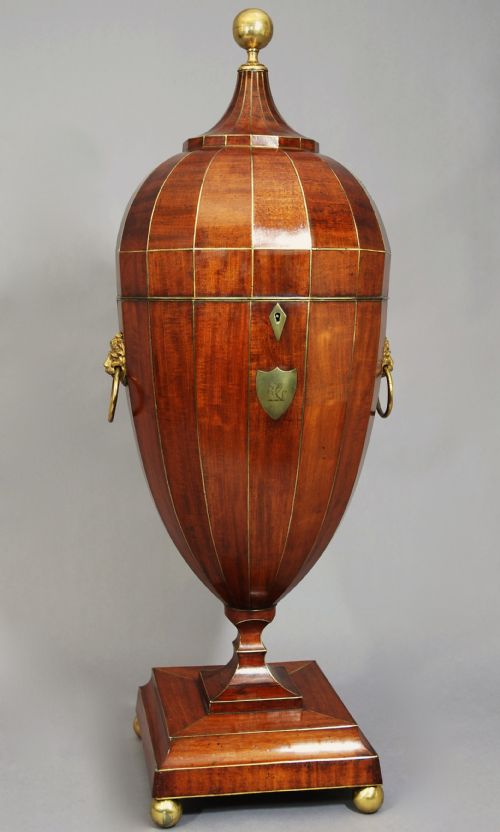
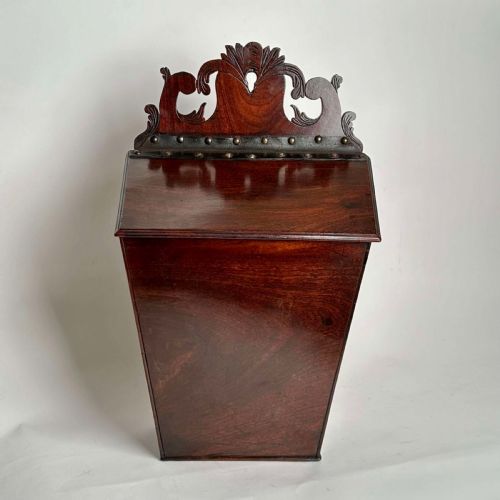
A georgian wooden cutlery box takes several distinct shapes across the eighteenth and nineteenth centuries, including sloping knife boxes, lidded urns, butler's trays, and carry caddies. Mahogany predominates among the surviving pieces, often shaped with serpentine fronts or accented by contrasting wood inlay.
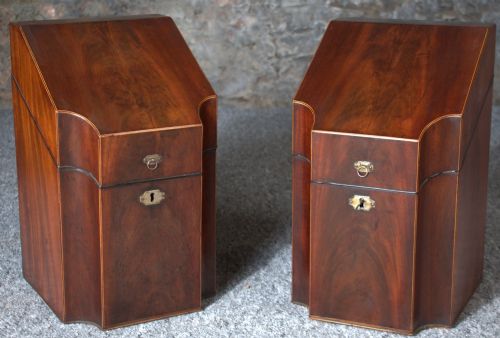
Pairs of knife boxes and lidded cutlery urns appear frequently alongside utilitarian kitchen organisers and country house trays in oak, walnut, and red-painted wood. Most examples date from the Georgian and George III eras, though occasional Victorian interpretations and seventeenth-century attributions surface.
Buyers seeking a georgian wooden cutlery box encounter functional items designed for dining rooms and large house kitchens, many retaining original brass handles, escutcheons, and fitted interior compartments.
Materials and construction
Cabinetmakers built these pieces using solid and veneered timbers such as mahogany, walnut, and oak, frequently adding boxwood stringing and decorative wood inlay to enrich the surface. Brass fittings, including carrying handles, hinges, and lock plates, provide structural reinforcement and contrast against the dark grain of the wood.
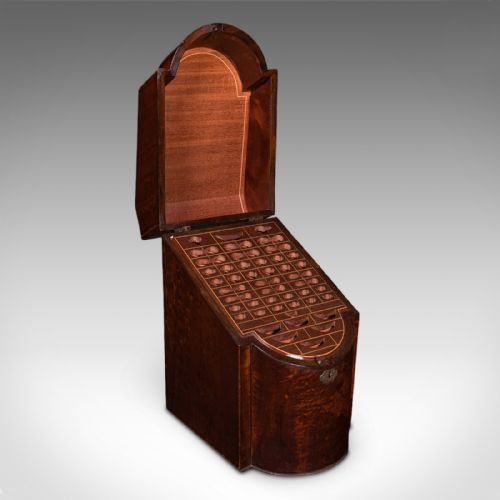
Internal partitions and fitted compartments were constructed to hold specific quantities of flatware or bottles safely, while curved serpentine shapes required advanced timber-bending and joinery skills.
The inventory includes mahogany, oak, walnut, and satinwood pieces spanning the Georgian, Victorian, and seventeenth-century periods.
Craftsmanship and proportion
Quality rests in the precision of the timber selection, particularly where figured mahogany or complex serpentine curves demand expert woodworking. Finer items display crisp inlay work, well-proportioned sloping lids, and undamaged original brass hardware.
The integrity of the internal fittings and the condition of the wooden joints distinguish superior examples from plain utilitarian storage pieces, reflecting the original workshop standards of the period.
The Georgian Wooden Cutlery Box Glossary
- Serpentine
- A curved shape curving outward in the centre and inward at the sides. This contour appears frequently on eighteenth-century knife box fronts.
- Inlay
- Pieces of contrasting timber fitted flush into a recess to form decorative patterns. Boxwood and satinwood provide pale contrast on dark mahogany surfaces.
- Cutlery Urn
- A lidded, vase-shaped wooden vessel designed for storing tableware. These matching pairs typically stand on sideboards or serving tables.
- Escutcheon
- A flat plate of brass surrounding a keyhole. It protects the surrounding wood from wear and adds metal accenting.
- Caddy
- A small box or chest intended for storage. Versions in this category hold bottles, cutlery, or stationery.
Georgian Wooden Cutlery Box: Frequently Asked Questions
What were knife boxes used for?
These boxes held forks, spoons, and knives in dining rooms between meals, keeping silver protected from tarnishing in the open air.
Servants carried them to the table when setting places and returned them to sideboards or storage areas afterward.
How do I identify a George III box?
George III pieces typically feature dense mahogany timber, serpentine fronts, and characteristic brass carrying handles on the sides.
Interior partitions often remain intact to separate individual knife blades and utensil handles.
Are pairs common for these pieces?
Matching pairs of knife boxes or lidded urns appear regularly, designed to sit symmetrically on either side of a grand dining room.
Single boxes also exist, reflecting more modest household inventories or utilitarian kitchen use.
How should I clean the wood?
Dust the exterior gently with a dry, soft cloth and apply a traditional beeswax polish sparingly to preserve the timber finish.
Avoid liquid cleaners and moisture, which can damage aged veneers and corrode original brass fittings.