
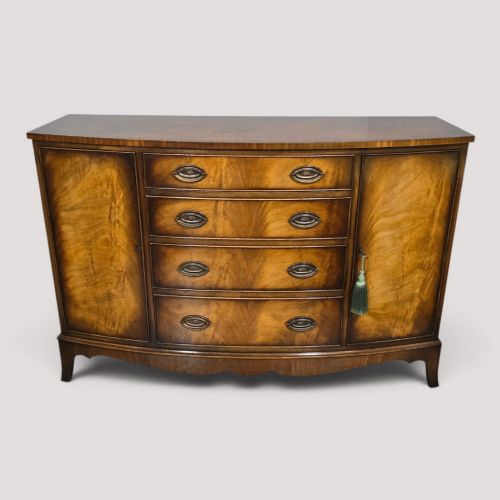
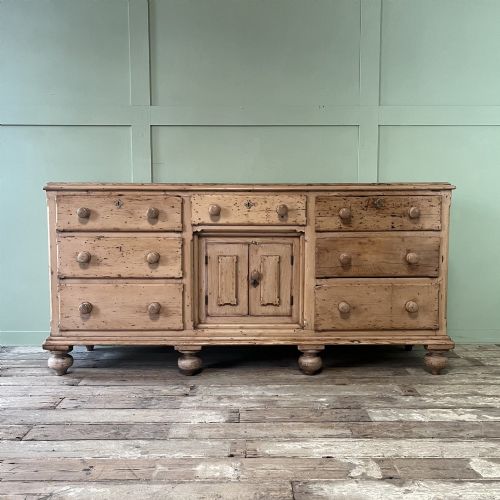
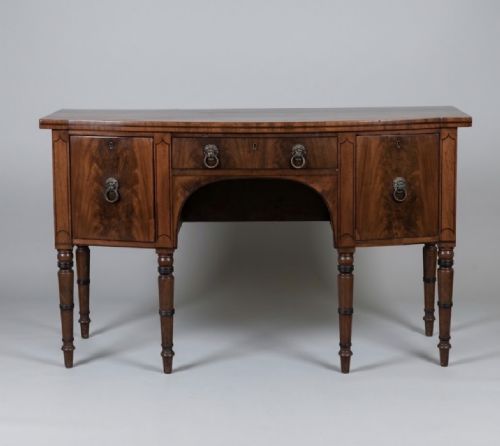
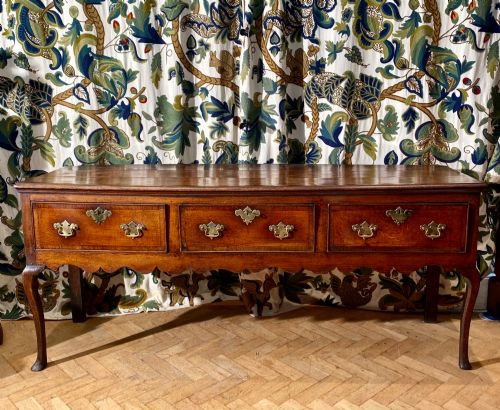
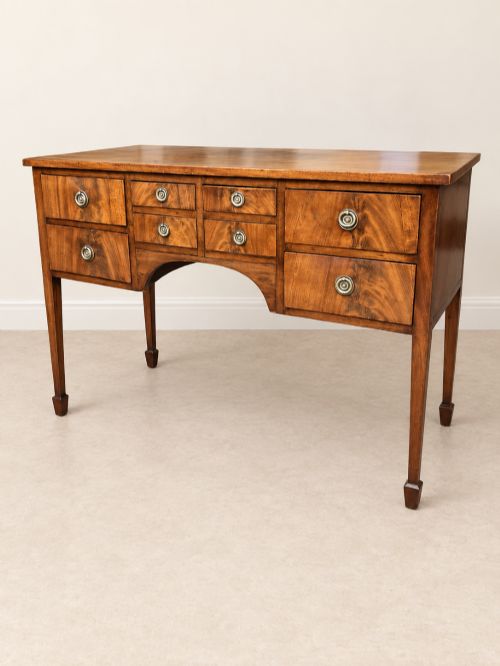
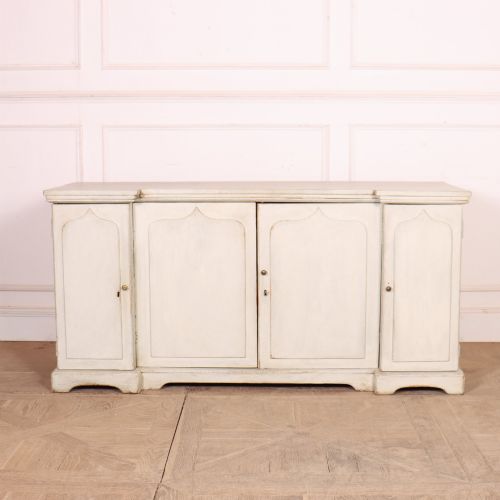
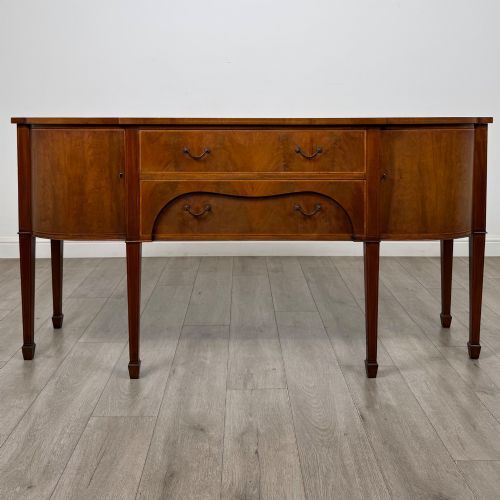
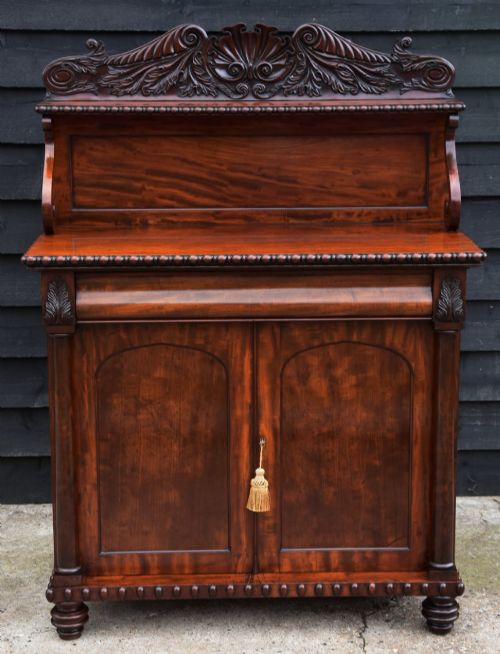
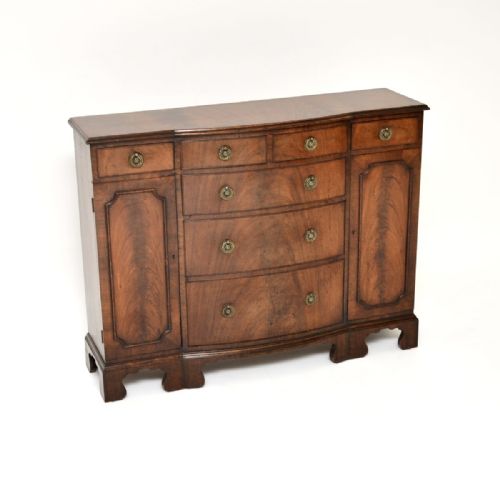
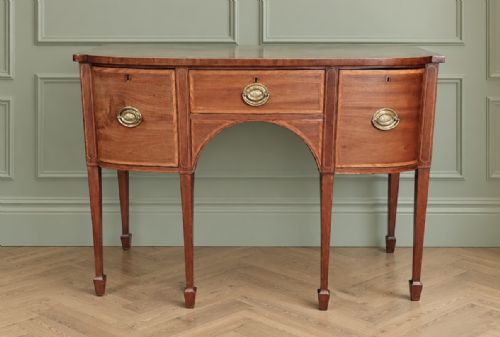
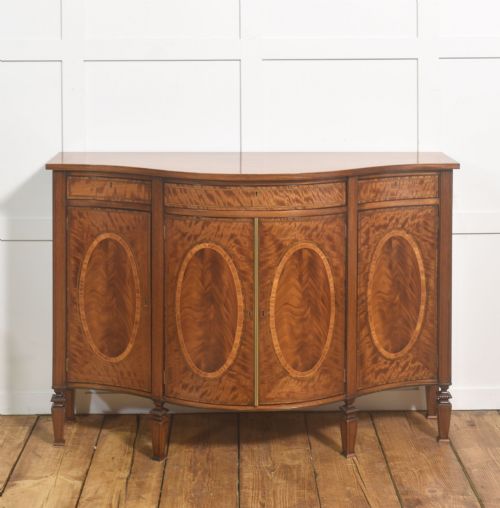
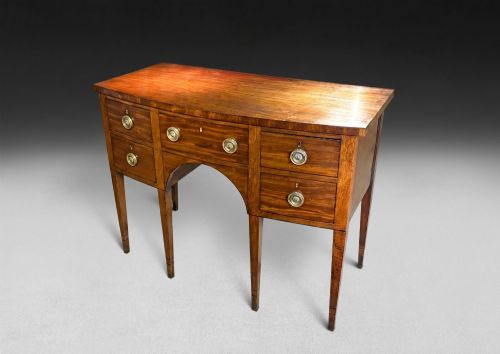
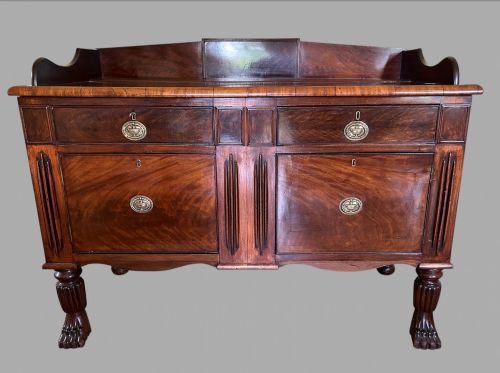
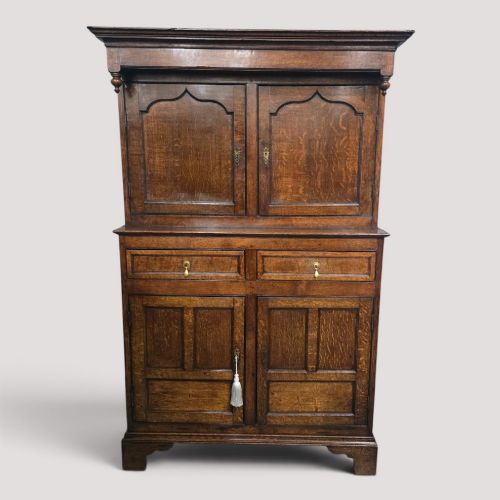
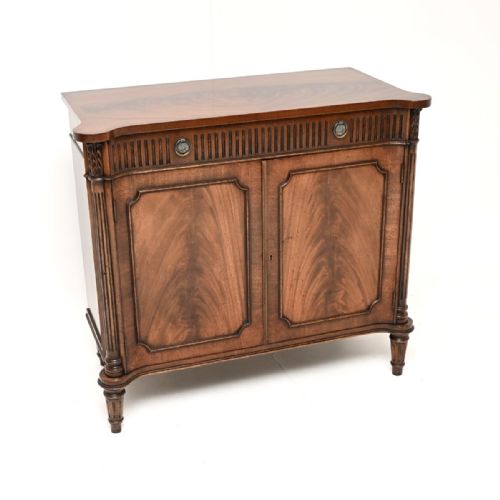
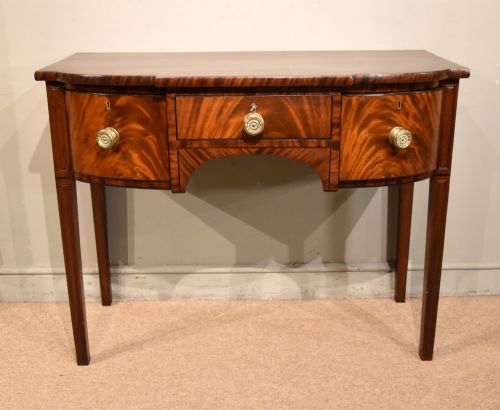
Georgian Wooden Buffet Cabinet
A georgian wooden buffet cabinet provides substantial storage and distinct period character for a dining room.
Georgian Wooden Buffet Cabinet
A georgian wooden buffet cabinet encompasses sideboards, side cabinets, dressers, and cupboards originating across the eighteenth, nineteenth, and early twentieth centuries. Pieces frequently take the form of bow-fronted or breakfront structures designed for dining and serving spaces.
Buyers encounter items spanning Georgian and Regency periods alongside later revivals such as Sheraton Revival and Edwardian interpretations. These variations reflect shifting tastes in English cabinet making while maintaining practical utility.
How they were made
Construction relies primarily on timber framing, utilising mahogany, flame mahogany veneer, oak, and satinwood complemented by boxwood inlay and brass mounts. Cabinet makers selected figured woods to enhance the visual depth of primary surfaces.
Joinery techniques join solid timbers and applied veneers to form robust carcases for sideboards, dressers, and side cabinets. Decorative elements such as boxwood stringing and brass details finish the structural joinery.
Listings feature items spanning the 18th Century through the 1920s, constructed in mahogany, oak, satinwood, and pine with brass and boxwood details.
What varies in quality
Quality differences appear in the selection of timber figures, such as figured mahogany and flame veneer, and the precision of boxwood inlay. Superior examples display careful matching of wood grain across doors and drawer fronts.
The refinement of brass hardware and the crispness of architectural mouldings distinguish finer period cabinets from standard utility pieces. Proportion and overall balance also dictate the standing of an individual item.
M. D. Miller & Sons
The Georgian Wooden Buffet Cabinet Glossary
- Bow front
- A convex curved front section popular on sideboards and cabinets. This shaping softens the linear profile of a dining room piece.
- Breakfront
- A cabinet design where the central section projects forward from the flanking wings. It creates a structured architectural facade.
- Chiffonier
- A low sideboard or cabinet equipped with drawers and doors, often featuring a shelf superstructure. It developed during the Regency period.
- Dresser base
- A low wooden storage unit with drawers and cupboards, historically used in kitchens and dining rooms. It forms the lower portion of a traditional dresser.
- Inlay
- The technique of embedding contrasting woods such as boxwood into a solid surface to create decorative patterns. It defines Sheraton Revival styles.
Georgian Wooden Buffet Cabinet: Frequently Asked Questions
What is a georgian wooden buffet cabinet?
A georgian wooden buffet cabinet is a heavy timber storage piece used primarily for dining rooms, encompassing sideboards, cabinets, and cupboards.
These items date from the Georgian and Regency eras as well as later revival periods, built from mahogany, oak, and satinwood.
How do I tell different periods apart?
Distinguishing periods relies on observing timber choices, hardware styles, and inlay techniques such as boxwood stringing.
Earlier pieces show proportion and timber figuring typical of George III work, while twentieth-century revivals often incorporate lighter satinwood.
Where were these cabinets used?
These pieces served dining rooms and parlours for storing crockery, glassware, and serving items.
Their substantial timber construction provided a stable surface for food preparation and display during meals.
What woods are most common?
Mahogany is the predominant timber found in these cabinets, frequently presented as solid wood or flame mahogany veneer.
Oak, satinwood, and pine also appear across specific regional pieces and country dressers.