




Georgian Flame Mahogany Chiffonier
A georgian flame mahogany chiffonier brings striking grain and useful low storage to a room, exactly as it did in the early nineteenth century.
Georgian Flame Mahogany Chiffonier
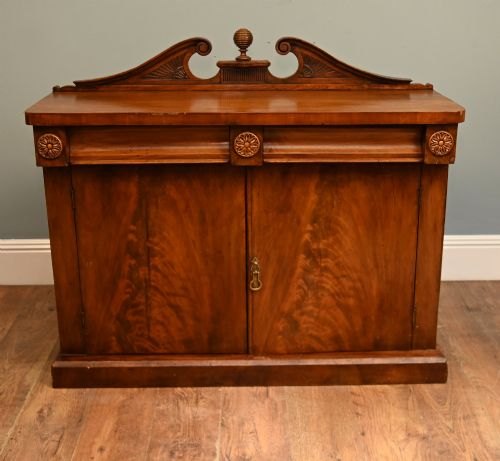
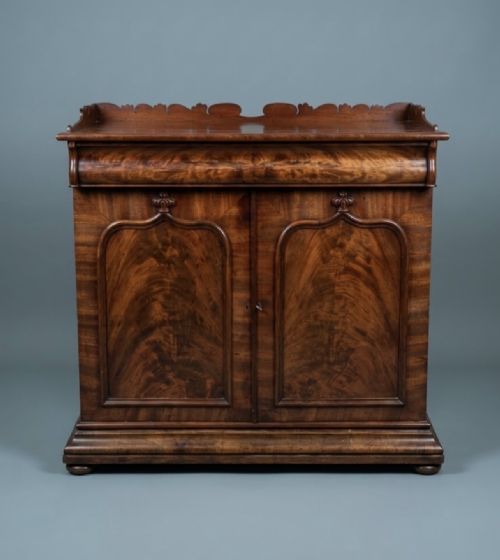
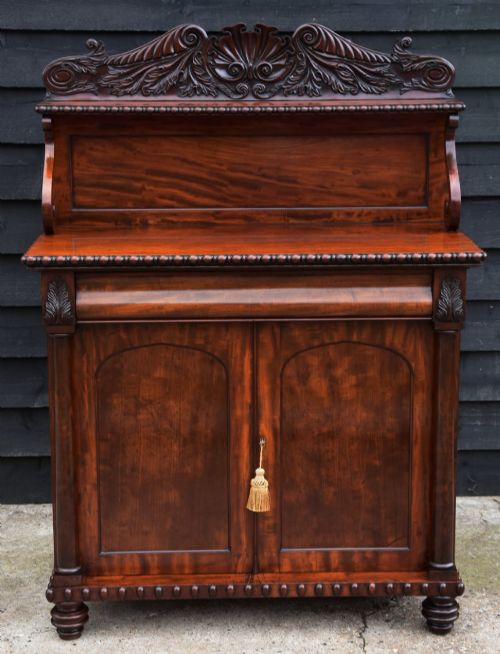
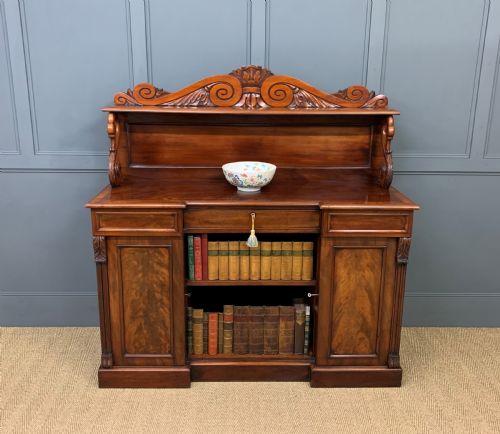
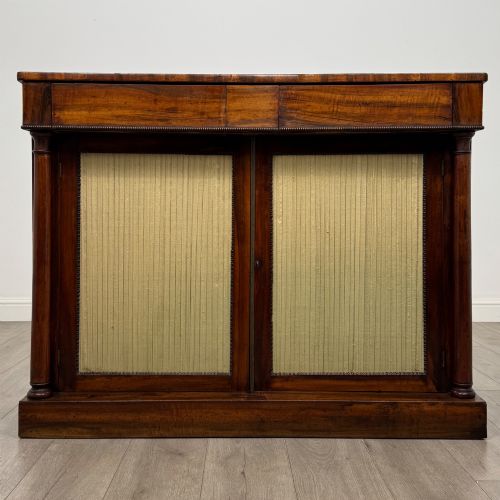
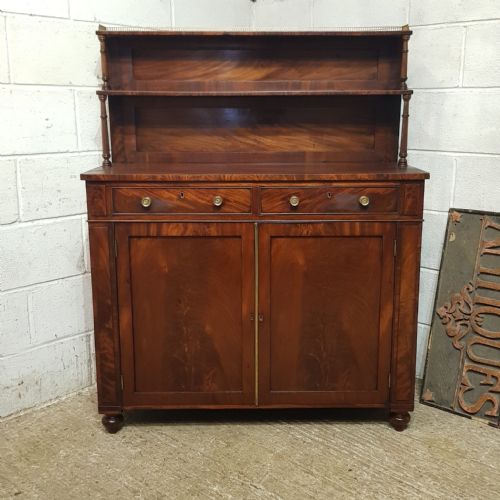
A georgian flame mahogany chiffonier is a low side cabinet developed to hold dining or parlour linen and service ware, sitting neatly against a wall without dominating the floor space. These pieces appear across the Regency, George III, George IV, and William IV periods, often taking the form of a compact two-door cupboard sometimes topped with a small shelved bookcase. The listings here record them under various historical terms including side cabinets and sideboards, though the quintessential chiffonier remains defined by its low enclosed base. Most examples date from the early nineteenth century, bridging late Georgian taste and the bolder William IV aesthetic.
The proportions of a georgian flame mahogany chiffonier vary from small scale examples suitable for intimate parlours to larger sideboard-height pieces built for grander rooms. Many retain original brass details and panelled doors, reflecting their evolution from simple side cupboards into principal reception room furniture. Buyers searching for this phrase seek both the practicality of enclosed shelving and the dramatic visual presence of figured timber.
How they were made
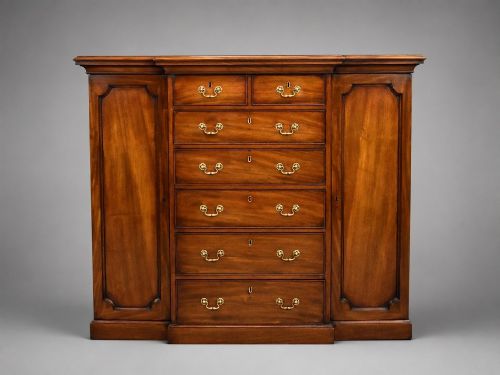
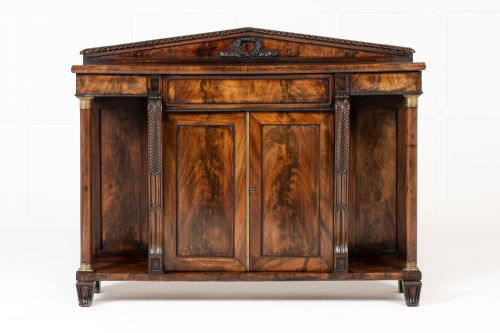
Cabinet makers built these pieces using solid oak for internal framing and secondary carcases, applying carefully selected veneers across the primary surfaces. Flame mahogany veneer provides the distinctive rippled figure, matched symmetrically down drawer fronts and door panels to create bold patterns. Solid mahogany forms the structural mouldings, columns, and feet, while brass inlays and brass grille work occasionally decorate the upper tiers.
Techniques relied on precise timber selection and seasoning to prevent the wide mahogany boards from splitting as they aged. Workshops utilised hand-cut dovetails for drawer construction and applied traditional shellac polishes that deepened the warm red tones of the wood over generations.
Many of these small cabinets spent their youth hiding spare wine bottles from polite society.
What varies in quality
The distinction between standard and superior pieces rests largely on the choice and matching of the flame mahogany veneer. Top tier examples display intense, rolling grain patterns that are book-matched across two doors, whereas lesser pieces utilise plain mahogany or unevenly figured timber. The crispness of the turned columns, the finesse of the brass mounts, and the integration of original internal shelving further separate workshop standards.
Structural integrity also dictates quality, with finer cabinets retaining original backboards, unwarped doors, and smoothly operating drawers lined in solid oak rather than deal. The architectural proportions of the base and the restraint or elegance of any applied carved details indicate the skill of the original maker.
Gillows
The Georgian Flame Mahogany Chiffonier Glossary
- Flame mahogany veneer
- A figured wood veneer sliced from timber where the branch junctions meet the trunk, producing a rippled, flame-like pattern. This decorative surface defines the aesthetic appeal of many Regency cabinets.
- Chiffonier
- A low sideboard or cabinet featuring enclosed cupboards below, sometimes surmounted by a small bookshelf or gallery. The form emerged in the early nineteenth century for dining and drawing room storage.
- Regency
- A British design period spanning the late eighteenth and early nineteenth centuries, characterised by classical revival motifs and refined cabinet work. Pieces from this era often incorporate bold mahogany veneers and brass detailing.
- William IV
- A stylistic period bridging late Regency and early Victorian design during the 1830s, known for heavier proportions and robust architectural elements. Cabinets from this era frequently feature substantial scroll brackets and figured timbers.
- Side cabinet
- A general term for low furniture pieces designed to stand against a wall, encompassing various forms of chiffoniers and small sideboards. They provide surface display space alongside concealed storage.
Georgian Flame Mahogany Chiffonier: Frequently Asked Questions
What is a chiffonier?
A chiffonier is a low cabinet designed for storing linen, silver, or china in a dining room or parlour.
These pieces typically feature a pair of cupboard doors below a flat top, and occasionally include a small shelved superstructure.
How do I date a chiffonier?
Dating relies on examining timber choices, construction methods, and stylistic details such as leg shape and hardware.
Earlier pieces from the George III and Regency periods tend to show more refined proportions, while William IV examples often feature heavier architectural elements.
Where were these placed?
They were designed to stand against dining room or drawing room walls where space precluded a full sideboard.
Their low profile allowed them to sit beneath wall mirrors or paintings without blocking light or views.
What is flame mahogany?
Flame mahogany is a specialised veneer cut from wood grain that produces dynamic, undulating patterns resembling flickering fire.
Cabinet makers arranged these veneers symmetrically to create striking visual panels on doors and drawers.