




Georgian Walnut Dressing Glass
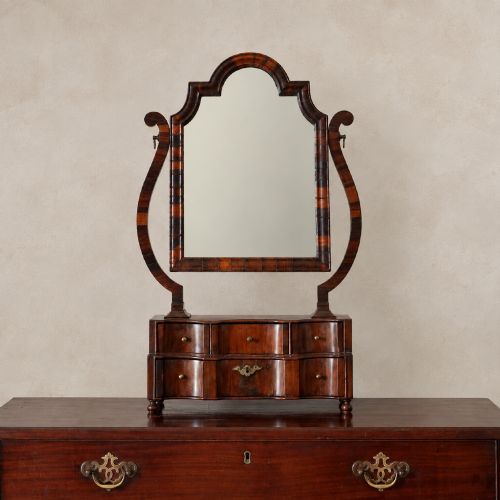
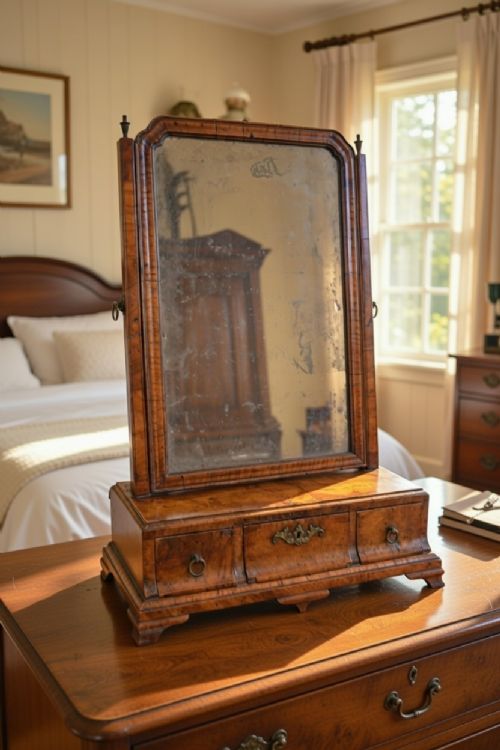
These georgian walnut dressing glass examples are compact mirrors designed for vanity and grooming, prized for their figured grain and warm timber tones.
Georgian Walnut Dressing Glass
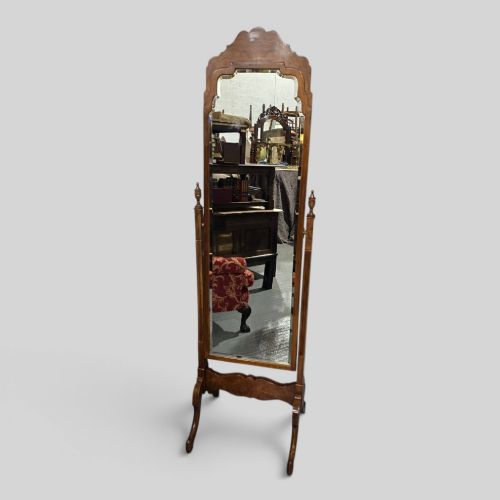
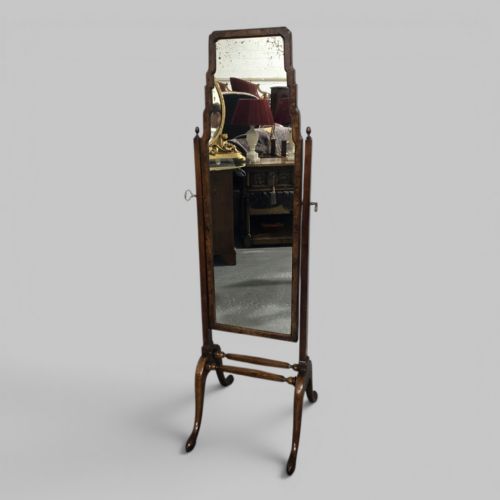
When you search for georgian walnut dressing glass pieces, you encounter portable tabletop mirrors and larger cheval glasses designed for bedrooms and dressing rooms. The selection includes compact toilet mirrors intended to sit on chests of drawers, alongside taller floor-standing cheval mirrors.
The forms span the eighteenth century and later revivals, capturing Queen Anne, George II, and George III aesthetics. Most surviving examples utilise rich walnut timbers, often enhanced with contrasting boxwood stringing or laburnum banding.
Makers fashioned these dressing mirrors with pivoting plates supported by upright framing above small drawer bases. These drawer sections often feature stepped interiors or small compartments for keeping personal trinkets and cosmetics.
How they were made
Cabinetmakers constructed the primary carcases using solid walnut and applied burr walnut veneers to the visible surfaces to create dramatic grain patterns. They frequently incorporated boxwood inlay and laburnum banding to outline the drawer fronts and framing edges.
The pivoting mirror frames rely on brass adjustment screws and brackets that allow the glass plate to tilt to the desired angle. Silvered glass plates sit within rebated frames, backed by pine or secondary timber panels.
The listings span the eighteenth century, the Regency era, and later revival periods, utilising walnut, burr walnut, brass, and boxwood inlay.
What varies in quality
The superiority of a dressing glass rests in the choice of timber and the complexity of its figured veneers. Finely figured burr walnut and carefully matched grain patterns distinguish finer examples from plain timber constructions.
Proportion and execution of the base drawer section dictate the overall refinement of the piece. Crisp joinery, delicate boxwood stringing, and original brass hardware elevate the visual appeal of the mirror.
The Georgian Walnut Dressing Glass Glossary
- Dressing Glass
- A portable mirror mounted on a small box base containing drawers, designed for tabletop use during grooming.
- Cheval Mirror
- A full-length, free-standing mirror supported in a frame with pivoting side posts.
- Toilet Mirror
- An alternative term for a dressing glass or tabletop mirror used in a bedchamber.
- Boxwood Inlay
- Contrasting light wood inserted into recesses in the darker walnut surface to form decorative geometric lines.
- Burr Walnut
- Highly figured wood grain taken from the abnormal growth of a walnut tree, prized for its swirling patterns.
Georgian Walnut Dressing Glass: Frequently Asked Questions
Where were dressing glasses placed in rooms?
These mirrors sat atop chests of drawers, side tables, or dedicated dressing tables within bedchambers.
Their compact footprints allowed owners to move them easily to catch the best natural light near windows.
How do I distinguish a toilet mirror from a cheval mirror?
Toilet mirrors are smaller tabletop units featuring a box base with small drawers underneath.
Cheval mirrors stand independently on the floor as full-height glass panels supported by four-legged framing.
What are the primary timbers used in these pieces?
Walnut serves as the main structural and decorative wood, frequently selected as burr walnut for its rich figuring.
Cabinetmakers accented these surfaces using lighter woods such as boxwood and laburnum for inlay and banding.
How do the pivoting mirror frames function?
The glass plates hang between two upright arms attached to the base using threaded brass screws and nuts.
Tightening these hardware components holds the glass securely at the preferred viewing angle.