


Carved Walnut Standing Mirror
These carved walnut standing mirror pieces combine timber frames with adjustable glass, offering full-length reflections in period interiors.
Carved Walnut Standing Mirror
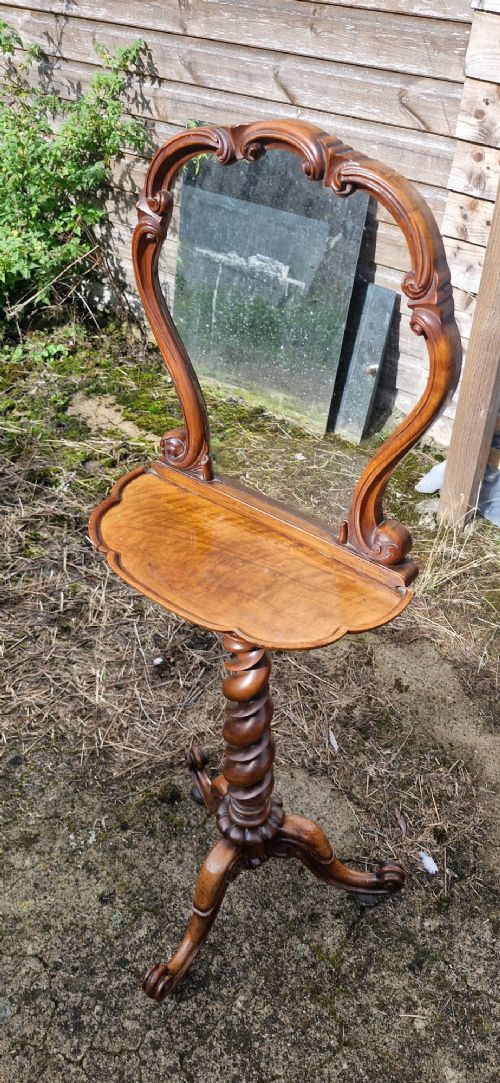
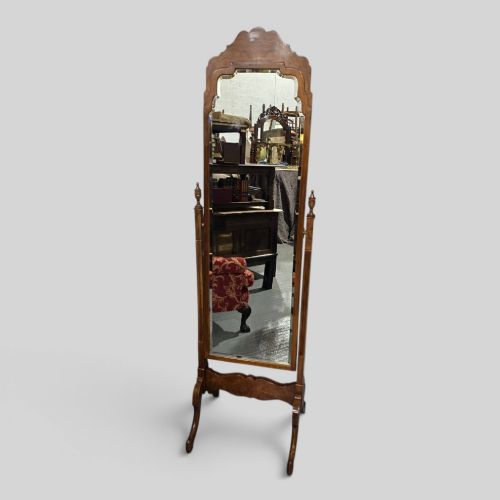
A carved walnut standing mirror typically takes the form of a cheval mirror or dressing glass designed to stand upright on the floor or a surface. These items appear across Victorian, Edwardian, and later twentieth-century periods, including Queen Anne and Louis XV revival styles.
The primary forms recorded in this category include full-height cheval mirrors alongside smaller toilet mirrors and dressing glasses. Walnut and burr walnut dominate the timber choices, frequently accompanied by mirror glass and brass fittings.
How they were made
Craftsmen utilised solid walnut and highly figured burr walnut veneers applied to secondary woods, often enhancing the timber with carved ornamentation. Frames incorporate brass pivots, hinges, and candle sconces or support brackets where applicable.
Surfaces received traditional polishing techniques to bring out the dark grain and varied figuring of the walnut. Mirror plates are set within adjustable frames supported by standing trestle bases or upright floor standards.
Listings feature walnut, burr walnut, brass, and mirror glass across Victorian, Georgian revival, and Art Deco styles.
What varies in quality
Quality separates simple production items from exhibition pieces through the selection of timber and the depth of carving. Highly figured burr walnut veneers and crisp, hand-carved details distinguish superior examples.
The weight and stability of the standing frame, alongside the quality of the original brass hardware and bevelling on the mirror glass, mark the difference between standard workshop output and top-tier craftsmanship.
Shoolbred & Co.
The Carved Walnut Standing Mirror Glossary
- Cheval mirror
- A large standing mirror supported by a vertical frame on feet, allowing the glass to swing. This form provides a full-length reflection.
- Burr walnut
- Timber taken from the wart or burl of a walnut tree, producing swirling, highly decorative grain patterns. It is typically used as a veneer on statement furniture.
- Dressing glass
- A smaller mirror designed to sit on a table or dressing chest rather than stand directly on the floor. These often incorporate small drawers in the base.
- Marquetry
- The art of applying decorative pieces of veneer to a structure to form intricate patterns. This technique appears on select Victorian and revival pieces.
Carved Walnut Standing Mirror: Frequently Asked Questions
How do I date a walnut mirror?
Dating relies on the stylistic revival periods, construction methods, and timber choice visible in the frame. Victorian, Edwardian, and Art Deco eras each introduced distinct proportions and carving details.
Examining the backboards, fixings, and the composition of the mirror glass helps confirm the manufacturing period.
What is a cheval mirror?
A cheval mirror is a freestanding full-length looking glass mounted on vertical pivots within a sturdy frame. This allows the user to tilt the angle of the glass.
The design emerged to assist with dressing and remains popular for its combination of practicality and decorative presence.
Are these mirrors adjustable?
Most standing mirrors utilise brass pivots or thumb screws on either side of the frame. This hardware allows the glass to tilt forward or backward to suit the user.
Original brass mechanisms indicate the piece retains its intended fittings.
Where should I place a standing mirror?
These mirrors suit bedrooms, dressing rooms, and spacious hallways where a full-length reflection and a decorative timber frame add depth to the room. Positioning them near natural light enhances their function.
Ensure the floor surface is level to keep the standing frame stable on its feet.