

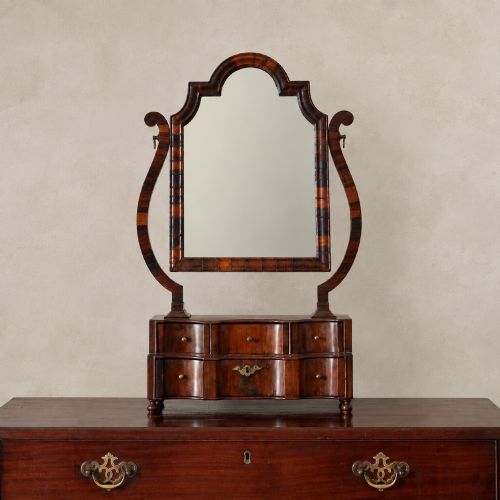


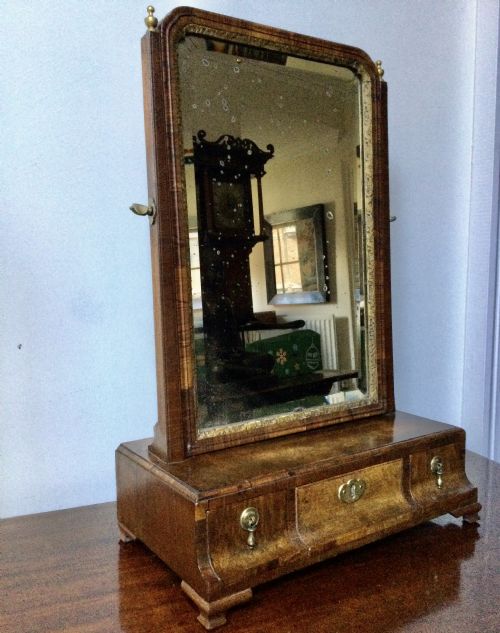


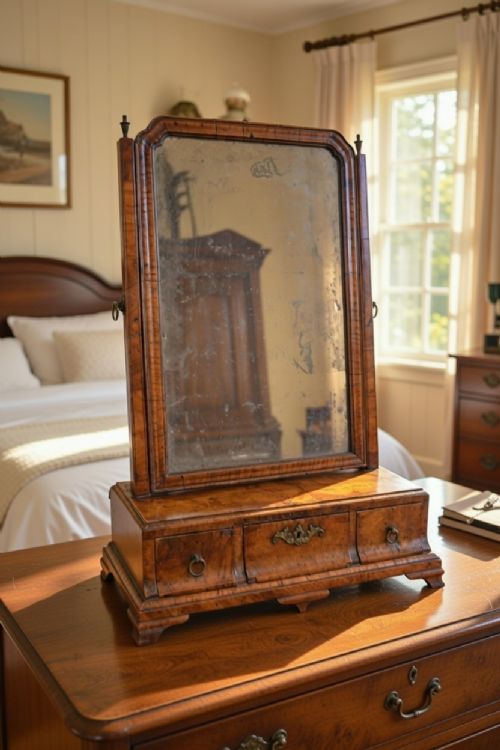
Queen Anne Box Mirror
These queen anne box mirror examples offer compact elegance and practical dressing surface storage, making them a desirable addition to period interiors.
Queen Anne Box Mirror
A queen anne box mirror sits upon a small base containing drawers, designed for placement on a table to assist with grooming and dressing. These compact forms appear predominantly in walnut and lacquer, reflecting the domestic habits of the period.
Most pieces seen here originate from the eighteenth century, with occasional later nineteenth-century revivals executed in the same taste. The object types range from simple dressing mirrors to those incorporating miniature bureau bases.
How They Were Made
Cabinet makers utilised dense timbers such as walnut and laburnum, frequently applying decorative veneers to the structural carcase of the box base. Brass is typically employed for small drawer pulls and adjusting mechanisms that tilt the glass.
Glass plates are set within wooden frames, whilst black lacquer appears on select examples to provide a contrasting decorative surface. Joinery methods of the period rely on closely fitted joints within the miniature bureau or drawer sections.
Queen Anne Box Mirror Retail Price Guide 2026
Typical asking prices for queen anne box mirror among the pieces listed under this phrase on Sellingantiques today, from the lower quarter to the upper quarter. They describe what is for sale here now, not the wider market.
Listings feature eighteenth-century and Victorian pieces constructed primarily from walnut, brass, and glass.
What Varies in Quality
The sophistication of the timber figure and the execution of the veneer work distinguish superior examples from plain construction. Richness of grain in the walnut or laburnum elevates the visual weight of the piece.
The integration of the mirror frame with the drawer base reveals the hand of a skilled maker through proportion and balance. Bureau bases add complexity to the form, separating standard dressing mirrors from more elaborate variants.
The Queen Anne Box Mirror Glossary
- Box mirror
- A portable dressing mirror mounted on a shallow wooden box base containing small drawers. This form allows the glass to be adjusted for angle.
- Laburnum
- A dense hardwood often used for contrasting oyster veneers and decorative crossbanding on period cabinet work. Its distinctive dark grain creates rich patterns.
- Bureau base
- A miniature fall-front writing compartment incorporated into the lower section of the mirror stand. It provides small compartments alongside the traditional drawers.
- Toilet mirror
- A traditional term for a small dressing table mirror used during grooming. These pieces sit comfortably upon chests of drawers or dedicated tables.
Queen Anne Box Mirror: Frequently Asked Questions
Where should I place a box mirror?
These mirrors suit placement on top of a sturdy chest of drawers, a side table, or a dedicated dressing table within a bedroom or hallway.
Ensure the surface is level and deep enough to support the weight of the base and the adjustable mirror frame.
How do I care for the walnut finish?
Keep the wood away from direct sunlight and excessive heat sources to prevent the walnut veneer and laburnum from drying out.
Dust gently with a dry cloth and avoid harsh chemical polishes that can damage old polished surfaces.
What is the difference between periods?
Eighteenth-century examples display period construction techniques and native timbers characteristic of early cabinet making.
Nineteenth-century pieces built in the Queen Anne taste often replicate these earlier forms using similar materials during revival periods.
Can the mirror glass be tilted?
Most box mirrors feature original or replacement side pivot screws that allow the glass frame to angle forwards or backwards.
Adjust these brass fittings carefully to achieve the desired viewing angle during use.