


Box Mirror with Drawer
A box mirror with drawer combines a practical swing glass with a neat compartmentalised base for storing small valuables.
Box Mirror with Drawer
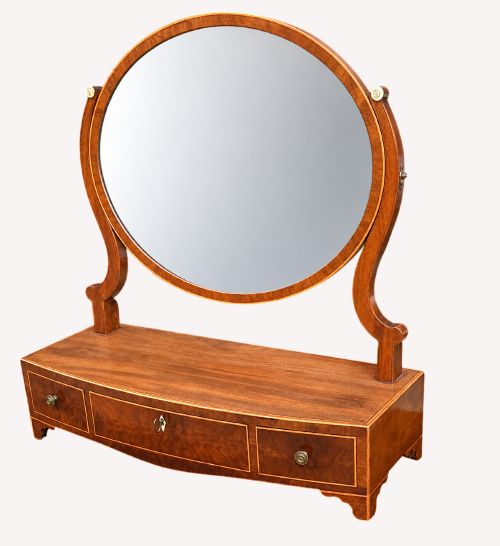
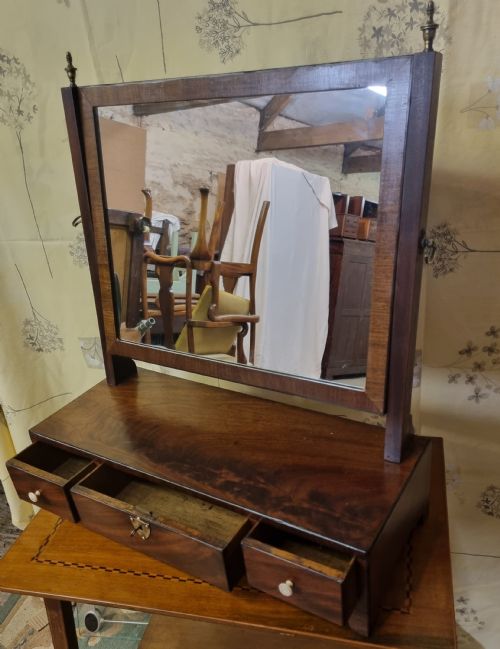
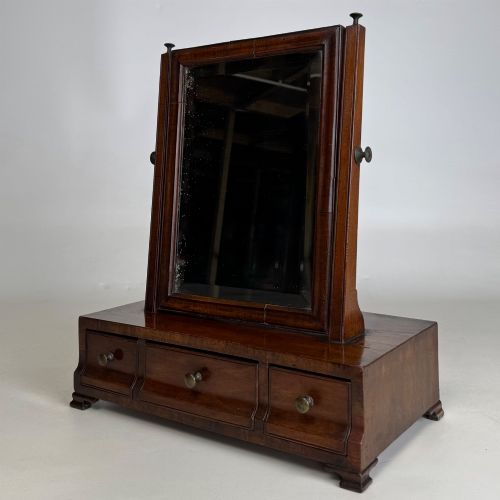
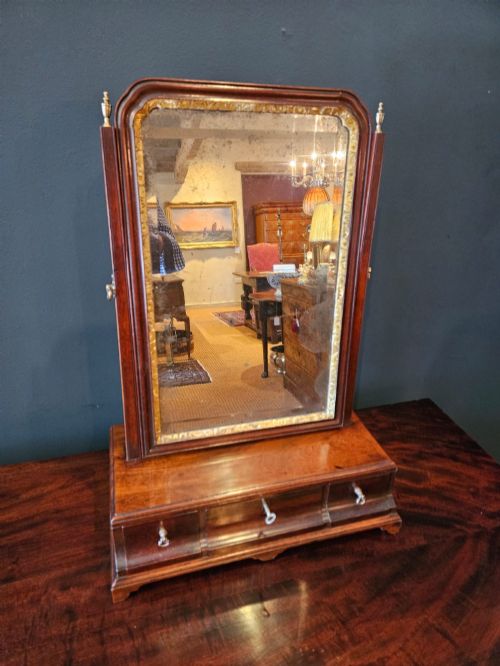
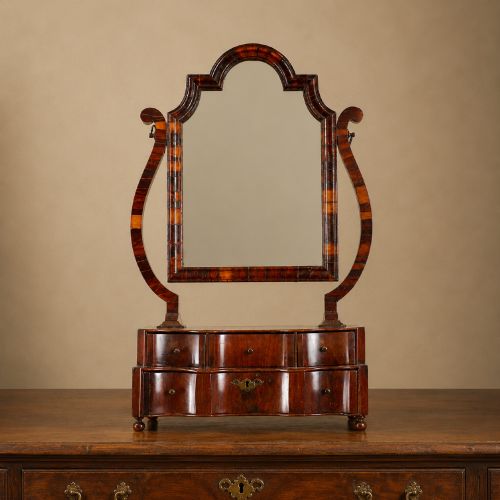
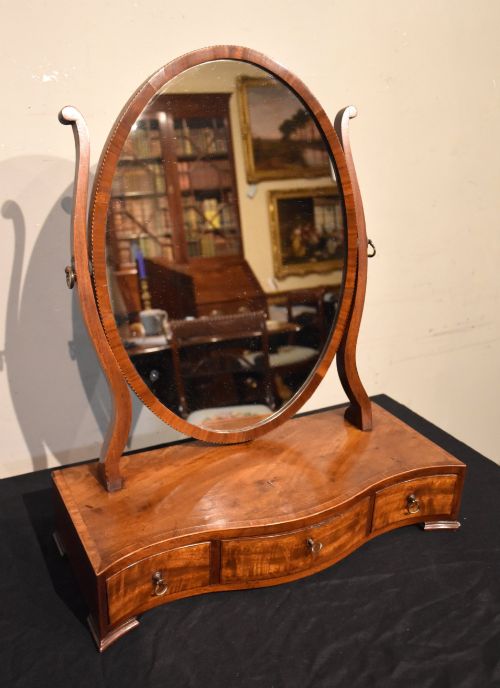
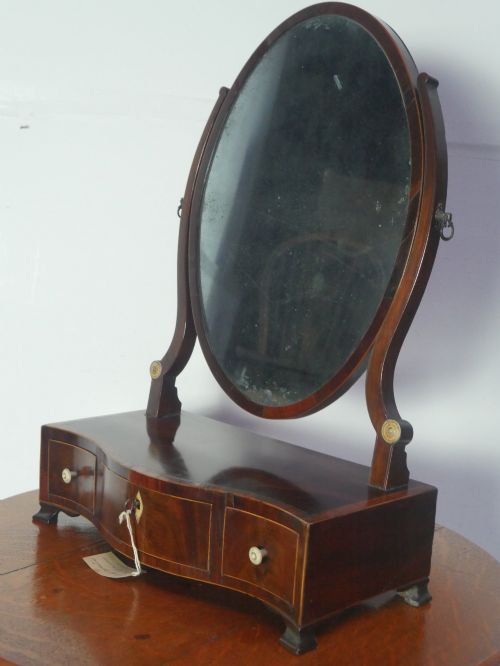
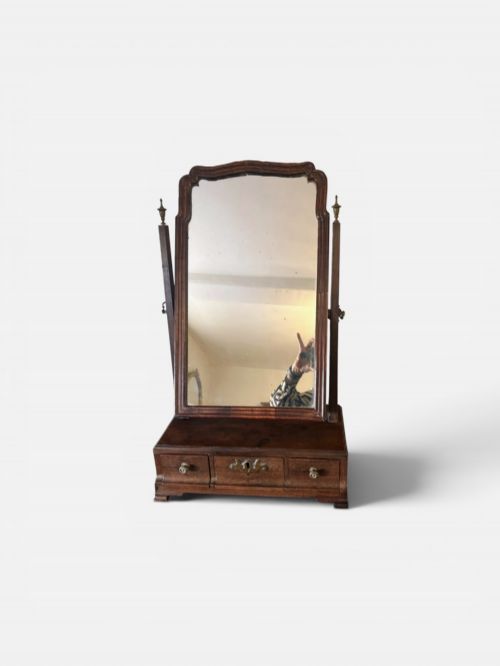
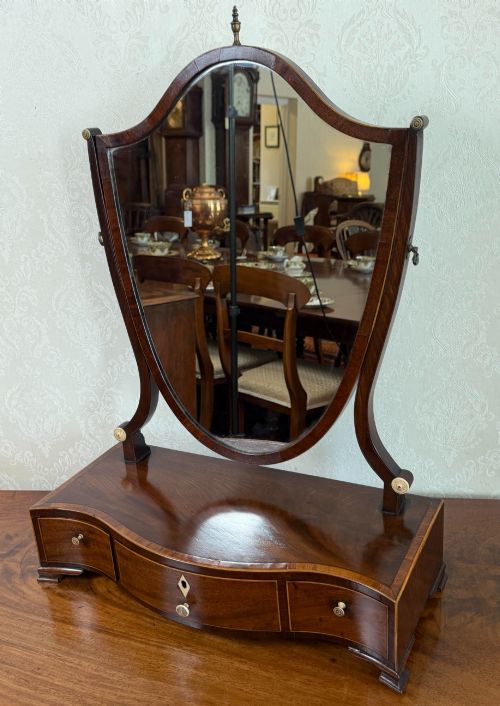
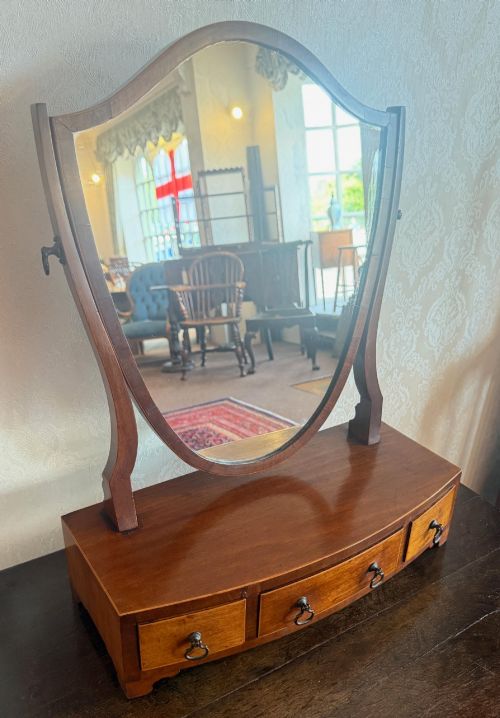
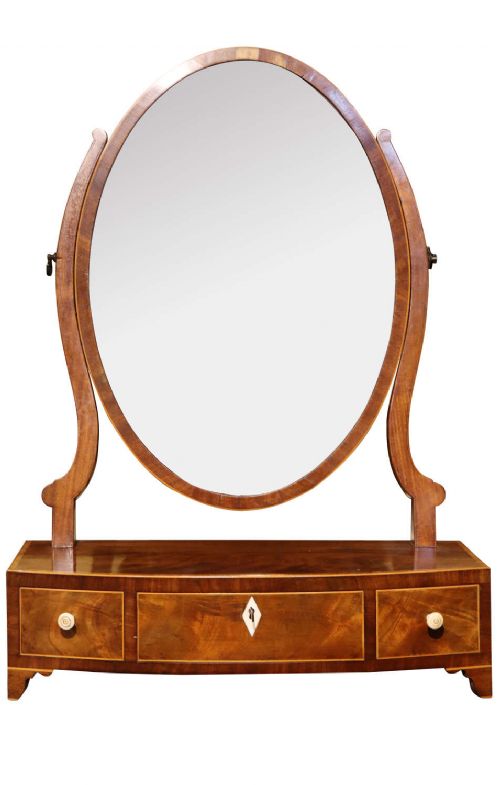
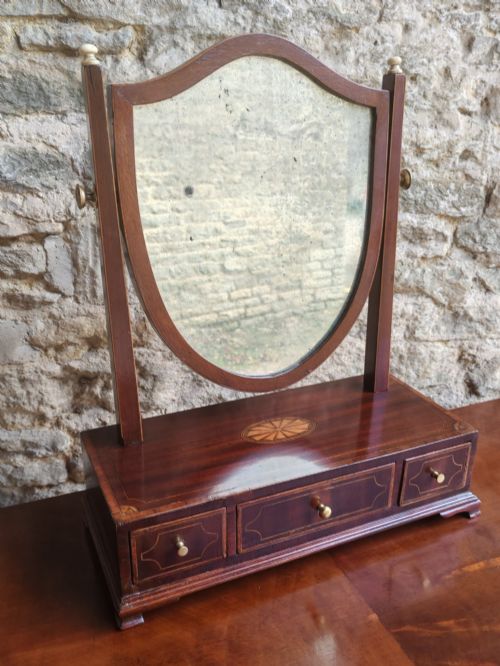
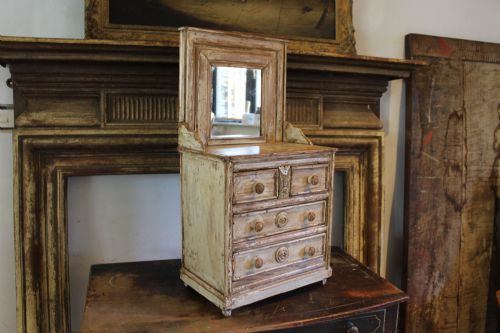
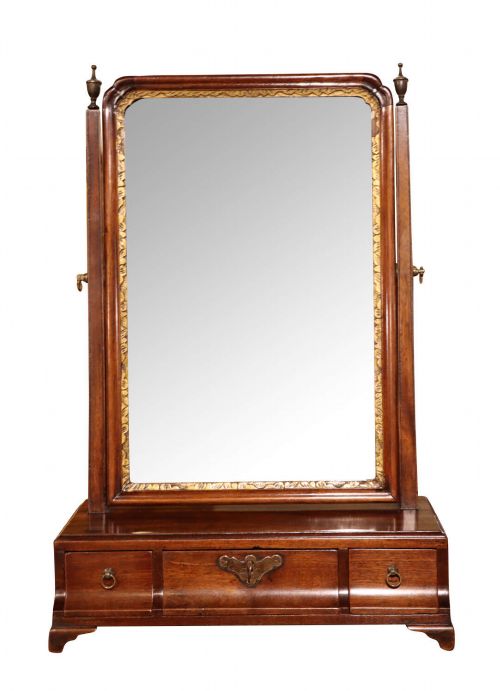
When you search for a box mirror with drawer, you are looking at compact table mirrors designed for dressing tables and chests of drawers during the eighteenth and nineteenth centuries. These pieces sit on bracket feet or small supports, featuring a pivoting swing mirror mounted above a sturdy wooden base fitted with one or more small drawers.
The version you are most likely to meet on this page is constructed from mahogany or walnut, often dating from the Georgian period or the nineteenth century. Surviving examples demonstrate various base configurations, including serpentine fronts, bow fronts, and straight rectangular boxes equipped with brass fittings.
How they were made
Cabinet makers utilised dense hardwoods like mahogany and walnut for the structural boxes and mirror frames, occasionally incorporating secondary timbers such as oak for drawer linings. Timber selection often involved striking grain patterns, sometimes enhanced with subtle boxwood stringing or bone escutcheons around the drawer keyholes.
The mirror plates are held within pivoting frames attached to upright arms, allowing the glass to tilt to the desired angle. Traditional construction relies on dovetailed joints for the drawer boxes and pegged tenons for the mirror uprights, ensuring stability for the weighted swing glass.
Site listings show box mirrors spanning the Georgian, Regency, and Victorian periods, constructed primarily in mahogany and walnut with brass and bone details.
What varies in quality
Quality in these pieces rests upon the proportions of the mirror frame relative to the box base, alongside the subtlety of the woodwork. Superior examples exhibit finely figured mahogany veneers, harmonious serpentine or bow front contours, and original brass hardware that complements the scale of the object.
The execution of the drawer construction and the retention of the original mirror glass and backing boards distinguish finer pieces from later adaptations. Attention to detail in the joinery, such as narrow dovetails and clean interior drawer divisions, marks out workshop production of higher ambition.
The Box Mirror with Drawer Glossary
- Box mirror
- A portable table mirror mounted on a shallow box base containing one or more small drawers. This form became popular during the eighteenth century for personal grooming and jewellery storage.
- Toilet mirror
- A contemporary descriptor for a dressing table mirror used during the Georgian and Regency eras. These pieces typically sat upon chests of drawers or dedicated dressing tables.
- Swing mirror
- A mirror plate suspended on pivot screws between two upright posts, allowing the glass to tilt. This mechanism forms the upper section of a box mirror.
- Serpentine
- A curved line that bends inward centrally and outward at the sides, frequently seen on the drawer fronts of finer eighteenth-century boxes. This shaping requires skilled carpentry.
- Stringing
- A narrow strip of contrasting wood inlaid into the surface of a panel as decorative edging. Boxwood was commonly used against dark mahogany for this purpose.
Box Mirror with Drawer: Frequently Asked Questions
Where were box mirrors placed?
These mirrors were designed to sit upon dressing tables, side tables, or tall chests of drawers in bedrooms and dressing rooms. Their compact footprint allowed them to be moved easily to catch the morning light.
Because they combined a storage compartment with a mirror, they served as a central hub for daily grooming routines and the safekeeping of small personal items.
What went into the drawers?
The small drawers built into the base held cosmetics, hairpins, trinkets, and small pieces of jewellery. Compartmentalised interiors kept these delicate items organised.
Some drawers were secured with small brass locks to protect valuables, reflecting the personal nature of the objects stored within.
Are the mirror glasses original?
Many surviving pieces retain older mirror plates, though replacement glass is common due to the fragile nature of vintage silvered glass. Older glass often exhibits subtle imperfections and slight foxing.
Examining the backing boards and the way the glass is secured in the frame helps determine whether the plate dates to the period of the box base.