




Georgian Wall Sconces
Georgian wall sconces bring brilliant candlelit reflection and sculptural elegance to any room.
Georgian Wall Sconces
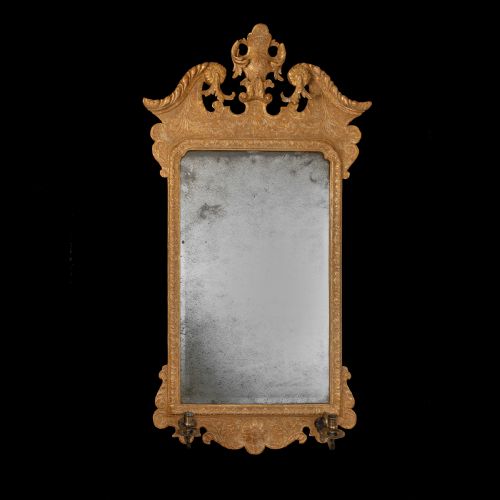
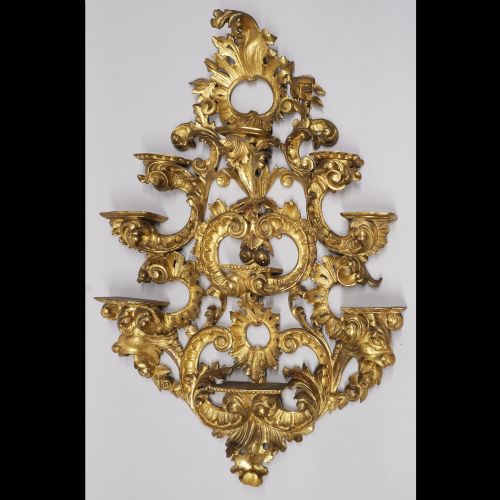
Georgian wall sconces encompass candle sconces, girandole mirrors, and wall lights originating primarily from the eighteenth century alongside later revival periods. These pieces combine functional illumination with decorative wall furniture, frequently designed to reflect candle flame through mirrored glass and polished metal surfaces. Buyers searching for georgian wall sconces encounter both period originals and later interpretations spanning the Regency, Victorian, and early twentieth-century eras.
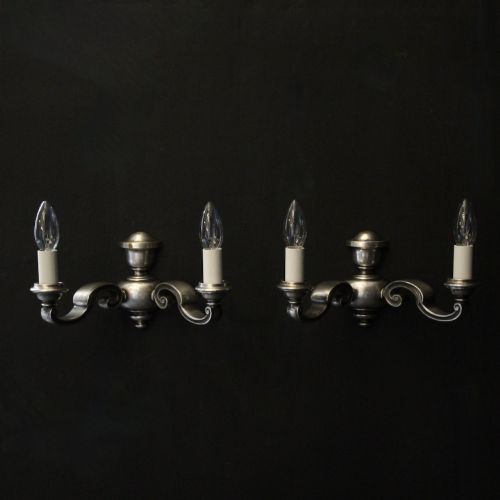
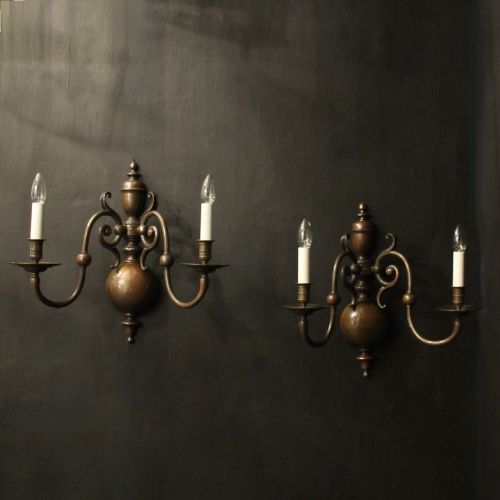
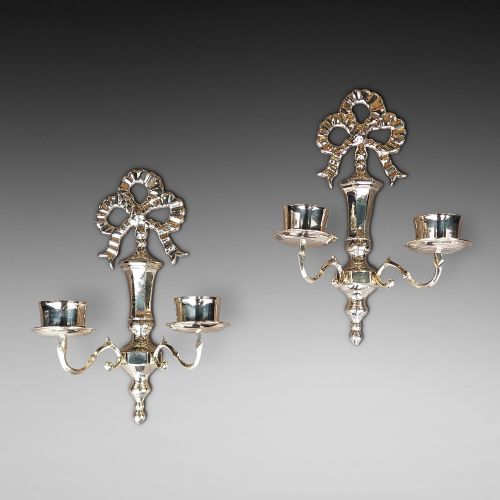
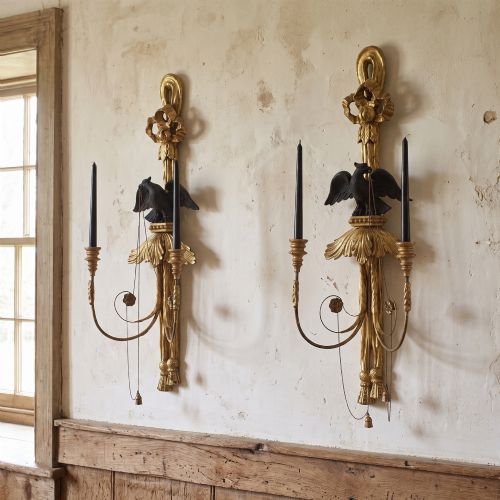
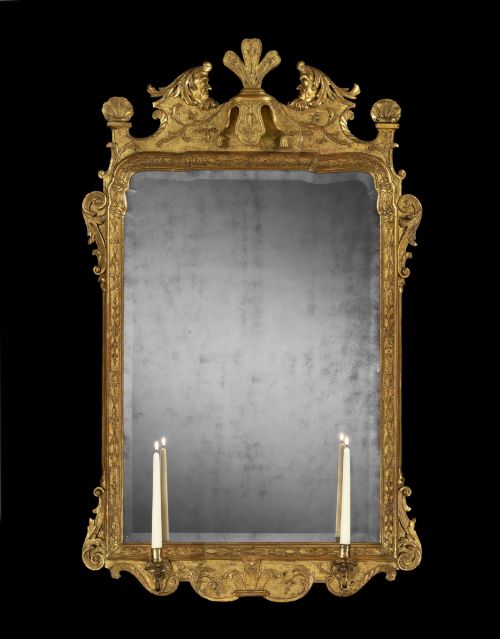
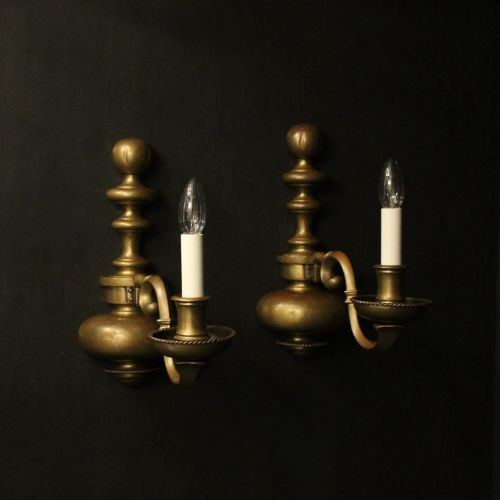
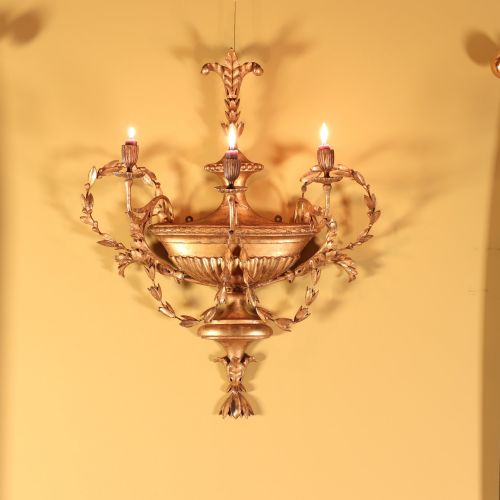
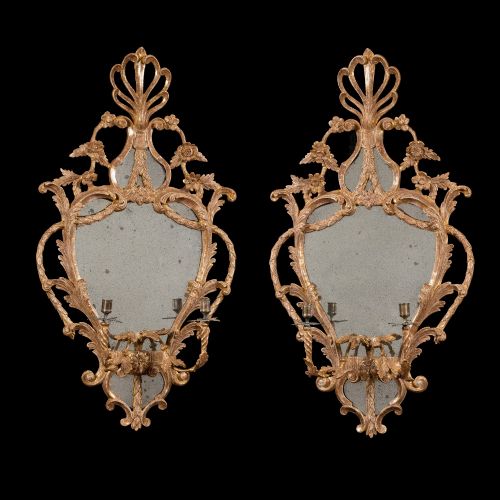
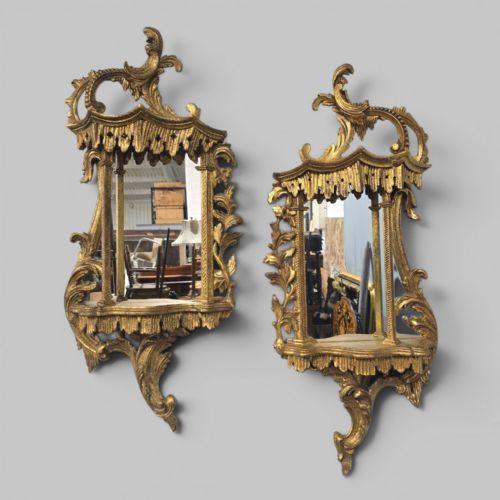
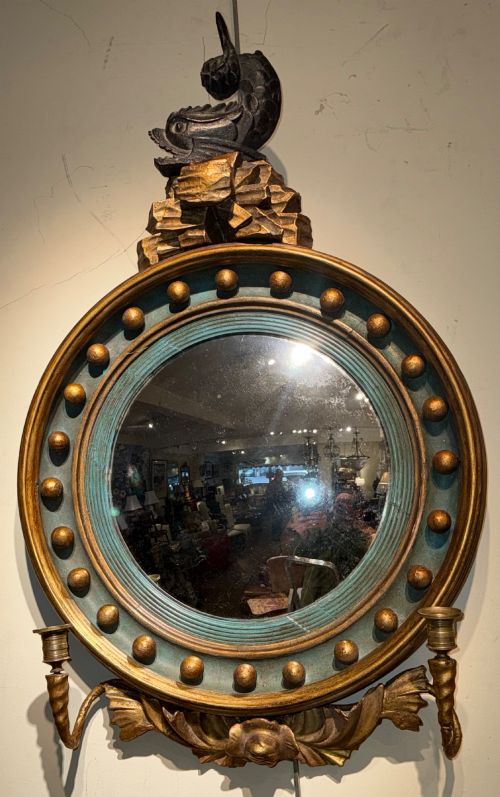
The selection ranges from George I and George II carved gesso frames to substantial Regency convex mirrors and Adam style gilded wall sconces. Many examples appear in pairs, utilised historically to flank paintings, doorways, or fireplaces for balanced illumination. Materials extend beyond wood and gesso to include bronze, brass, silver plating, and cut glass.
While authentic eighteenth-century examples feature prominently, buyers also meet nineteenth-century copies and twentieth-century revival pieces modelled on earlier designs. These variations provide distinct aesthetic choices for interior schemes, connecting modern spaces with historic lighting traditions.
Materials and Construction
Makers shaped carved timber cores, applying layers of gesso to build intricate relief ornament before laying gold leaf or applying paint finishes. Giltwood and gesso pieces demonstrate skilled hand-carving, often incorporating rococo scrolls, architectural motifs, and eagle designs.
Metal components involved casting brass, bronze, or copper, sometimes finished with verdigris patination or silver plating to achieve specific visual effects. Cut glass and mirrored plates were hand-cut and silvered, then integrated into frames and sconce arms to maximise light reflection.
Coach-house style lanterns bring the robust charm of historic transport illumination directly onto interior walls.
Distinctions in Quality
Quality rests upon the crispness of the hand-carved detail in gesso and giltwood frames, where depth and precision separate skilled craftsmanship from simpler production. Superior pieces retain their original gilding surfaces and retain harmonious proportions across arms, brackets, and mirrors.
The sophistication of the casting work defines metal wall lights and sconces, with finely chased bronze or brass displaying sharp articulation. Integrated glass elements, such as cut drops and convex mirror plates, reveal quality through their clarity and historical integrity.
Benjamin Goodison
The Georgian Wall Sconces Glossary
- Girandole
- A wall mirror featuring attached candle branches designed to multiply reflected light within a room. These fixtures combine the functions of a looking glass and a wall sconce.
- Gesso
- A mixture of chalk, gypsum, and size applied to a wooden substrate as a preparation for gilding or painting. Skilled artisans carved intricate relief ornament directly into this hardened surface.
- Giltwood
- Timber, typically pine or oak, coated with gold leaf over a prepared ground. This luxurious finish defines the most ornate mirrors and wall brackets of the period.
- Convex mirror
- A circular looking glass with a curved surface that provides a wide-angle reflection of the interior space. Frequently framed in giltwood with decorative balls or eagle crests during the Regency era.
Georgian Wall Sconces: Frequently Asked Questions
How do I date a wall sconce?
Dating relies upon examining construction methods, wood types, and stylistic vocabulary consistent with documented periods. Eighteenth-century pieces display hand-carved joinery and period gilding techniques.
Revival pieces from the nineteenth and twentieth centuries often utilise machine tooling or distinct framing proportions that reflect the aesthetic tastes of their specific era of manufacture.
Were these originally wired for electricity?
Historic wall sconces were engineered exclusively for wax candles or oil combustion before the advent of modern electrical lighting. Metal arms held drip pans and sockets designed specifically for taper candles.
Many surviving examples have since been professionally adapted to house electrical wiring while preserving their original decorative armatures and reflective backplates.
What is the difference between a sconce and a girandole?
A standard wall sconce consists primarily of a bracket or backplate supporting one or more candle arms without an incorporated looking glass. These focus purely on directional illumination and wall decoration.
A girandole specifically integrates a mirror plate into the design so that the candle flames reflect outwards, enhancing the ambient light of the space.
How should I hang a heavy giltwood mirror?
Heavy carved timber and gesso frames require secure wall fixings distributed across structural studs or masonry anchors. Professional mirror hangers utilise heavy-duty brackets rated to support the considerable combined weight of the wood, glass, and plaster.
Ensuring correct load-bearing capacity prevents stress on the historic frame joints and maintains safe installation.