




Georgian Wall Barometer
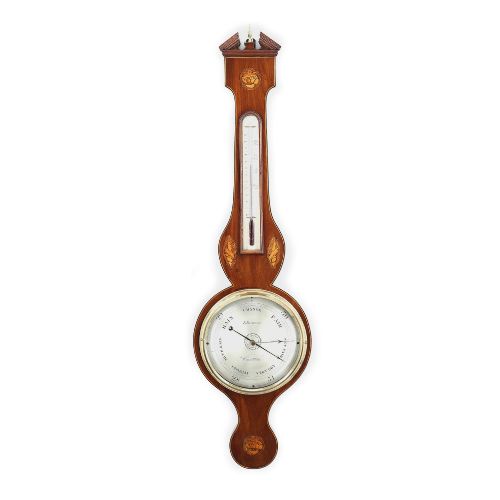
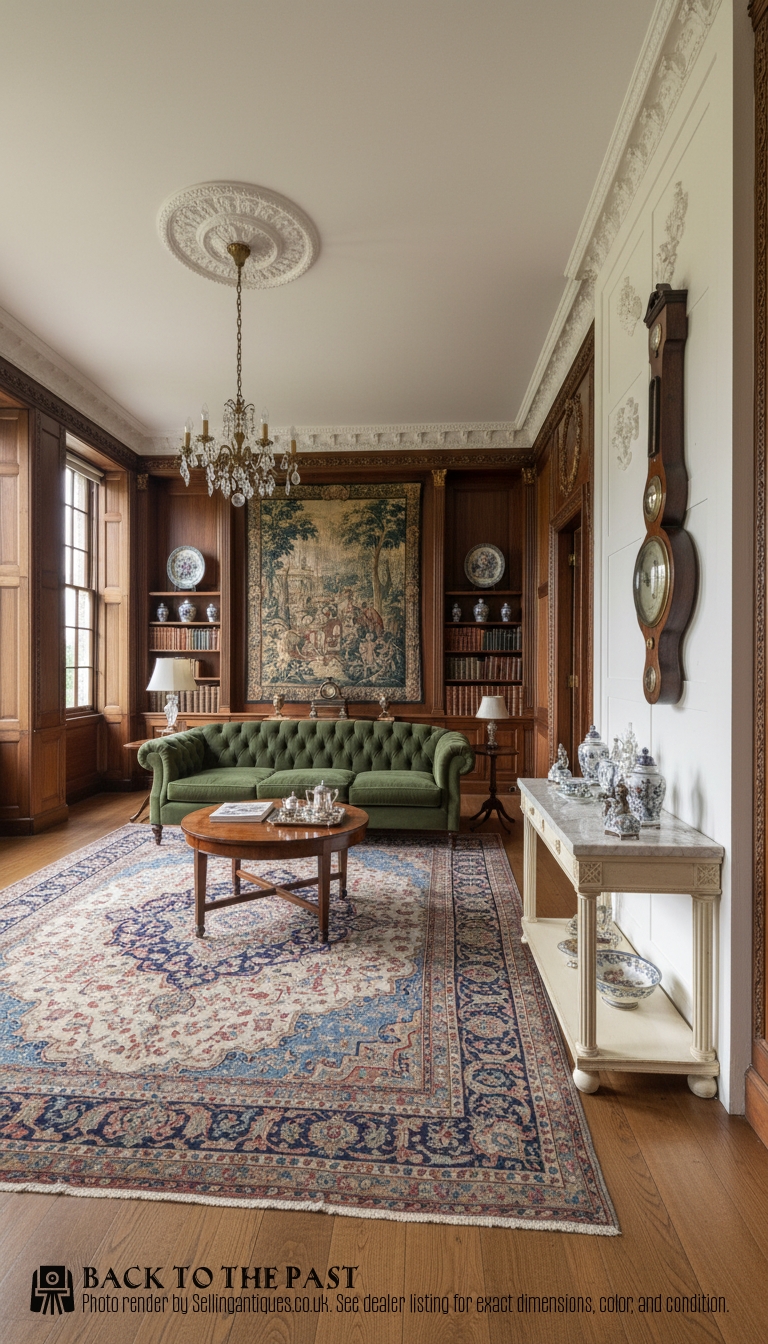
These georgian wall barometer examples measure atmospheric pressure in handsome wooden cases that hang in domestic halls and libraries.
Georgian Wall Barometer
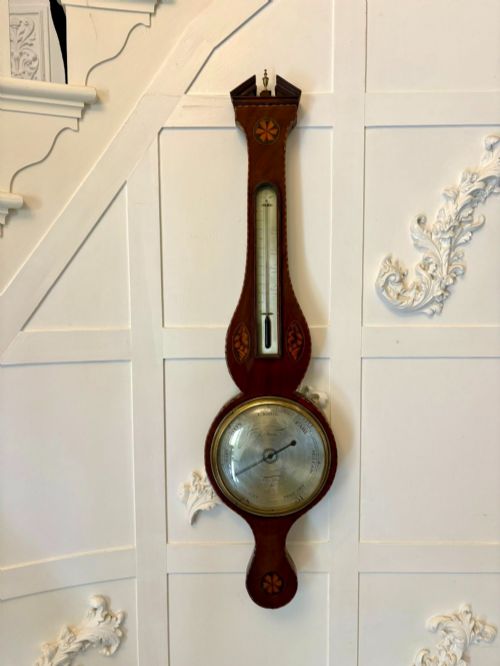
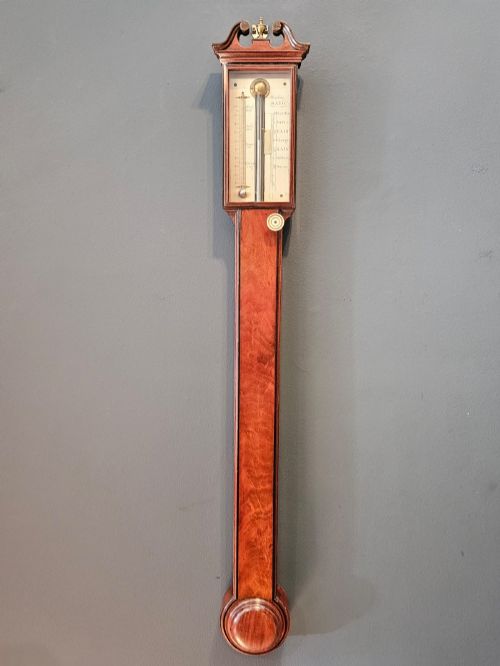
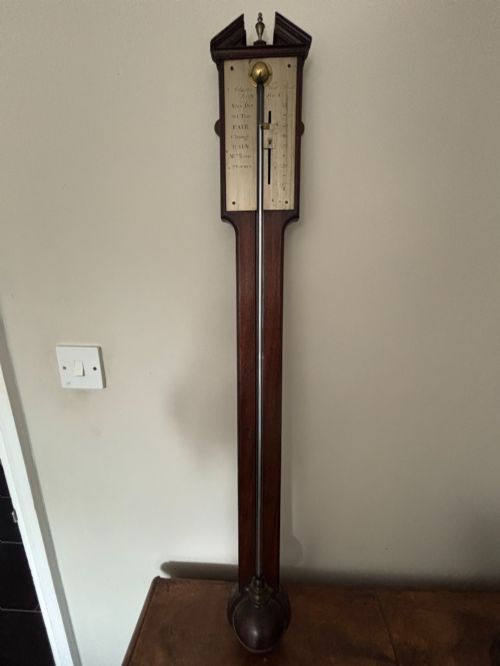
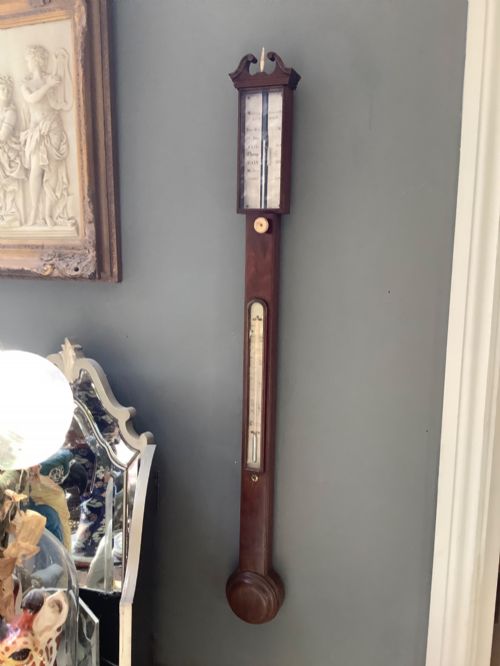
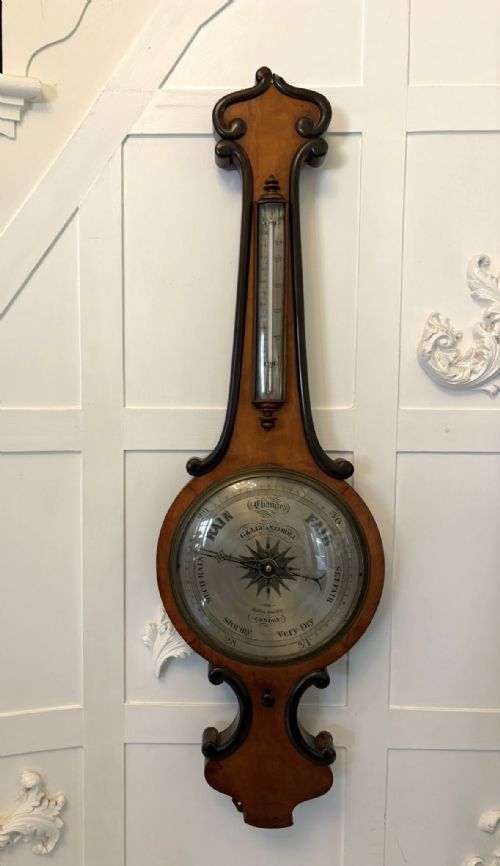
When you search for a georgian wall barometer, you encounter mercury-filled scientific instruments housed in timber frames designed for domestic display. The pieces on this page span the Georgian, Regency, and Victorian periods, taking the form of traditional stick barometers or wider banjo and wheel shapes.
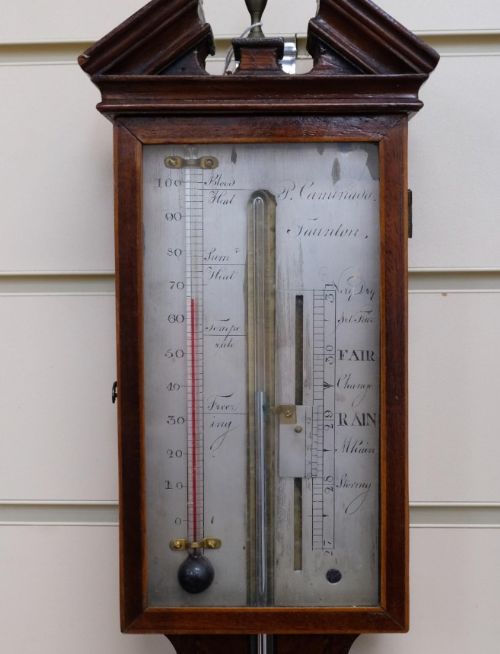
Makers working in London and provincial towns produced these instruments using dense cabinet timbers like mahogany and rosewood. Many pieces incorporate thermometers or silvered metal dials alongside the main pressure tube to provide additional weather readings.

Materials and construction
Cabinetmakers constructed the cases primarily from solid mahogany and rosewood, frequently incorporating boxwood stringing, bone details, and shell inlay or mother-of-pearl decoration. These timber frames protect the fragile glass mercury tubes and support the silvered brass or metal dials.
The working mechanism relies on a column of mercury balanced against atmospheric pressure, housed within glass tubes that connect to visible scales. Skilled craftsmen engraved the numerical scales onto silvered metal plates and mounted spirit thermometers alongside the main barometer columns.
Georgian Wall Barometer Retail Price Guide 2026
Typical asking prices for georgian wall barometer among the pieces listed under this phrase on Sellingantiques today, from the lower quarter to the upper quarter. They describe what is for sale here now, not the wider market.
Listings feature mahogany, rosewood, and walnut cases housing mercury tubes, alongside bone and mother-of-pearl details.
Quality and craftsmanship
The distinction between standard examples and the finest work lies in the refinement of the cabinetmaking and the reputation of the instrument maker. Pieces featuring intricate marquetry, parquetry, or signed dials by notable makers demonstrate superior craftsmanship.
Proportion and the preservation of original wooden veneers and glass components dictate the desirability of each instrument. Refined swan-neck pediments and delicate shell inlays separate distinguished examples from simpler provincial pieces.
P. Caminada·George Adams London·B. Besozzi·G & L Guanziroli·Dollond of London·Ganthony of London·JB Bergna·Prada of High Wycombe·Molton of Norwich·Luisetti of London·Fagioli of Clerkenwell·Bate of London·Jenkins Of Old Swindon·Ronchetti Of Holborn·L Casatelli·Roncoroni·H Marks·Sandrino of Liverpool·Hayward of Ashford·Vecchio & Co
The Georgian Wall Barometer Glossary
- Stick barometer
- A tall, narrow instrument where the mercury tube is exposed along a wooden trunk, offering precise readings of atmospheric pressure. These vertical designs represent the traditional form of domestic weather metres.
- Wheel barometer
- A wider instrument featuring a circular dial that translates the movement of the mercury into a rotating pointer. Often called banjo barometers due to their distinctive silhouette, these frequently incorporate hygrometers or thermometers.
- Silvered metal
- A brass or copper dial treated with a silver solution to create a bright, reflective surface for engraved weather scales. These plates provide high contrast for the black lettering.
- Pediment
- The decorative architectural crowning element at the top of the barometer case. Triangular and swan-neck pediments were common stylistic choices during the Georgian period.
- Marquetry
- The art of applying decorative pieces of veneer to a structure to form intricate patterns and pictures. Floral motifs and geometric lines frequently decorate the timber cases.
Georgian Wall Barometer: Frequently Asked Questions
What is a stick barometer?
A stick barometer is a tall, narrow weather glass mounted on a wooden backplate that displays atmospheric pressure directly through an exposed mercury column.
These vertical instruments were designed to hang securely on interior walls where temperature changes remained stable.
How do wheel barometers work?
Wheel barometers use a concealed siphon tube containing mercury with a small glass float resting on the surface. A delicate silk thread connects the float to a pulley needle on the circular dial, translating vertical movement into rotational pointing.
This mechanical linkage allows the instrument to display weather changes on an easy-to-read round face.
Where were these barometers made?
Makers constructed these instruments in workshops across London and various provincial English towns such as Newcastle, Liverpool, and Norwich. Many immigrant Italian instrument makers also established businesses in British cities during this era.
Signed dials frequently record the exact maker and town of origin.
How do I care for a mercury barometer?
Hang the instrument securely on an interior wall away from direct sunlight, central heating radiators, and heavy vibrations. Maintaining a stable ambient temperature prevents erratic movement in the mercury column.
When moving the piece, the mercury tube must be safely locked or tilted to prevent damage to the glass.