
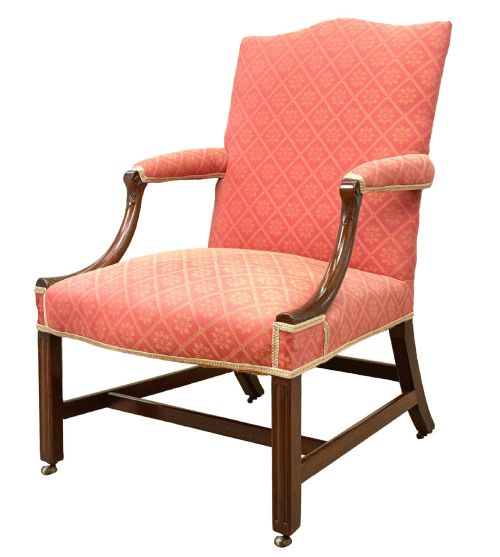
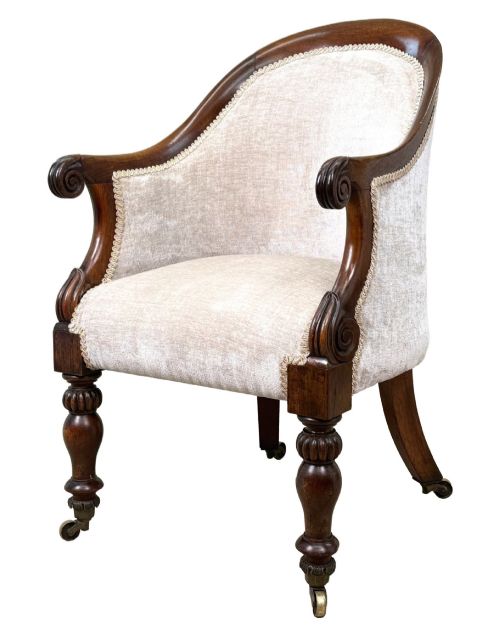
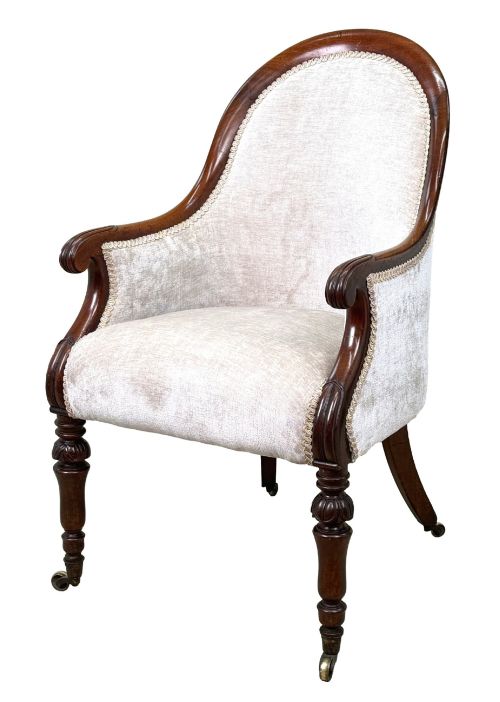
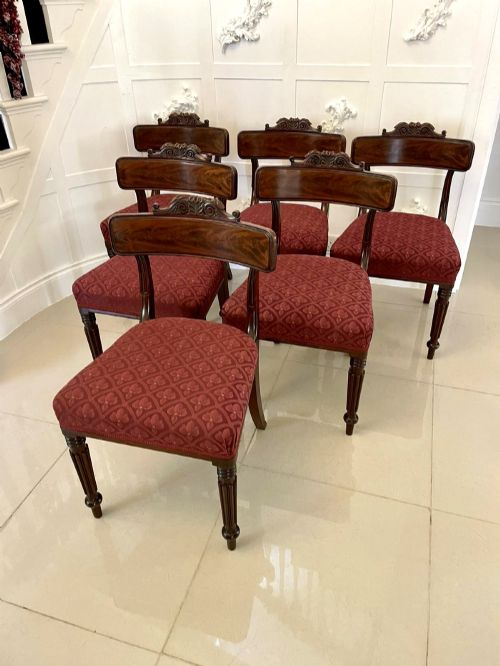
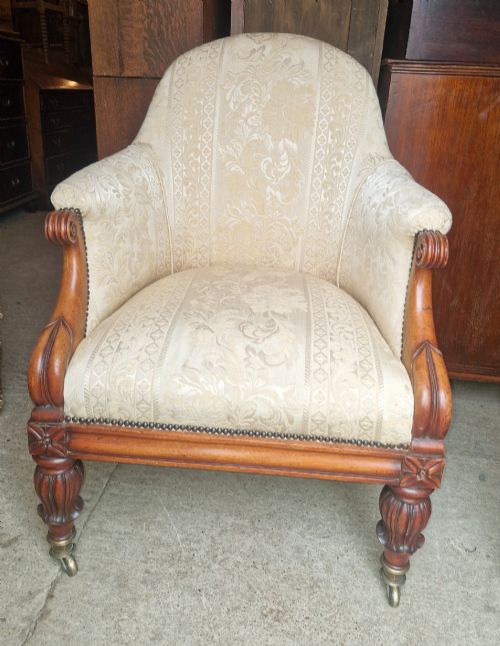
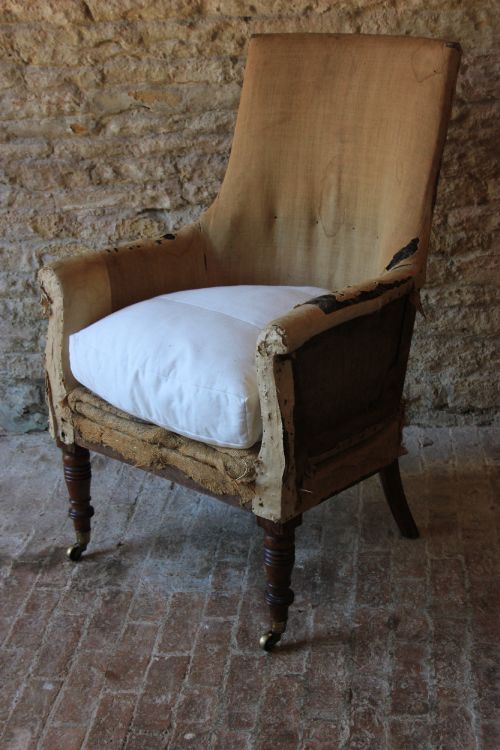
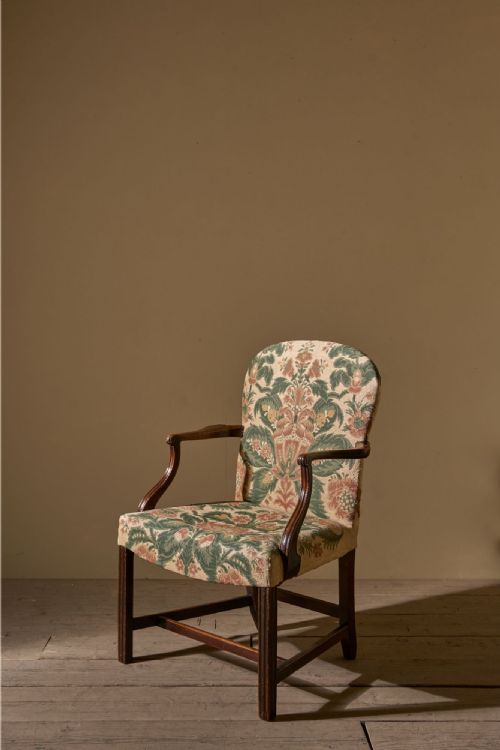
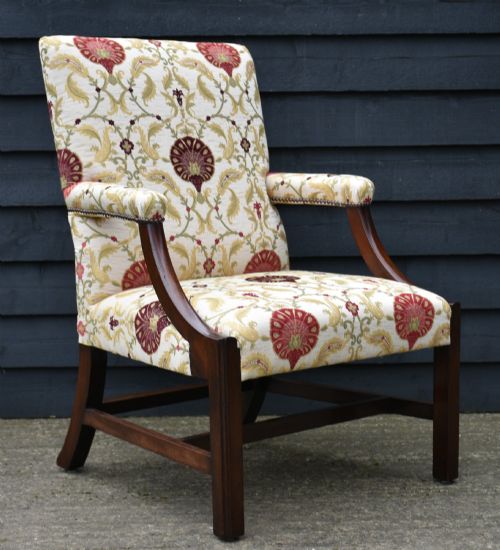
Georgian Upholstered Library Chair
A georgian upholstered library chair offers deep comfort and solid timber frames that anchor a traditional study.
How they were made
Frames rely primarily on solid mahogany, alongside occasional uses of yew wood, walnut and rosewood. Joinery incorporates traditional mortise and tenon construction to support heavy timber sections.
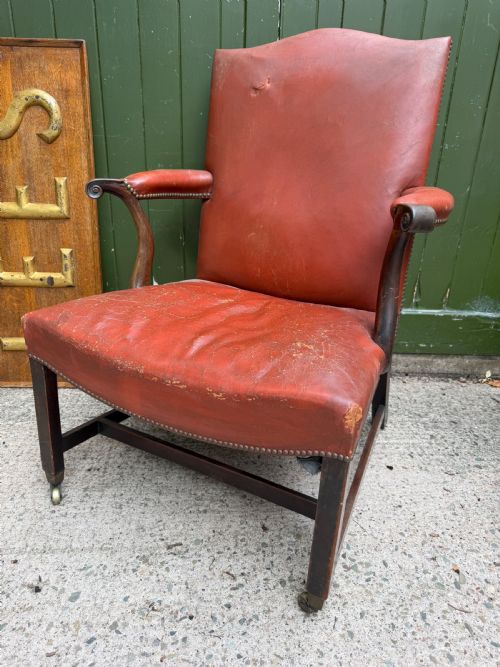
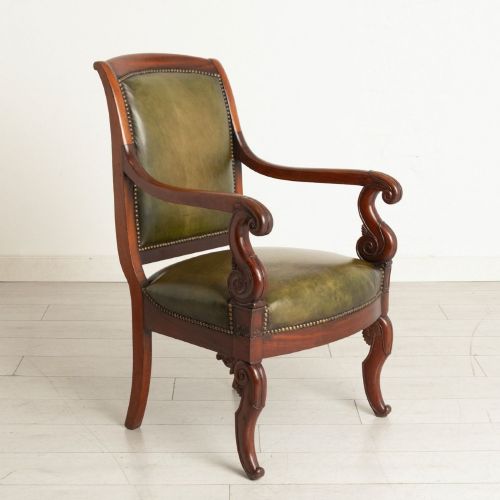
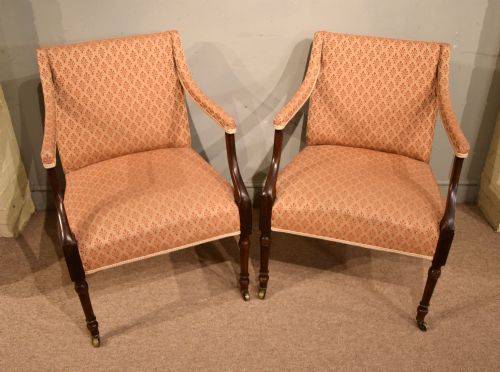
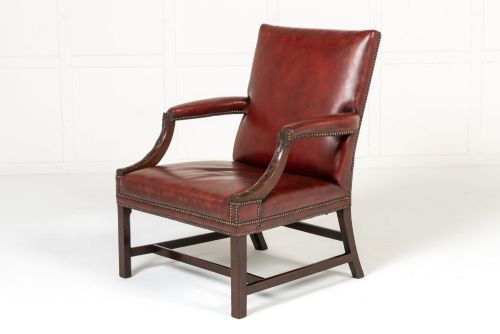
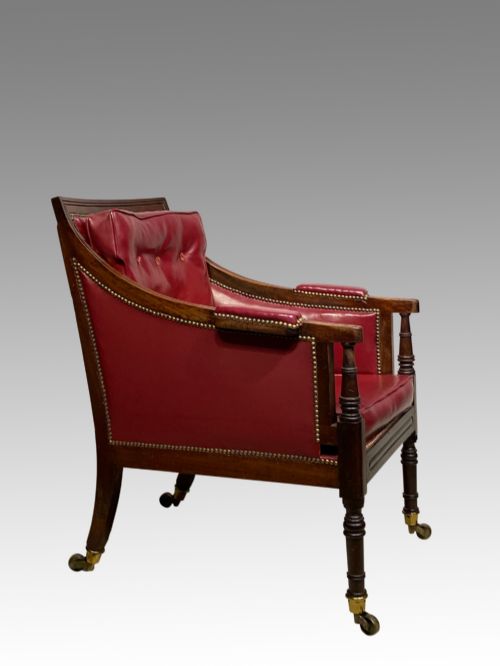
Upholstery techniques utilise fabric, leather, velvet and tapestry textiles secured over supportive internal webbing and stuffing. Brass tacks frequently edge the leather panels on Gainsborough models.
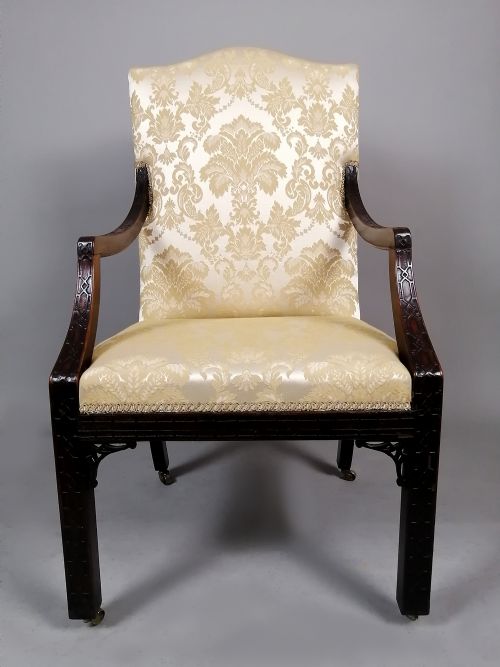
Carving appears on legs and arm supports, ranging from simple hipped cabriole shapes to reeded Regency members and Chinese Chippendale lattice motifs.
What varies in quality
The crispness of the timber carving dictates the baseline of execution, separating standard workshop output from finer London commissions. Untouched frame surfaces retain patination that heavy cleaning or excessive sanding destroys.
Proportion and scale define the visual success of an armchair, particularly in the sweep of the arms and the rake of the back. Heavy or clumsy timber sections diminish the elegance intended by the original maker.
Old red leather retains the imprints of centuries of quiet reading.
Gillows
The Georgian Upholstered Library Chair Glossary
- Gainsborough armchair
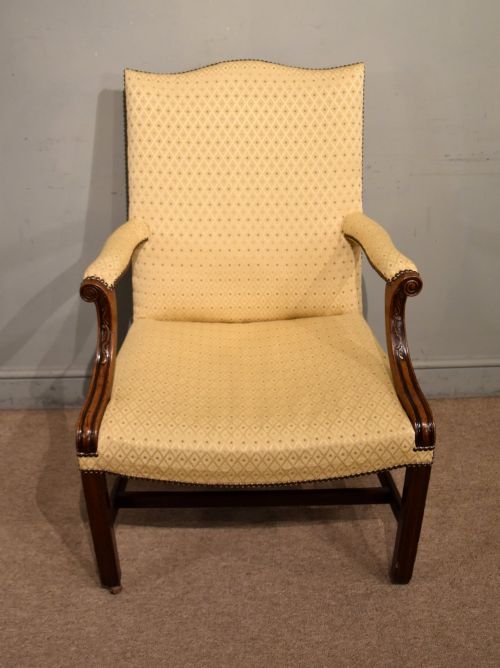
- A wide, open-framed seat with padded arms, upholstered back and seat, standing on four legs. This form gained popularity during the mid eighteenth century for library use.
- Bergère
- An enclosed armchair with stuffed upholstery set within a wooden frame, often featuring cane panels to the sides or back. It emerged in various Regency and nineteenth century iterations.
- Wingback armchair
- A high-backed seat featuring projecting side panels designed to shield the sitter from drafts. Eighteenth century examples utilise deep wings and robust mahogany frames.
- Cabriole leg
- A furniture leg that curves outward at the knee and tapers inward toward the foot, frequently terminating in pad or claw-and-ball feet during the Georgian era.
- Regency style
- Design characteristics spanning the early nineteenth century defined by classical restraint, Grecian influences, and darker timbers such as mahogany and rosewood.
Georgian Upholstered Library Chair: Frequently Asked Questions
What is a Gainsborough chair?
A Gainsborough chair is a wide, open-arm easy chair with a fully upholstered back and seat, designed during the eighteenth century for reading and writing.
These pieces typically feature mahogany frames with carved cabriole or straight legs and leather upholstery.
How do I identify a Georgian library chair?
Georgian library chairs exhibit solid mahogany frames, traditional joinery, and period upholstery materials such as leather or tapestry fabric.
Look for structural proportions typical of the eighteenth century, including pegged joints and hand-carved arm supports.
Were these chairs used at desks?
Certain library armchairs double as desk chairs due to their height and supportive upholstered backs.
Authors and scholars utilised these sturdy seats for prolonged periods of reading and correspondence in private studies.
What is the difference between a wing chair and a tub chair?
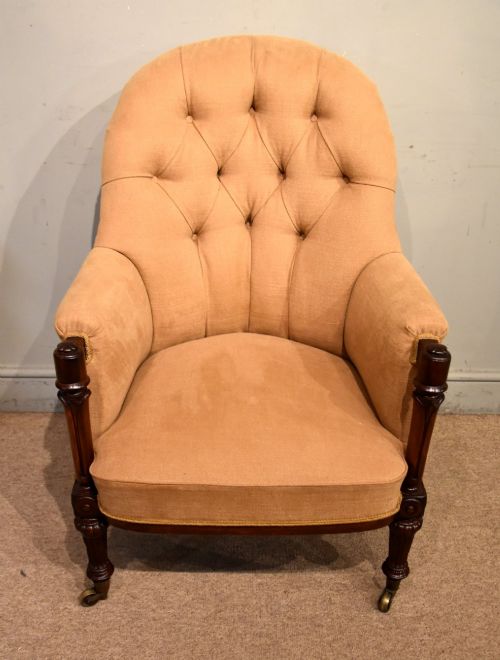
Wing chairs feature high backs with protective side panels, whereas tub chairs present a continuous curved back and armrest structure.
Both forms appear across the eighteenth and nineteenth century listings in mahogany and various textile coverings.