

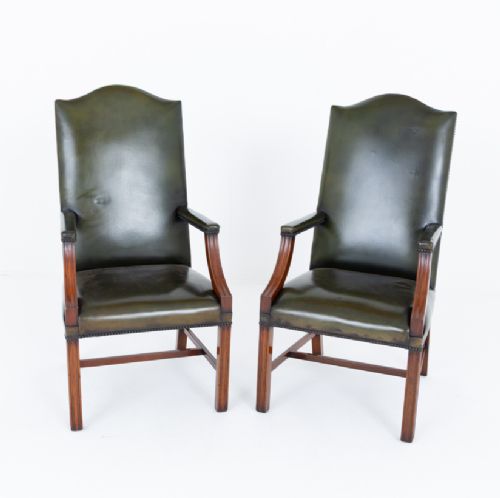


Vintage Gainsborough Style Chair
A vintage gainsborough style chair brings substantial presence to a study, combining a wide upholstered seat with open arms for reading or desk work.
Vintage Gainsborough Style Chair
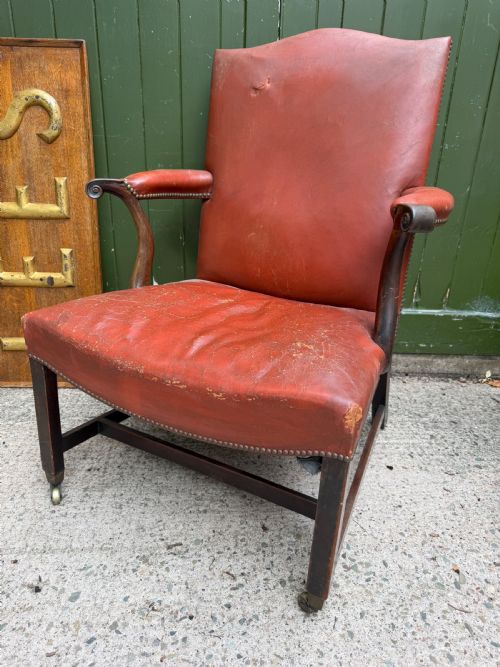
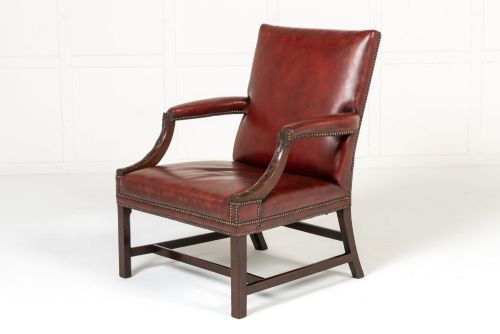
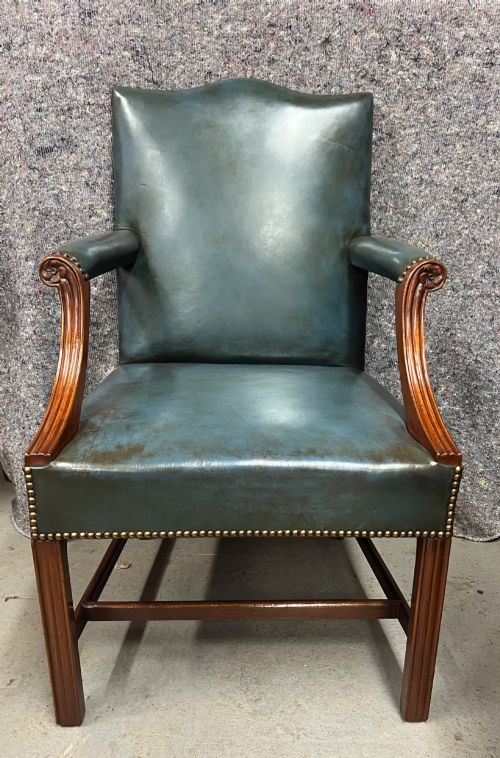
A vintage gainsborough style chair is a wide, upholstered armchair designed for libraries, writing desks, and studies. These seating forms typically feature a padded back, upholstered armrests, and open wooden sides that reveal the frame beneath.
The versions most frequently met on this page date from the Georgian period through the nineteenth and early twentieth centuries, including Georgian Revival interpretations. Makers across these eras utilised traditional cabinet woods to build sturdy, functional library seating.
Forms span from eighteenth-century originals to later revival pieces finished in mahogany or walnut. Buyers encounter variations in proportion, ranging from standard proportions to large and over-scaled library armchairs.
Materials and construction methods
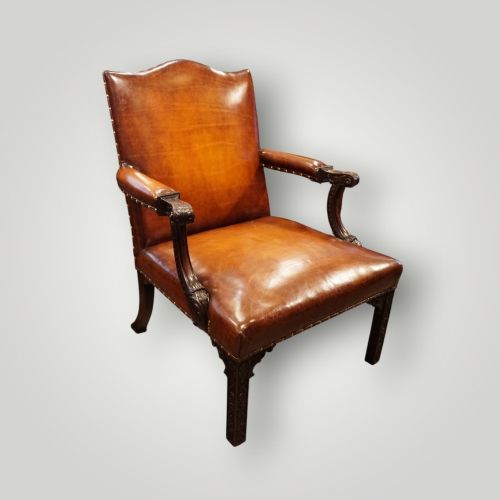
Frames are constructed predominantly from solid mahogany and walnut, frequently joined with traditional cabinetry methods to support the weight of the upholstered structure. Carved details such as blind fretwork appear on select mahogany examples.
Upholstery relies on leather, including hand-dyed English hide and red leather, alongside silk, fabric, and textile coverings. Brass tacking often secures the leather edges neatly to the wooden framework.
Vintage Gainsborough Style Chair Retail Price Guide 2026
Typical asking prices for vintage gainsborough style chair among the pieces listed under this phrase on Sellingantiques today, from the lower quarter to the upper quarter. They describe what is for sale here now, not the wider market.
Listings feature mahogany and walnut frames paired with leather, silk, and textile upholstery across Georgian, Victorian, and Edwardian periods.
Distinctions in quality
The tier of a piece depends on the depth of carving and the weight of the timber utilised in the frame. Superior examples display crisp hand-carved ornamentation, such as blind fretwork, upon solid mahogany or walnut rather than plain timber.
The choice and application of upholstery materials create a clear division in grade. Hand-dyed English hide leather secured with individual brass tacks elevates the piece above standard fabric or lesser leather coverings.
The Vintage Gainsborough Style Chair Glossary
- Gainsborough chair
- A wide, open-armed library or desk armchair originating in the eighteenth century. This form allows ample room for the voluminous skirts worn during the period.
- Blind carving
- Carved ornament applied in low relief to a flat surface without piercing the wood. This technique appears on the stiles and rails of finer eighteenth-century and revival frames.
- Library armchair
- A sturdy, upholstered seating form designed for reading rooms and studies. These chairs prioritise heavy padding and supportive armrests for extended periods of use.
- Regency
- An English design period spanning the early nineteenth century. Pieces from this era often incorporate classical architectural motifs and refined mahogany framing.
- George III
- The stylistic era covering the mid to late eighteenth century. Furniture from this period is noted for architectural proportion and substantial mahogany construction.
Vintage Gainsborough Style Chair: Frequently Asked Questions
What is a gainsborough chair used for?
These pieces function primarily as library armchairs, reading seats, or executive desk chairs. Their wide proportions accommodate users comfortably during writing or study.
Historically, the open arms provided clearance for fashionable garments while allowing the occupant to sit close to a writing table.
How do I date a gainsborough chair?
Dating relies on examining the timber grain, construction joints, and framing style. Eighteenth-century models display different joinery methods compared to later nineteenth-century revivals.
Upholstery materials and secondary woods inside the frame also offer clues to whether a piece is an original period example or a later revival.
Are these chairs comfortable for daily use?
Most examples provide firm support due to their traditional padding and sturdy wooden construction. The wide seat and padded back make them suitable for sitting at a desk.
Buyers intending to use them daily should consider the seat height and depth relative to their modern writing desk or table.
What is the difference between original and revival chairs?
Original pieces date back to the Georgian period and carry the wear of centuries of use. Revival chairs were manufactured later, often during the Victorian or Edwardian eras, copying earlier designs.
Both categories utilise quality timber and traditional upholstery methods, though revival pieces generally show less age in the internal structure.