



Striped Fabric Accent Chair
Striped fabric accent chair examples combine period timber frames with patterned textile upholstery, offering functional seating with historical character.
Striped Fabric Accent Chair
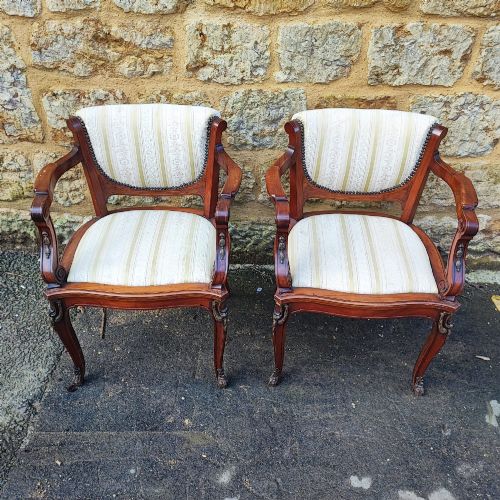
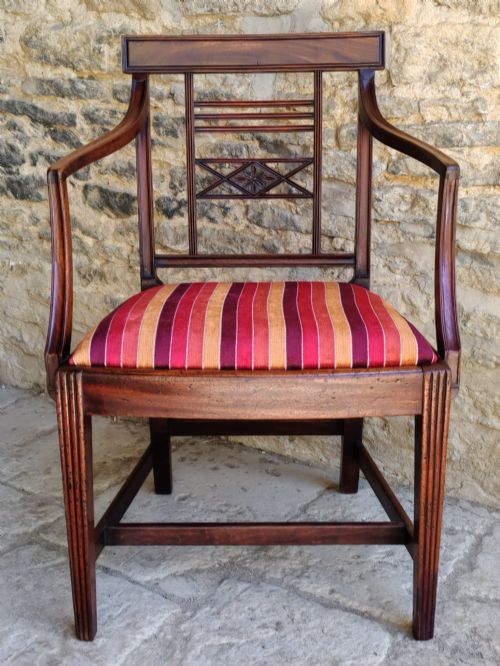
A striped fabric accent chair bridges centuries of seating design, ranging from 18th Century and Georgian walnut ribbon back models to Edwardian oak slipper chairs and French armchairs from 1900. These pieces serve primarily as occasional seating in reception rooms and bedrooms, utilising distinct periods such as Victorian and Louis XVI Revival.
The most common versions met on this page include Edwardian upholstered open armchairs and slipper chairs featuring reupholstered coastal stripe fabric or traditional textile coverings. Frames span from carved mahogany and walnut to solid oak, reflecting diverse regional styles including French chateau aesthetics and Portuguese elbow chairs.
Object types vary widely across the inventory, encompassing formal library armchairs, carvers, and boudoir chairs alongside large upholstered throne chairs. Buyers encounter everything from compact 1930 vintage French boudoir pieces to substantial 1860 carved walnut ladies chairs.
Materials and construction methods
Construction relies heavily on traditional cabinet timbers, principally mahogany, walnut, and solid oak, shaped through period joinery techniques and sophisticated carving. Frames frequently incorporate decorative woodwork, such as ribbon backs or painted finishes on French models.
Upholstery uses various textiles and fabrics, often applied during modern reupholstery campaigns on Edwardian and older frames. Metal and brass elements occasionally appear in structural fixings, casters, or decorative detailing on period chairs.
Striped Fabric Accent Chair Retail Price Guide 2026
Typical asking prices for striped fabric accent chair among the pieces listed under this phrase on Sellingantiques today, from the lower quarter to the upper quarter. They describe what is for sale here now, not the wider market.
Several chairs bear mysterious stamps, such as the elusive 'CVS' mark left by a diligent nineteenth-century maker.
Factors of craftsmanship and distinction
The sophistication of the timber frame carving and the integrity of the underlying joinery dictate the baseline quality of each piece. Finer examples display crisp detail work in walnut or mahogany, whereas simpler iterations utilise straightforward oak frames.
The selection and application of the textile covering significantly influence the overall character, particularly when historical frames receive fresh striped upholstery. Proportion, scale, and the harmony between the period frame style and the textile choice separate standard seating from exceptional examples.
The Striped Fabric Accent Chair Glossary
- Carver
- An armchair, usually with open arms, designed for the head of a dining table or as an occasional seat. These sturdy wooden frames often match a set of smaller dining chairs.
- Slipper chair
- A low-seated upholstered chair originally designed for ladies' bedrooms to assist with putting on shoes. They typically lack arms and feature compact dimensions.
- Ribbon back
- A chair back design characterised by carved wooden splats that imitate intertwined ribbons. This ornamental style frequently appears on Georgian walnut seating.
- Boudoir chair
- A small, comfortable occasional chair intended for a private dressing room or sitting room. These pieces often embrace decorative French or Victorian stylistic influences.
Striped Fabric Accent Chair: Frequently Asked Questions
What periods do these chairs come from?
The available selection spans multiple centuries and design eras, ranging from 18th Century and Georgian pieces through Victorian and Edwardian examples up to the 1930s.
Buyers encounter various stylistic revivals alongside pieces built during specific decades like 1860, 1880, 1900, and 1920.
Are these chairs newly upholstered?
Several pieces in the collection have been reupholstered in recent times, pairing older wooden frames with contemporary striped textile coverings.
This approach refreshes the appearance of Edwardian and older armchairs while preserving the structural integrity of the original timber framework.
How do I identify a Georgian chair?
Georgian pieces typically showcase traditional timbers like walnut or mahogany, often featuring refined details such as ribbon backs or classical proportions.
Comparing the joinery style and decorative carving helps distinguish these earlier pieces from later Edwardian or Victorian interpretations.
Where should I place an accent chair?
These versatile chairs suit various living spaces, functioning as occasional seating in drawing rooms, bedrooms, or libraries.
Smaller slipper and boudoir chairs fit neatly into compact corners, while larger arm and library chairs anchor more expansive room layouts.