

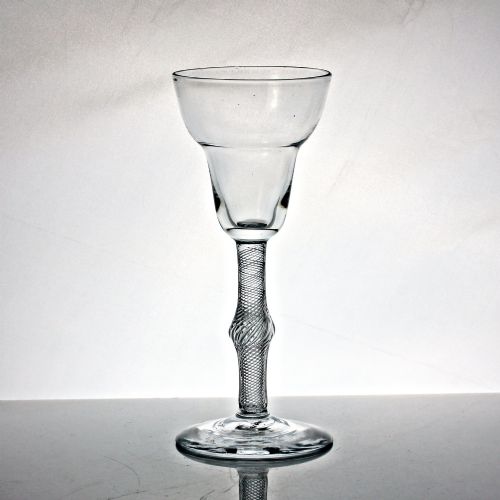

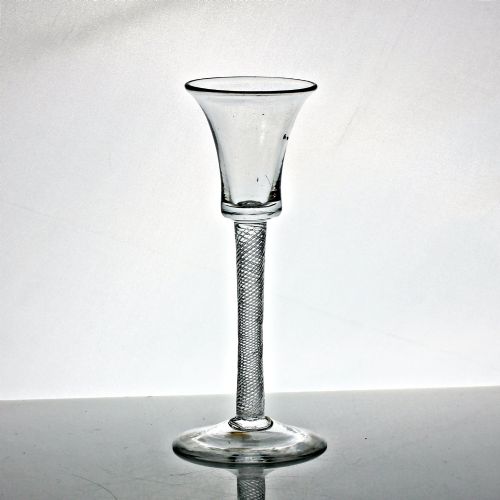
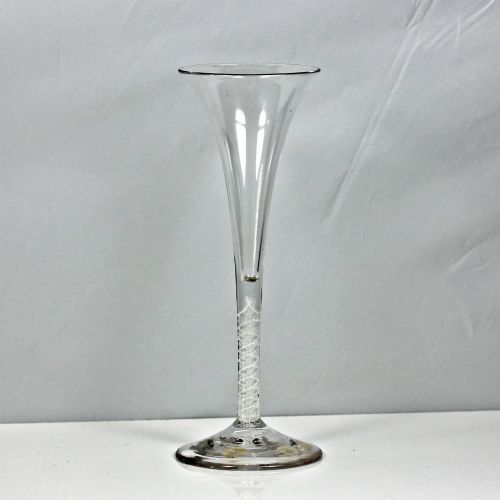
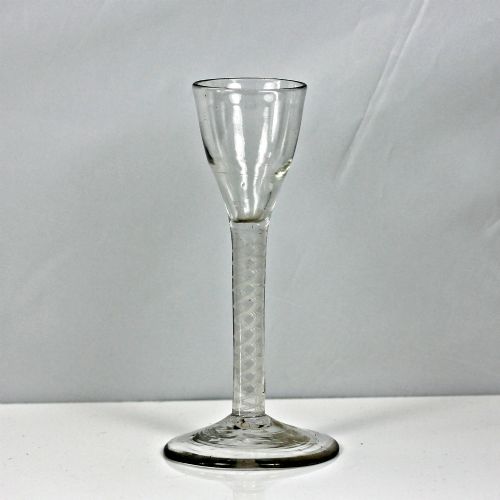
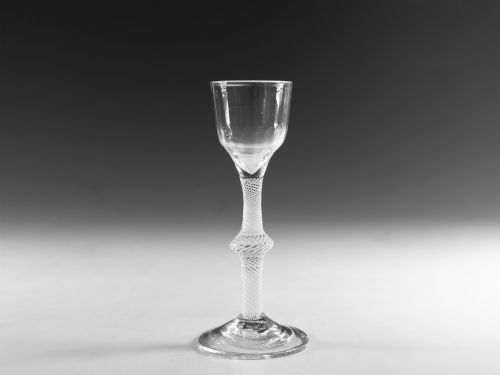

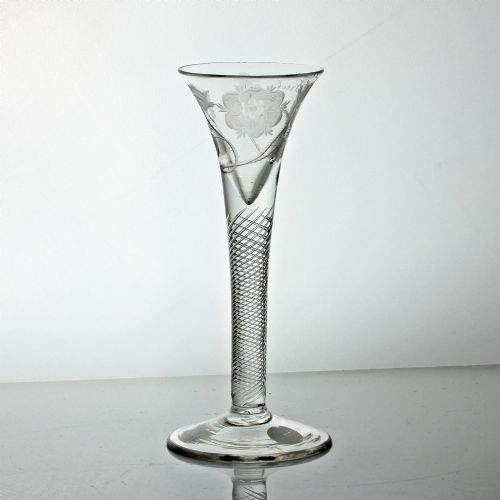
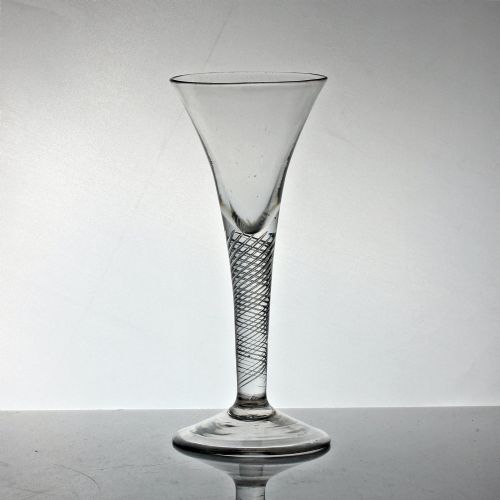


Georgian Twist Stem Goblet
A georgian twist stem goblet brings eighteenth-century glassmaking directly to the table, offering tactile stems and rich historical context for any collector.
Georgian Twist Stem Goblet
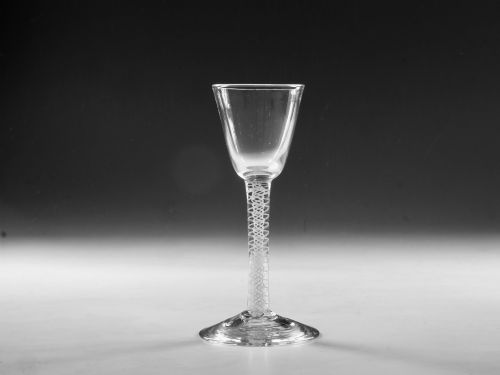
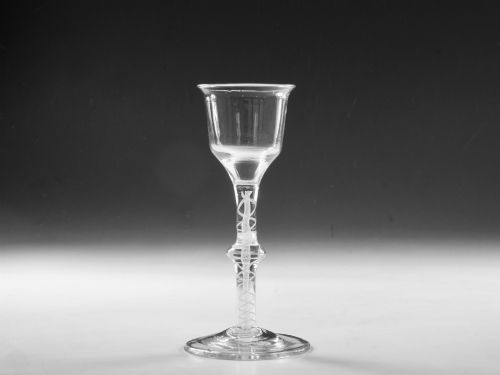
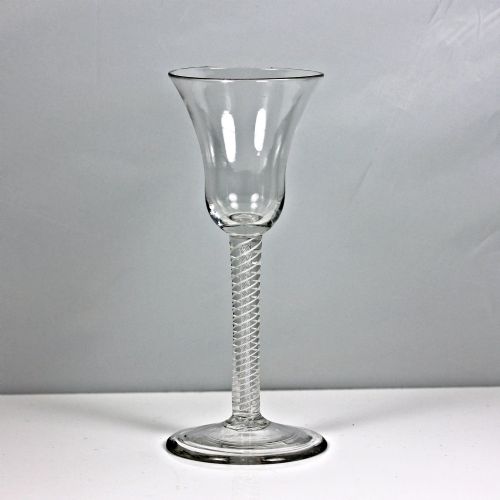
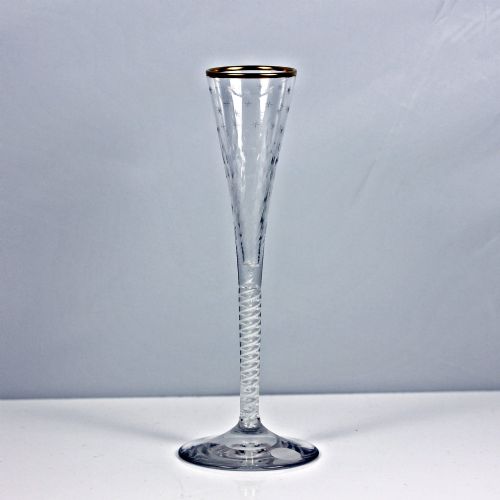
A georgian twist stem goblet belongs to a distinct group of drinking vessels produced during the eighteenth century, encompassing forms such as wine glasses, ale glasses, champagne flutes, and cordial glasses. These pieces showcase various bowl shapes, including trumpet, ogee, flared bucket, and ovoid forms, sometimes resting on domed or conical feet.
Buyers browsing this selection frequently encounter wine glasses and goblets featuring air twists, opaque twists, mixed twists, and composite stems. The inventory bridges the mid-to-late eighteenth century, capturing domestic dining habits and social rituals of the Georgian era through clear lead glass and flint glass construction.
Materials and Construction
Maker operations utilised lead glass, lead crystal, and flint glass to achieve the exceptional clarity and weight characteristic of these vessels. The high lead content allowed craftsmen to manipulate the metal while hot, drawing out slender stems and forming intricate internal threads without clouding the material.
Internal threads within the stems were formed by trapping air bubbles or inserting white enamel canes into the molten glass before twisting and pulling the rod. Variations such as single series, double series, multi-spiral air twists, and corkscrew designs required steady hands and precise temperature control.
Several glasses secretly support political causes, carrying hidden Jacobite or anti-Jacobite engravings meant for clandestine toasts.
Evaluating Quality and Design
Quality in these vessels rests upon the precision and complexity of the stem formation alongside the purity of the metal. Finer examples display symmetrical twist patterns, crisp engraving on the bowl, and balanced proportions between the foot, stem, and bowl.
The Georgian Twist Stem Goblet Glossary
- Air twist
- A stem containing spiral threads of enclosed air bubbles formed by drawing and twisting heated glass rods. This technique produces a luminous internal pattern.
- Opaque twist
- A stem incorporating white enamel glass threads rather than air, creating solid white lines within the clear lead glass.
- Ogee bowl
- An S-shaped curved bowl profile that flares outward at the rim, frequently seen on eighteenth-century drinking vessels.
- Composite stem
- A stem constructed from multiple distinct sections, often combining an air twist or opaque twist portion with a plain or knop section.
- Flint glass
- An early British term for high-quality lead glass prized for its refractive brilliance and heavy weight.
Georgian Twist Stem Goblet: Frequently Asked Questions
How do I date a twist stem glass?
Dating relies upon stylistic markers, bowl forms, and manufacturing techniques recorded across the eighteenth century. Mid-century examples often feature air twists, while opaque twists became prominent toward the seventeen-sixties.
Foot shapes, metal weight, and engraving styles provide additional clues for narrowing down the production period within the Georgian era.
What is the difference between air and opaque twists?
Air twists contain trapped helical channels of air enclosed within the clear stem. They rely on light refraction through empty spaces.
Opaque twists incorporate solid white enamel rods drawn into the molten glass, producing bold, visible white lines inside the stem.
Were these goblets used for everyday dining?
These vessels served aristocratic and middle-class households for consuming wine, ale, champagne, and cordials during formal meals and social gatherings. Their delicate stems and lead crystal composition made them prestige items rather than rough daily utility wares.
Specialised forms like ale flutes and sweetmeat glasses catered to specific beverage courses on the Georgian table.
What does mixed twist mean?
A mixed twist combines both air bubbles and white enamel threads within a single stem structure. This advanced technique creates complex internal patterns.
Such stems demonstrate a high level of glasshouse skill during the mid-eighteenth century.