

Georgian Turned Treen
When you handle georgian turned treen, you hold domestic history carved from timber on a lathe.
Georgian Turned Treen
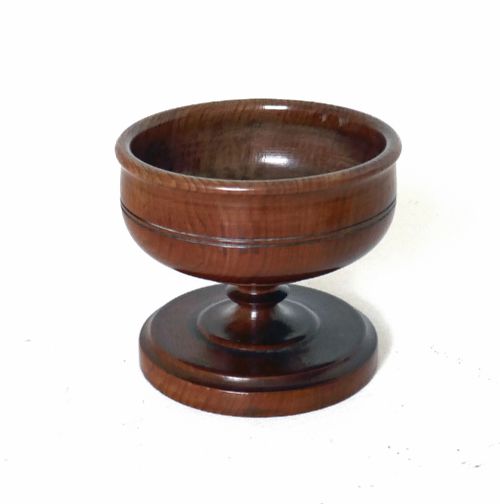
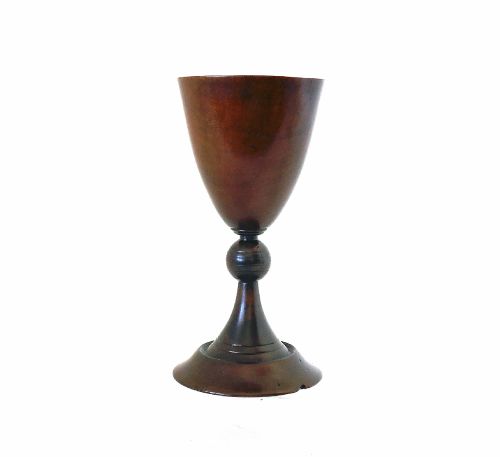
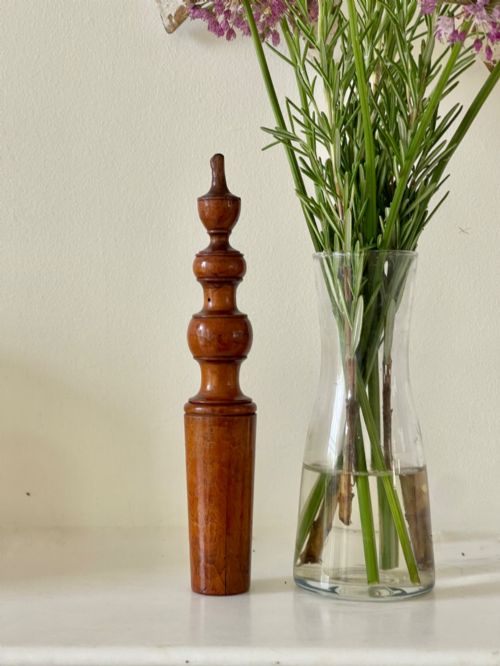
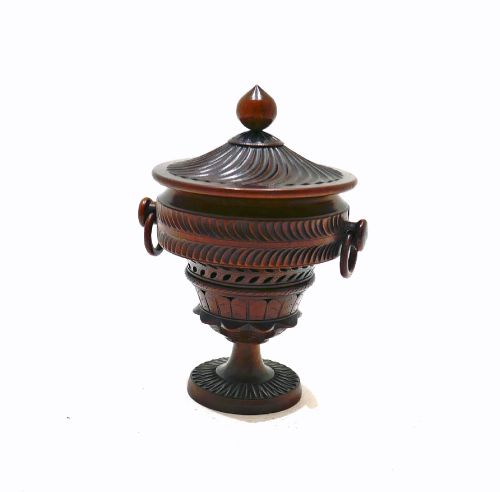
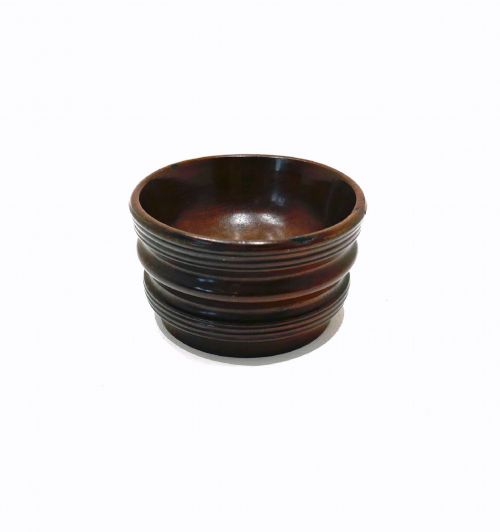
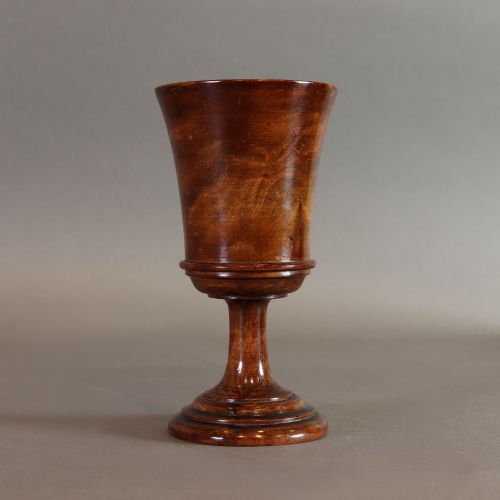
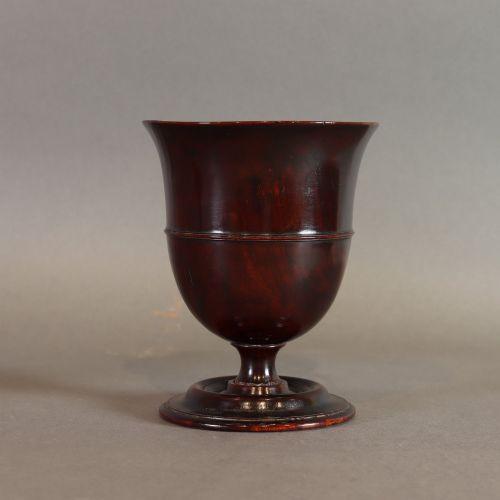
Georgian turned treen encompasses small domestic wooden objects shaped on a lathe during the eighteenth and nineteenth centuries. Buyers encounter practical items like salt cellars, goblets, spice towers, and nutmeg graters alongside decorative urns and wig stands.
The selection ranges from early Georgian pieces through Regency forms into Victorian examples. Most items serve specific household functions relating to dining, spice storage, and personal grooming.
English and Continental workshops produced these objects for everyday use in kitchens, parlours, and sewing rooms. Fruitwood, yew, walnut, and boxwood appear frequently across the surviving forms.
How they were made
Craftsmen shaped these objects on a lathe using dense hardwoods and fruitwoods such as fruitwood, yew wood, walnut, boxwood, and lignum vitae. The inherent grain and natural weight of the timber determined the stability of turned vessels like goblets and spice towers.
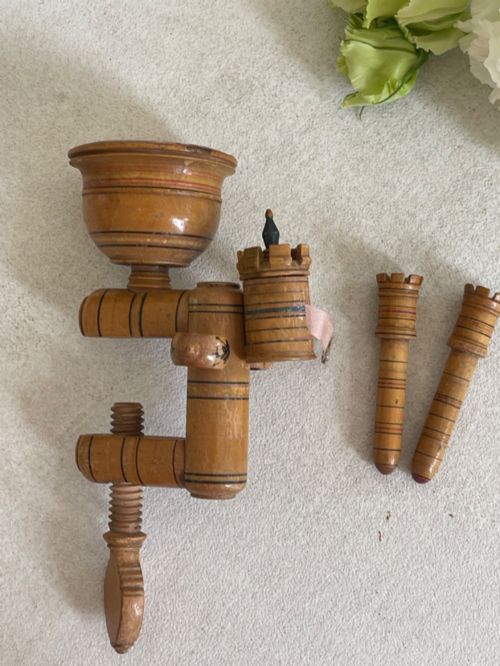
Makers utilised specialised joints and threads for multi-tiered spice towers, sewing clamps, and lidded pomanders. Metal elements like silver mounts or gilt accents occasionally complement the turned wood structures.
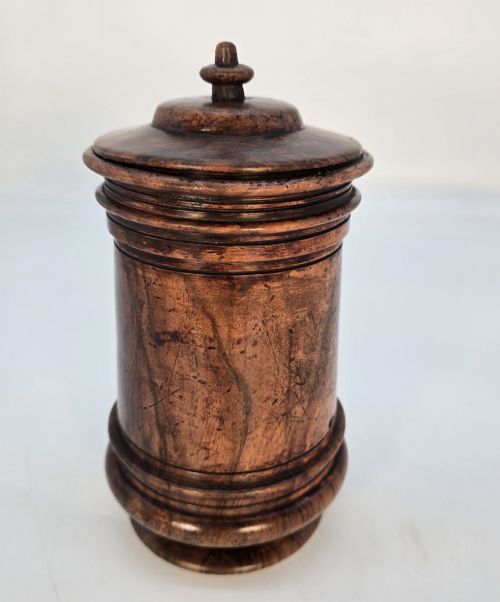
Coopering techniques appear in specific items like tobacco jars and pipe stands, combining stave construction with turned lids and bases. Surface finishes rely on natural oils and friction polishing rather than heavy lacquers.
Listings feature items dated across the eighteenth and nineteenth centuries, spanning the Georgian, Regency, and Victorian eras.
What varies in quality
Quality rests in the precision of the turning and the crispness of the mouldings on stems, bases, and lids. Better examples maintain balanced proportions and a sympathetic relationship between the timber grain and the object's form.
The choice of wood significantly influences desirability, with richly figured yew, laburnum, and well-patinated fruitwood commanding attention. Pieces retaining original surface colour and minimal wear demonstrate superior preservation.
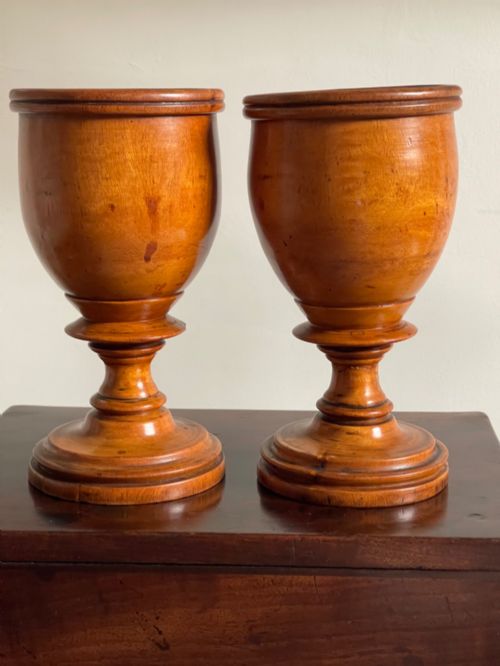
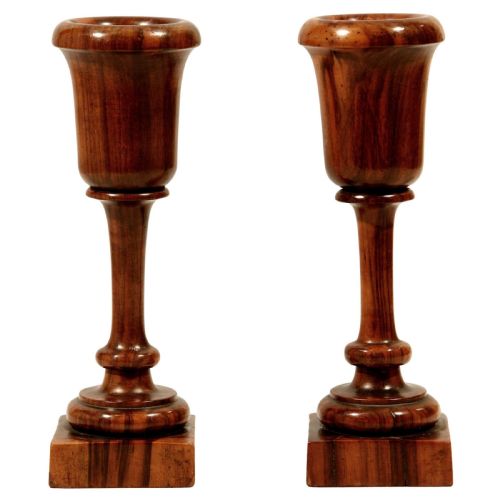
Complexity of form distinguishes standard items from exceptional ones, such as multi-tiered spice towers, sliding nutmeg graters, and matching pairs of urns or goblets.
The Georgian Turned Treen Glossary
- Treen
- Small handmade wooden domestic objects. The term derives from old English words meaning tree or wood.
- Spice tower
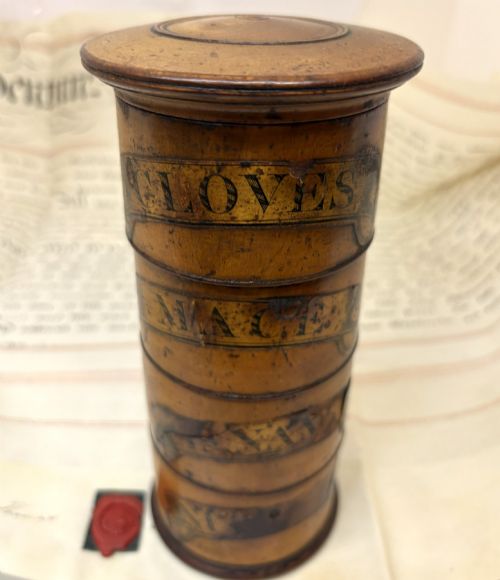
- A multi-tiered turned wooden vessel used for storing various culinary spices. Sections typically screw or fit together tightly.
- Lignum vitae
- A dense, heavy exotic wood prized by turners for its durability and oily nature. It sinks in water and takes a fine polish.
- Tunbridge Ware
- Small wooden items decorated with precise mosaic patterns of different coloured woods. This technique originated in Kent.
- Wig stand
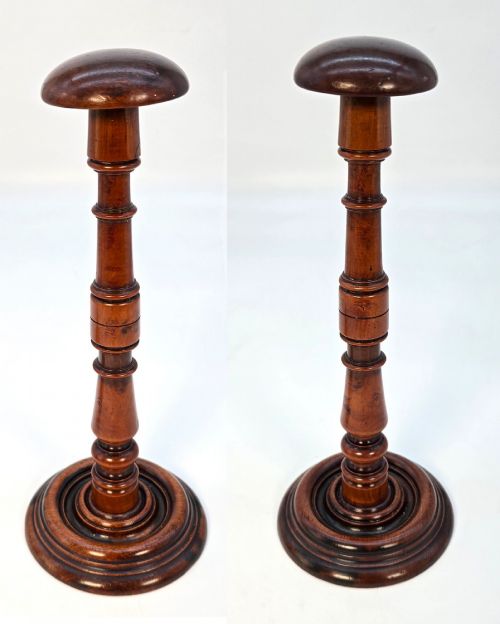
- A turned wooden pillar designed to support a perruque or wig when not in wear. These often feature a bulbous or spherical top.
- Negus strainer
- A small perforated utensil used for filtering spiced wine drinks. Examples in this category incorporate turned wooden handles or bowls.
Georgian Turned Treen: Frequently Asked Questions
What is georgian turned treen?
Georgian turned treen comprises small functional and decorative wooden objects produced on a lathe during the eighteenth and early nineteenth centuries. These items served daily domestic needs in the kitchen, parlour, and dressing room.
Craftsmen utilised dense hardwoods to shape practical household goods that double as sculptural miniature art. Each piece reflects the utility and aesthetic preferences of the Georgian domestic interior.
How were spice towers used?
Spice towers held distinct culinary spices in stacked, interlocking sections during an era when spices were costly and measured carefully. Cooks and hostesses kept them close at hand for seasoning food and drinks at the table.
The multi-tiered construction kept aromatic powders contained until needed for service. The tight joints prevented moisture from ruining expensive imports.
What woods did turners use?
Turners selected dense timbers that accepted fine detail and resisted splitting under lathe work. Fruitwood, walnut, yew, boxwood, laburnum, and lignum vitae appear regularly across these objects.
The natural grain patterns provided decorative surface texture without requiring applied paint or heavy inlay. Certain woods were chosen specifically for their weight or self-lubricating properties.
How do I identify a nutmeg grater?
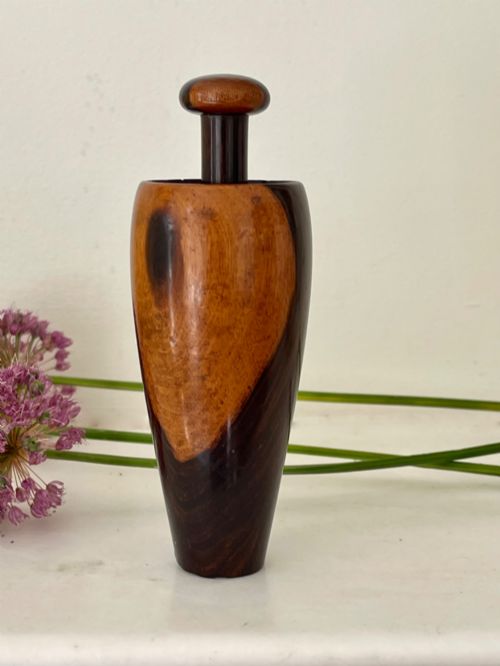
Nutmeg graters are compact turned objects, often shaped like wine bottles, acorns, or simple cylinders, designed to hold a whole nutmeg seed. Removing the cap reveals a small metal rasp fixed inside the chamber.
Georgian dining tables required these pocket-sized tools for grating fresh spice directly into punch, negus, or food. Their miniature scale distinguishes them from larger spice containers.