

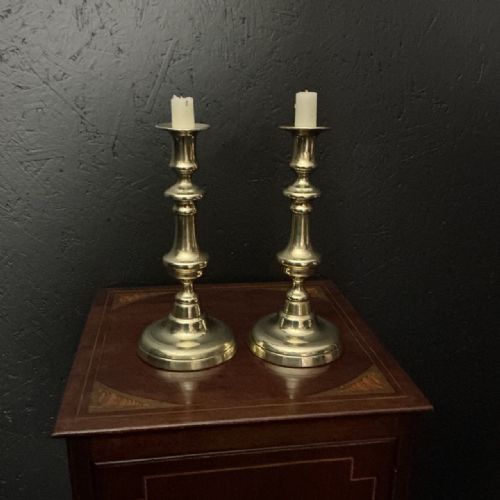
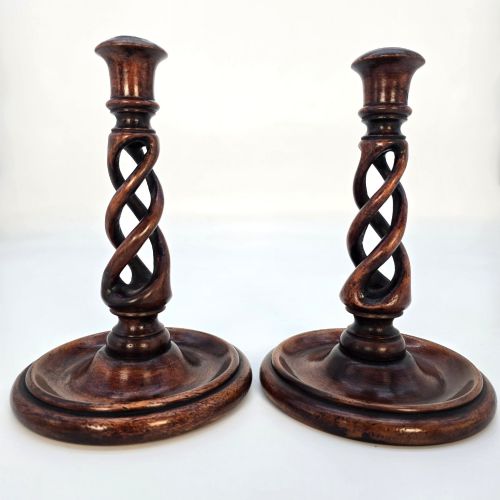


Georgian Turned Candle Holder
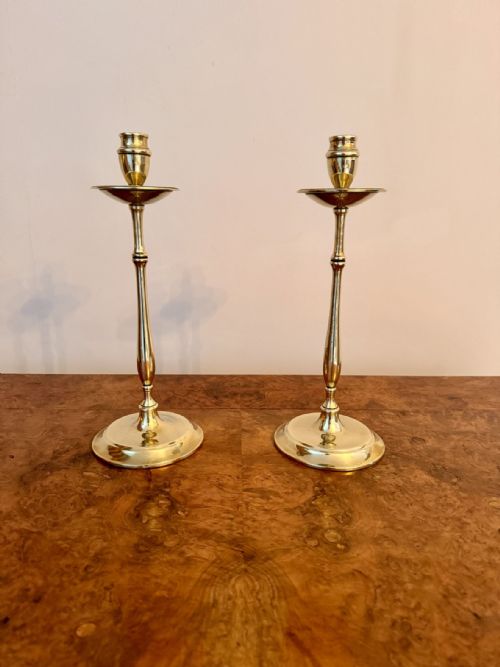
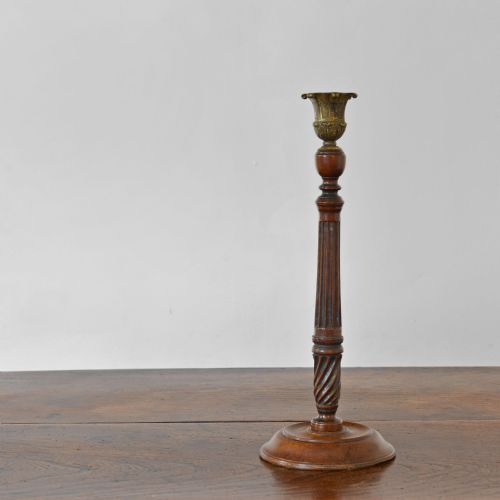
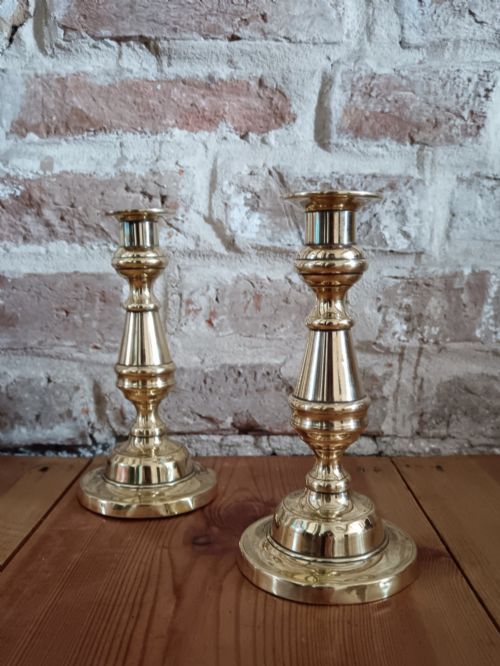
A georgian turned candle holder brings architectural warmth and practical illumination to a room, cast in rich hardwoods or polished brass.
Georgian Turned Candle Holder
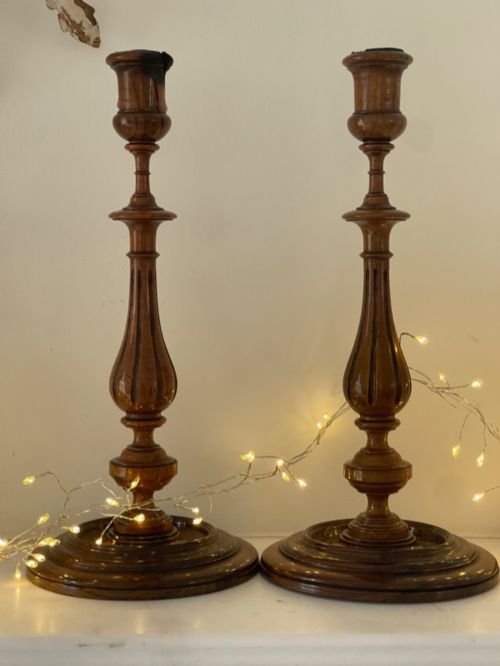
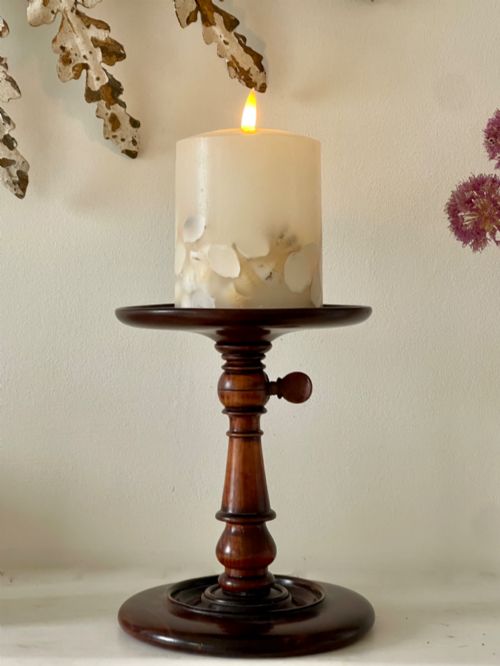
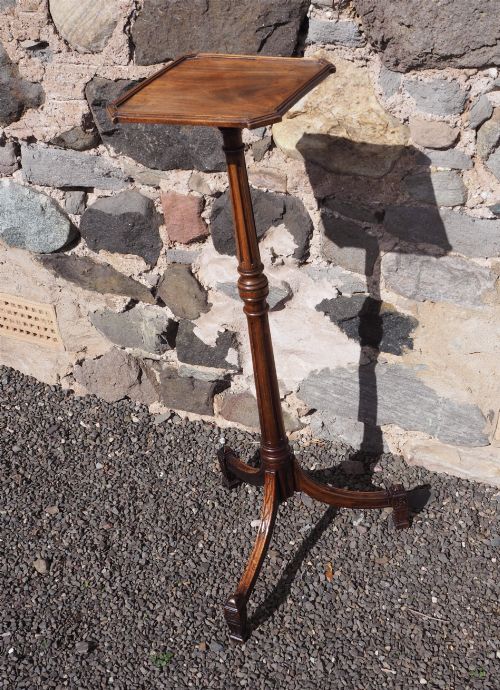
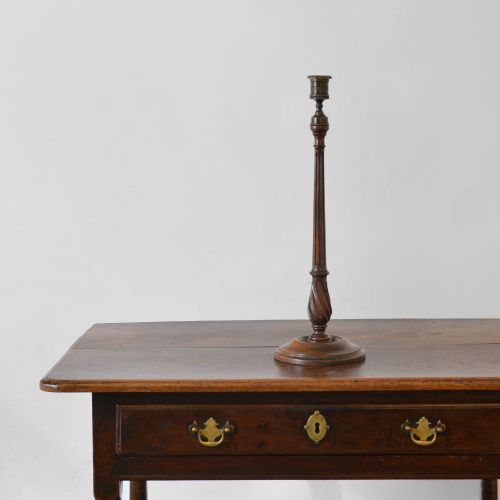
A georgian turned candle holder encompasses practical domestic lighting pieces shaped on a lathe, primarily appearing in brass, mahogany, walnut, fruitwood, and other hardwoods. Buyers encounter pairs of candlesticks alongside taller candle stands, torcheres, and spill holders originating across the eighteenth and nineteenth centuries.
The selection ranges from compact travelling versions to tall George III examples and continental interpretations like French Provincial and Dutch styles. Most pieces demonstrate the classic turned columns, vase shapes, or open twists characteristic of the period.
These items served daily lighting needs before electricity, meaning survival depends on sturdy construction and resilient materials like lignum vitae and treen. The inventory balances domestic brass pairs with timber variants that display the distinct grain and warm patination of walnut and mahogany.
Materials and construction methods
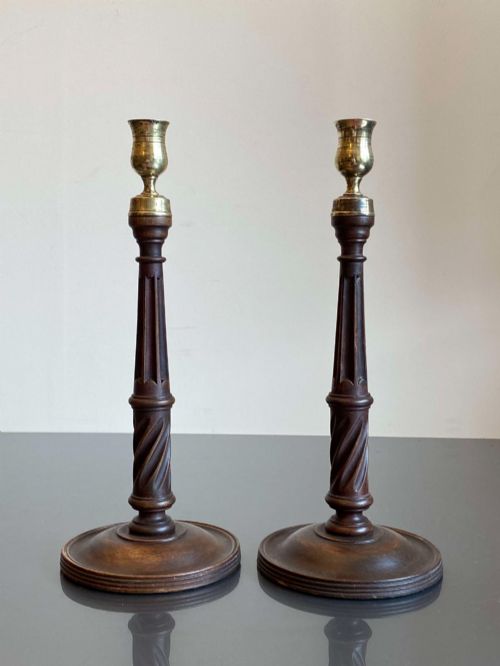
Makers utilised the lathe to shape timber into smooth, symmetrical columns, creating open twists and tear drop profiles from dense woods like mahogany, fruitwood, and walnut. Brass components were cast and turned to form structural columns, collars, and protective sconces that safely held burning tallow and wax.
Joinery and turning required precise hand skill, often combining turned timber shafts with heavy brass bases or incorporating brass drip pans. The combination of turned wood and metal components allowed workshops to produce durable pieces capable of withstanding regular handling and movement around the home.
Georgian Turned Candle Holder Retail Price Guide 2026
Typical asking prices for georgian turned candle holder among the pieces listed under this phrase on Sellingantiques today, from the lower quarter to the upper quarter. They describe what is for sale here now, not the wider market.
Listings feature brass, mahogany, walnut, and wrought iron across the eighteenth and nineteenth centuries.
Judging the standard of execution
Execution quality rests in the crispness of the lathe work and the weight of the chosen material, separating standard utility items from finer parlour pieces. Sharply defined mouldings, balanced proportions, and well-integrated brass fittings denote superior workshop standards.
The choice of material heavily influences the character, with dense hardwoods like lignum vitae and highly figured walnut or mahogany commanding attention through natural grain patterns. Gradations in quality appear in the symmetry of the turning and how cleanly the timber or brass has aged over centuries of use.
The Georgian Turned Candle Holder Glossary
- Treen
- Small handmade wooden objects for domestic use. These items showcase traditional turning and carving skills.
- Torchere
- A tall ornamental stand designed to hold a light. They often feature slender turned columns and substantial bases.
- Ejector
- A mechanism inside a candlestick socket to push out the remaining candle stump. This brass device aids cleaning.
- Sconce
- The metal nozzle or socket at the top of a candlestick. It catches dripping wax and secures the candle.
- Rat de Cave
- A low-profile cellar candlestick used in dimly lit spaces. They provide stable, close-to-the-ground illumination.
Georgian Turned Candle Holder: Frequently Asked Questions
How do I clean a brass candlestick?
Polishing should be approached with caution to preserve the historic surface patination accumulated over generations. Light dusting or gentle wiping with a dry cloth generally suffices.
Harsh chemical cleaners strip away the aged character that collectors value. Maintaining a natural surface keeps the historical integrity intact.
What is a Brighton bun?
A Brighton bun is a compact, screw-together travelling candlestick made from woods like olive wood. They were designed for safe transport during journeys.
The two halves unscrew to store the candle safely inside. This clever pocket format made them popular among nineteenth-century travellers.
How do I tell timber types apart?
Mahogany and walnut display deep, rich brown tones with distinctive grain figures developed through decades of polishing. Fruitwood and hardwoods like lignum vitae offer tighter, heavier grain structures.
Examining the weight and colour under natural light reveals the specific material used. Each timber ages differently according to its natural oil content.
Were these used for lighting rooms?
Candlesticks provided essential portable task lighting for reading and moving through unlit Georgian interiors. Taller stands and torcheres illuminated specific corners or hallways.
Multiple pairs were often deployed across mantelpieces and dining tables to maximise available light. Their practical function dictated their sturdy, functional design.