



Turned Wooden Candleholders
Turned wooden candleholders are weighted domestic supports that bring natural grain and warmth to a tabletop.
Turned Wooden Candleholders
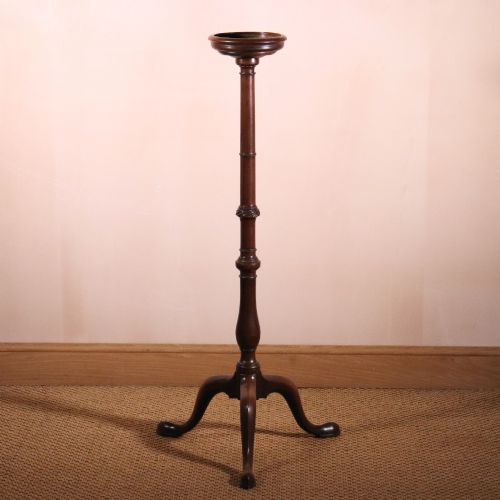
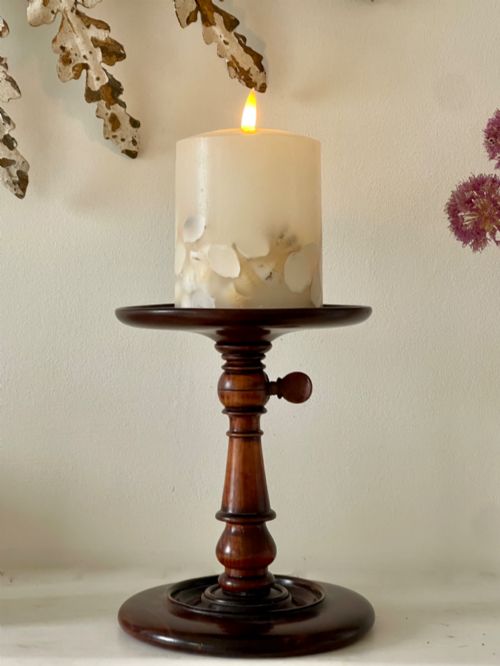
Turned wooden candleholders are domestic supports shaped on a lathe, ranging from compact travel forms to large display pairs. When you search for turned wooden candleholders, you encounter pieces designed to hold tapers securely while showcasing the natural grain of the material.
The selections on this page span several centuries, featuring examples from the Georgian and Edwardian eras alongside early twentieth century productions. Mahogany, oak, teak, and olive wood appear frequently, often paired with brass sconces or top plates.
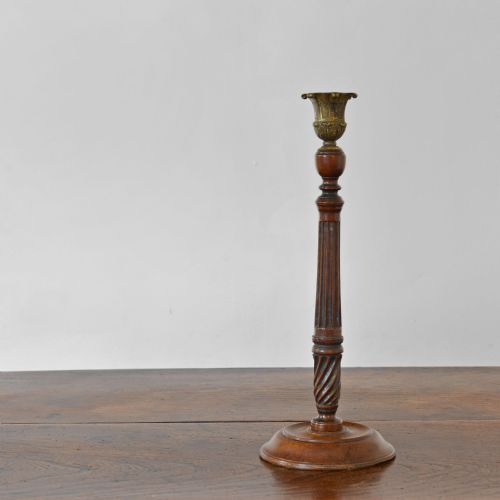
Forms vary from simple columns to bobbin turned shapes and barley twist designs. You find both formal George III style mahogany pairs and maritime pieces such as Brighton buns.
How they were made
Turned wooden candleholders are shaped on a lathe from dense timbers like mahogany, oak, teak, and olive wood. Craftsmen mount the wood and use gouges and chisels to create symmetrical profiles such as barley twists or bobbin turnings.
Many examples incorporate brass components, specifically fitted sconces or top plates designed to catch dripping wax and protect the timber base. The wood is then finished to highlight the natural grain patterns.
Turned Wooden Candleholders Retail Price Guide 2026
Typical asking prices for turned wooden candleholders among the pieces listed under this phrase on Sellingantiques today, from the lower quarter to the upper quarter. They describe what is for sale here now, not the wider market.
What varies in quality
The quality of turned wooden candleholders depends on the choice of timber and the precision of the lathe work. Dense woods like mahogany and olive wood hold crisp architectural details better than softer timbers.
Integration of materials also distinguishes the pieces, particularly the snug fit of brass sconces into the turned wooden sockets. Proportion and balance in the turned profile separate standard domestic items from finer decorative pairs.
The Turned Wooden Candleholders Glossary
- Lathe
- A woodworking machine that rotates timber on an axis while cutting tools shape it. This rotation is essential for producing the symmetrical columns and rings seen on these candlesticks.
- Sconce
- A metal socket fitted to the top of a candlestick to hold the taper and protect the wood beneath. Brass is the most common metal found on these pieces.
- Brighton bun
- A compact, pocket sized travelling candlestick that screws together into a wooden sphere resembling a bun. Olive wood was frequently utilised for these portable items.
- Barley twist
- A spiral carving resembling a twisted rope, produced on a lathe or by hand. This style appears frequently on early twentieth century oak candlesticks.
- Bobbin turned
- A style featuring a series of rounded wooden spheres or discs carved along the shaft. It creates a distinctive silhouette reminiscent of thread bobbins.
Turned Wooden Candleholders: Frequently Asked Questions
What are Brighton bun candlesticks?
Brighton bun candlesticks are pocket sized travelling pieces that unscrew and pack together into a tight wooden sphere. They were designed for safe transport during the Edwardian period.
Travellers and officers used them to bring portable light to temporary lodgings. The threaded halves protect the candle chamber inside.
Why do some wooden candlesticks have brass tops?
Brass tops, or sconces, are fitted to wooden candlesticks to prevent the flame from burning the timber. Molten wax drips onto the metal rather than staining the wood.
Candlesticks from the eighteenth century onwards frequently combined turned mahogany with brass inserts. This practical addition extended the working life of the piece.
Where were bobbin turned candlesticks used?
Bobbin turned candlesticks were used in both domestic rooms and maritime settings. Pieces were even turned from teak salvaged from naval vessels like the royal yacht HMS Renown.
The repetitive spherical shapes offered a robust design that suited cabins and studies alike. They brought texture and maritime history into the interior.