
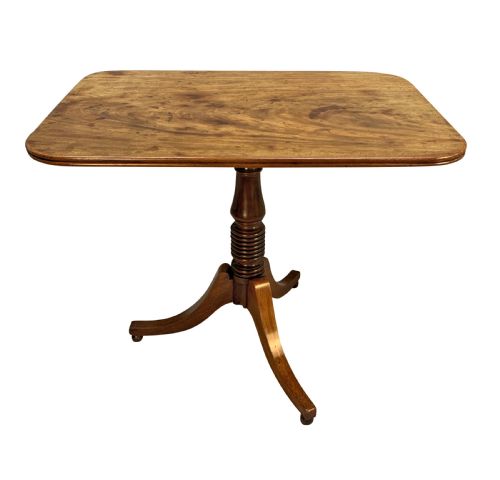
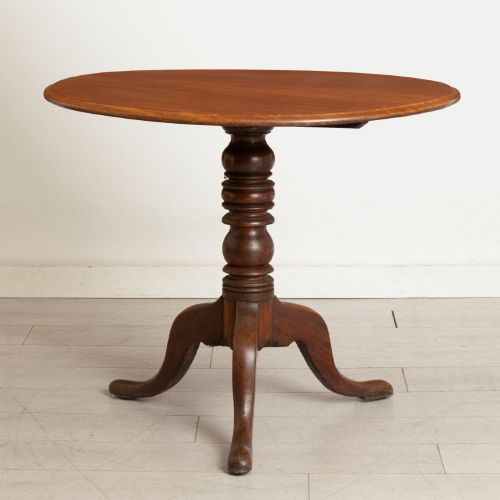
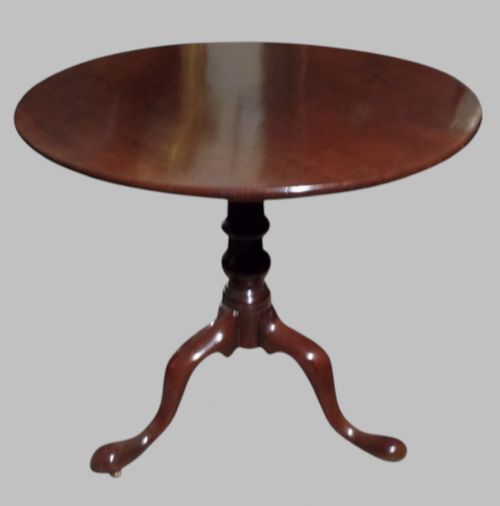
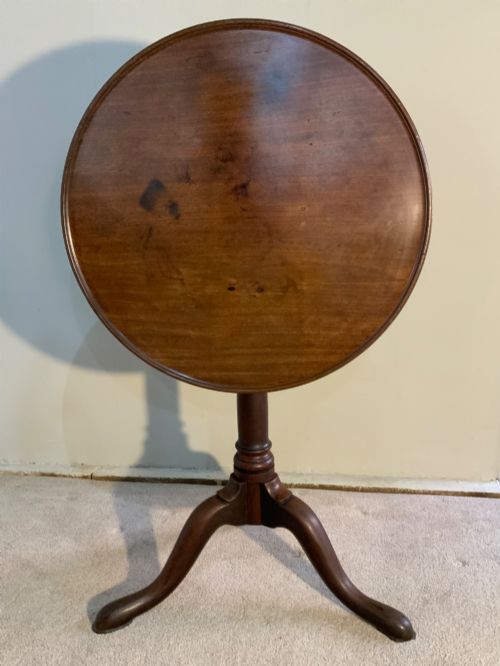

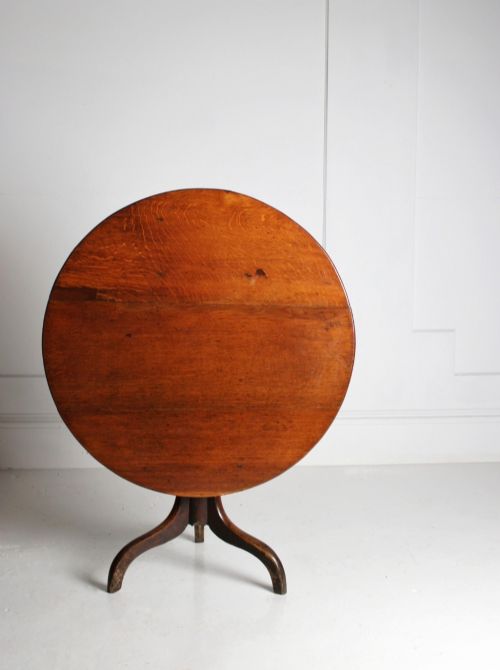


Georgian Tripod Supper Table
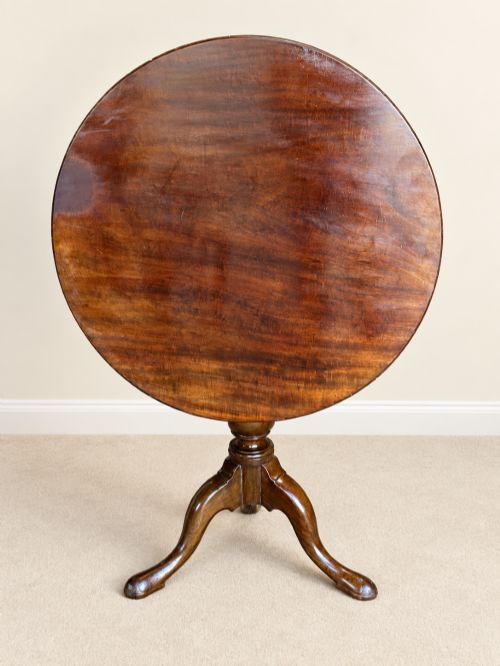
When you examine a georgian tripod supper table, you see a versatile circular timber surface designed to tilt out of the way when not holding evening meals.
Georgian Tripod Supper Table
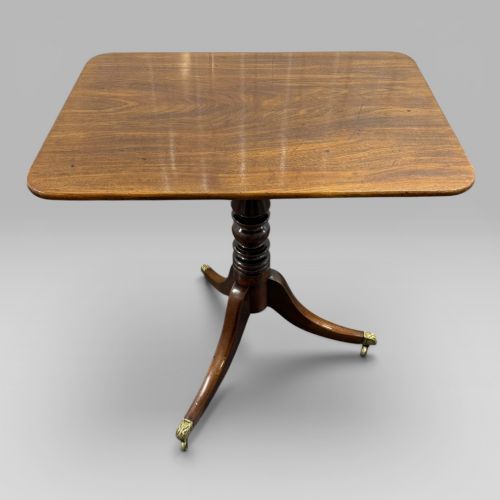
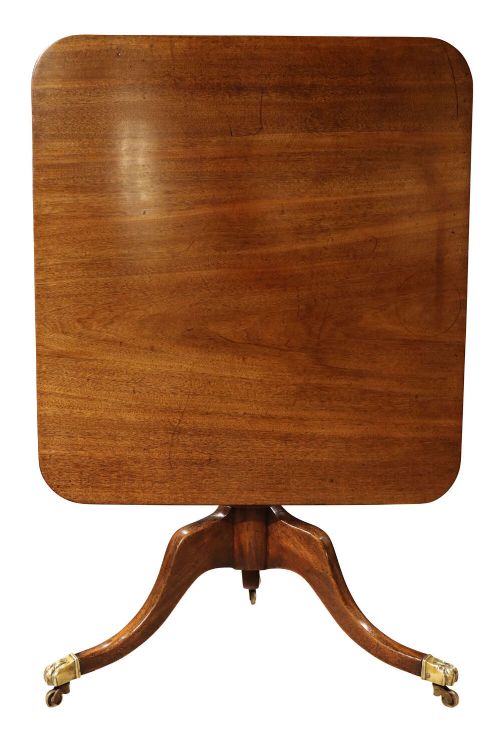
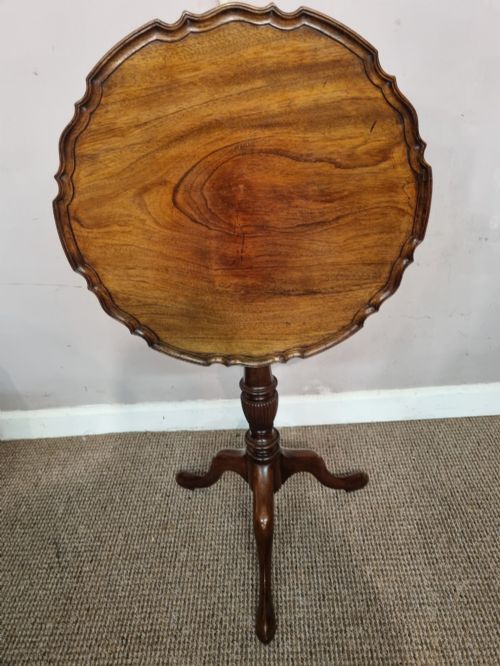
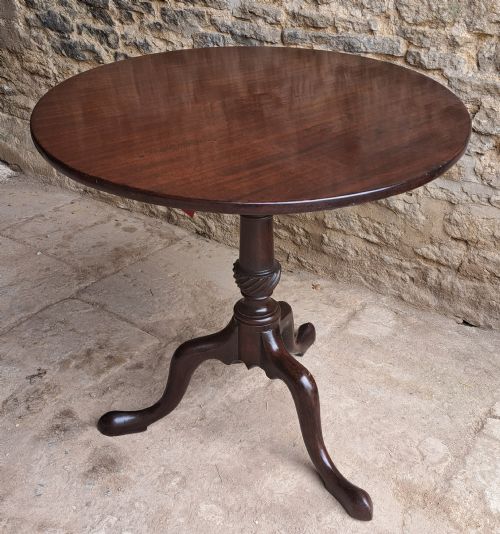
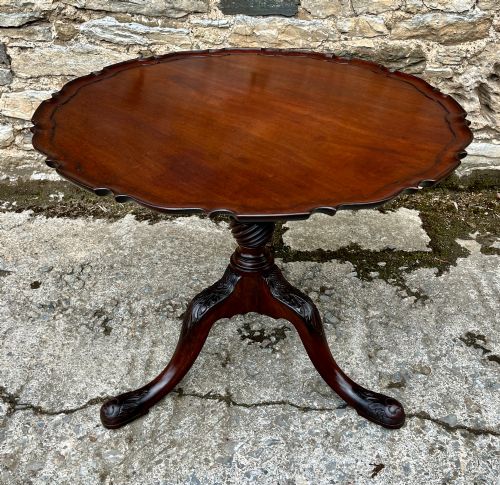
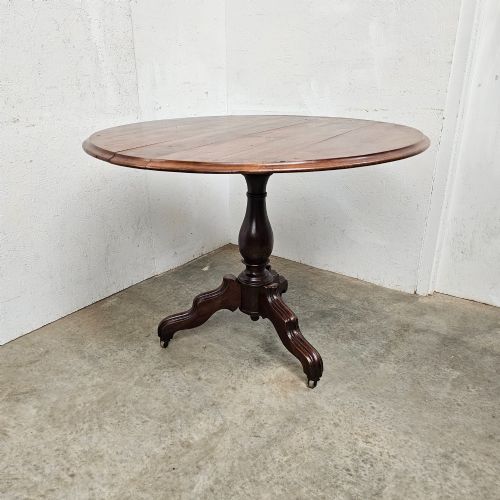
A georgian tripod supper table centres on a circular wooden top supported by a central pillar and three splayed legs. Most examples on this page hail from the eighteenth century, spanning the George II and George III periods, alongside later nineteenth-century interpretations.
The defining mechanical feature of these pieces is the tilt-top action, which allows the surface to pivot vertically to save space in smaller parlours and dining rooms. Many incorporate a birdcage mechanism beneath the top, permitting both rotation and tipping.
Makers fashioned these tables from timber such as mahogany, oak, walnut and occasional exotic woods like satinwood or rosewood. They serve flexibly as occasional tables, wine tables or small dining surfaces.
Evaluating Quality
The primary distinction across these tables lies in the choice of timber and the depth of figuring in the wood, with richly grained mahogany or burr elm sitting above plain utility oak. Timber selection dictates both visual depth and structural integrity.
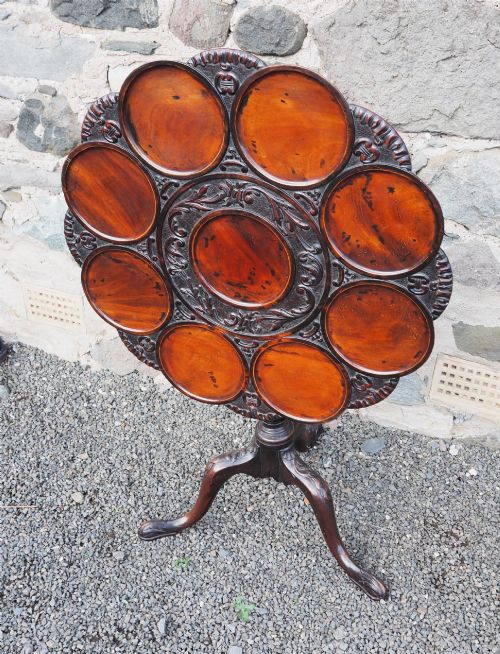
Carving execution separates standard provincial work from high-end cabinetmaking, particularly on the knees of the tripod legs and the scalloped edges of pie crust tops. Crisp, sharp carving without softness indicates superior workshop output.
The complexity of the mechanism also marks the grade of the piece, as a well-fitted birdcage action allowing smooth rotation and secure locking outperforms a simple hinged pivot block.
Many a midnight snack was safely cleared away by simply tipping the table top vertically against the parlour wall.
John Bivins
The Georgian Tripod Supper Table Glossary
- Tilt-top
- A table mechanism allowing the circular top to pivot ninety degrees into a vertical position for storage.
- Birdcage
- A wooden frame beneath the table top that enables the surface to revolve independently of the central column.
- Pie crust
- A raised, scalloped edge carved directly from the solid timber perimeter of the circular table top.
- Tripod
- A base comprising a central turned pillar supported by three distinct outward-curving legs.
- Snap top
- A spring-loaded catch mechanism that locks the tilting table top securely into the horizontal position during use.
Georgian Tripod Supper Table: Frequently Asked Questions
What was a supper table used for?
These tables served as portable dining surfaces for light evening meals in private parlours before being tilted vertically and pushed against the wall to clear the floor space.
Their flexible design made them ideal for multiple daily uses, functioning equally well as tea tables, wine stands or card surfaces.
How do you operate the tilt top?
Most examples rely on a brass catch or a wooden sliding wedge beneath the top that releases the table surface to pivot upright.
When returning the top to the horizontal position, the spring catch or gravity lock engages automatically to prevent accidental tipping.
Are these tables sturdy enough for daily dining?
The three-legged tripod base provides stable contact on uneven floors, though the central column naturally limits heavy downward pressure near the outer edges.
They comfortably accommodate drinks, books or modest meal settings without tipping during normal domestic use.
How do I distinguish an eighteenth-century table from a later copy?
Original pieces display period construction methods such as hand-cut dovetails, shrinkage cracks in the timber and patination built up over generations of polishing.
Later Victorian or Edwardian revival pieces often feature machine-sawn components, tighter modern glue lines and different timber preparation marks.