
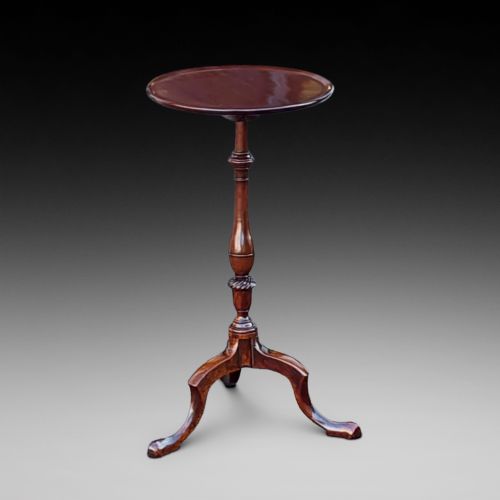
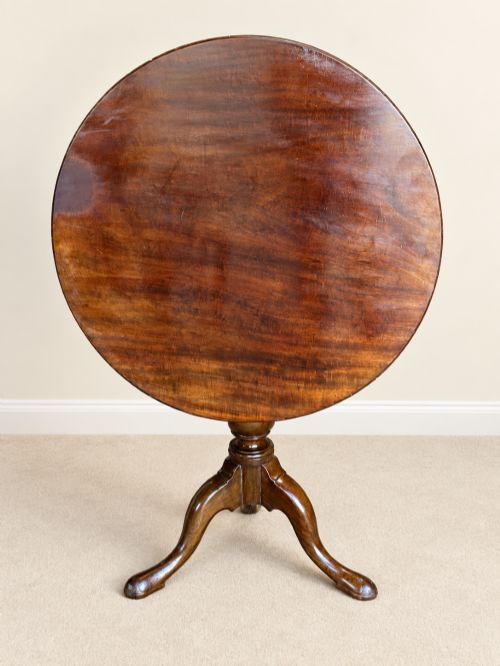
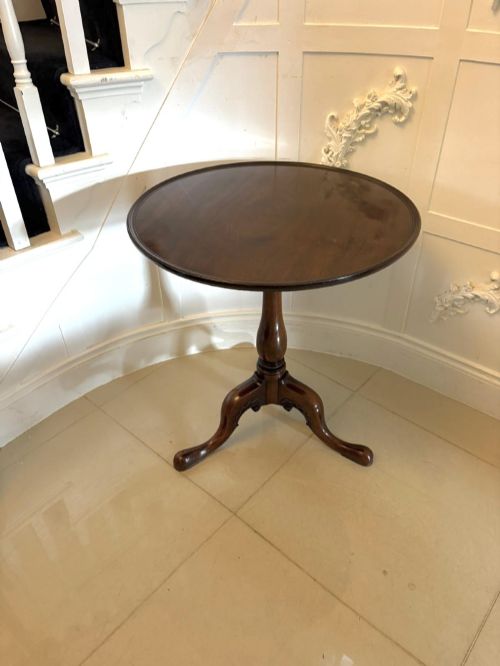
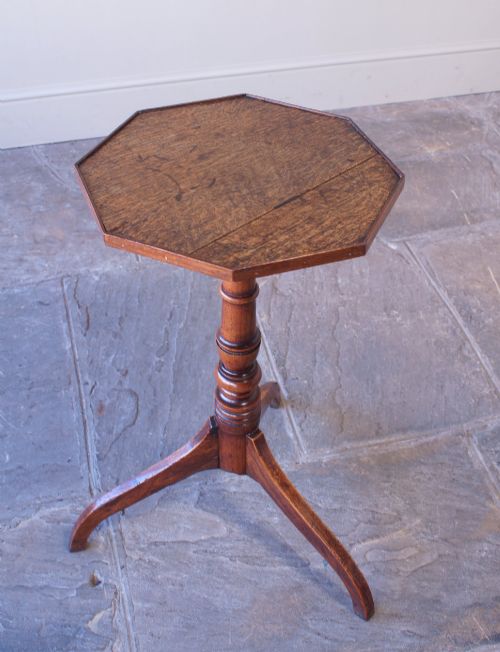
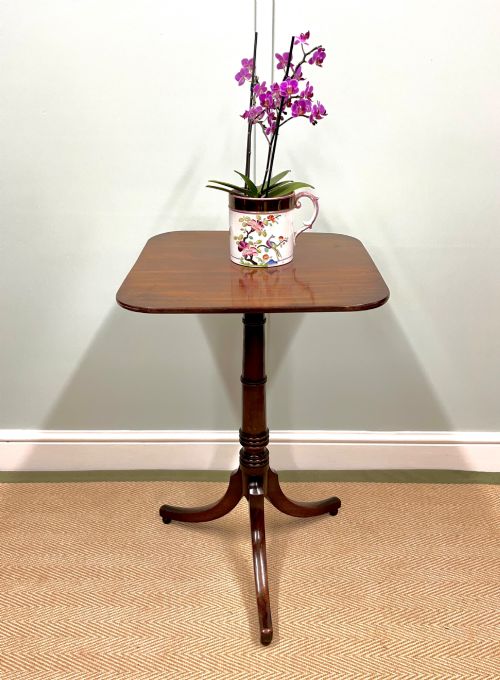
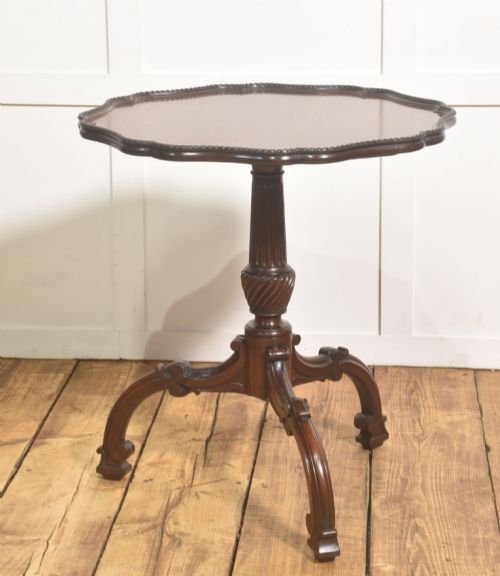
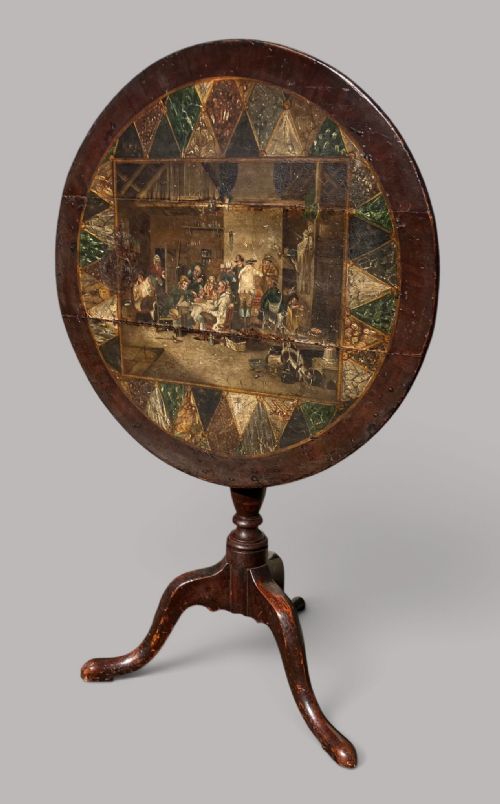
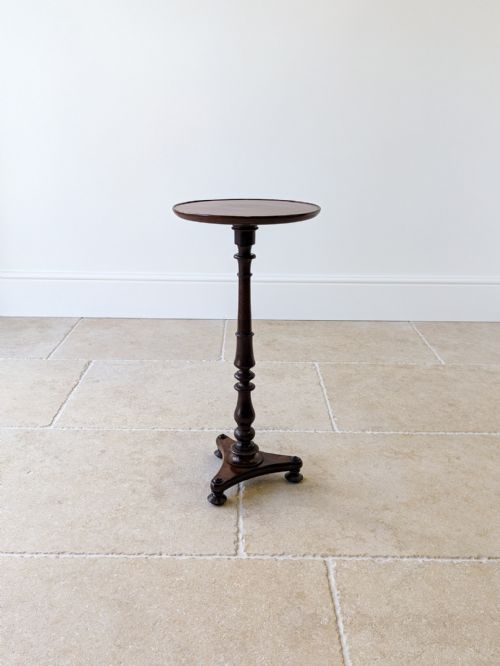
Georgian Tripod Candle Table
A georgian tripod candle table is a compact surface designed for illumination, resting on three slender legs.
Georgian Tripod Candle Table
A georgian tripod candle table appears across periods ranging from the eighteenth century to the nineteenth century, with manifestations in Regency and Edwardian styles. These pieces function primarily as occasional tables, side tables, or wine tables within domestic spaces.
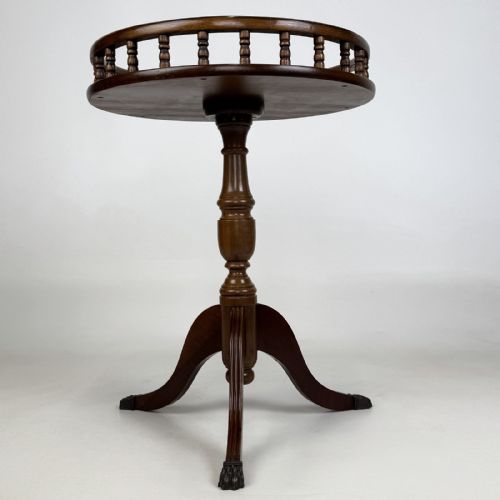
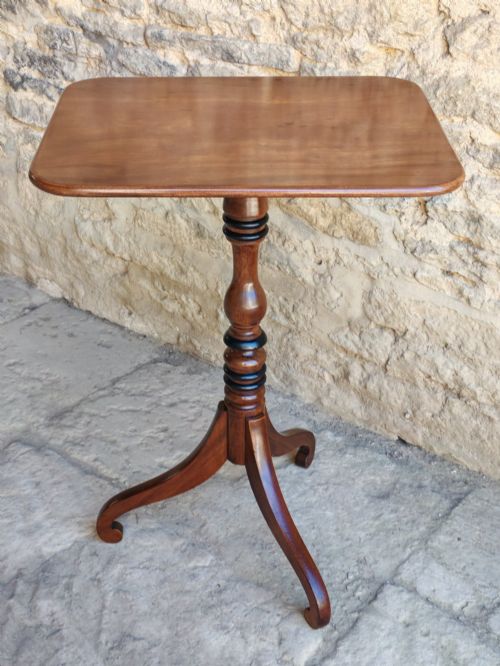
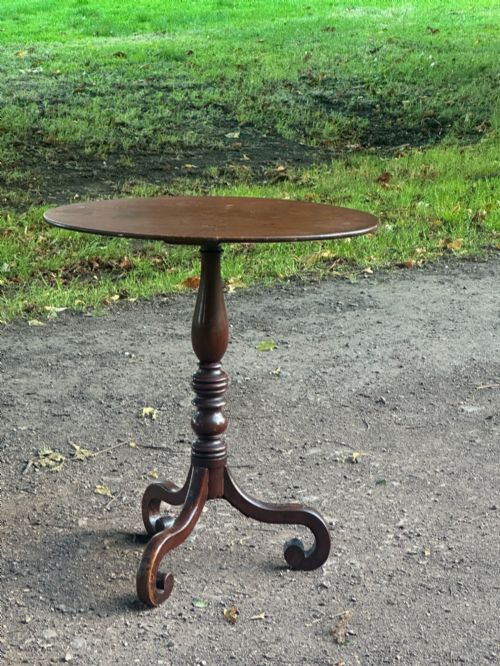
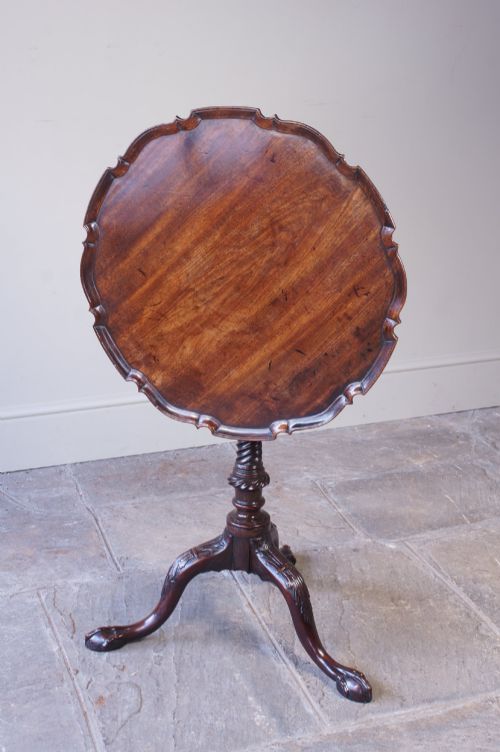
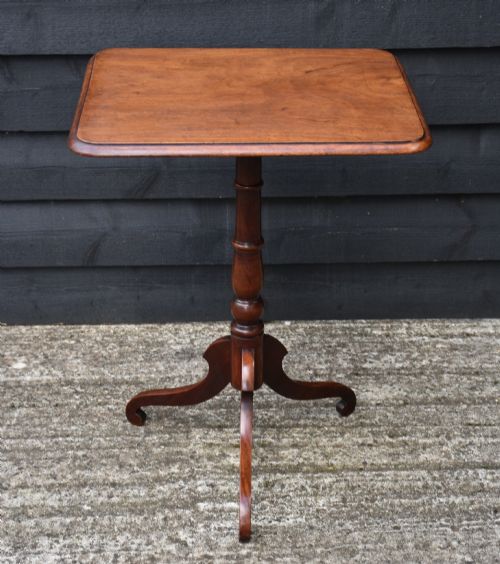
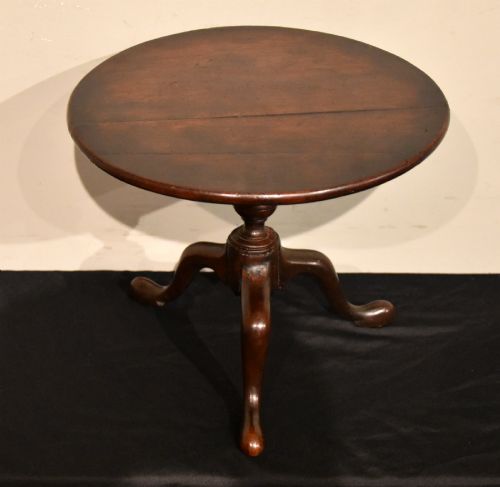
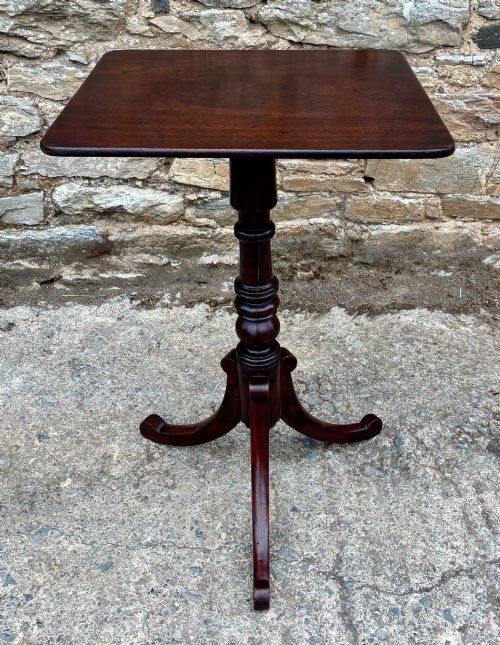
The most common version met on this page is constructed from mahogany, often featuring a circular top supported by a central pillar and three legs. Examples frequently incorporate specific tops such as tilt-top mechanisms, tray edges, or shaped pie crust rims.
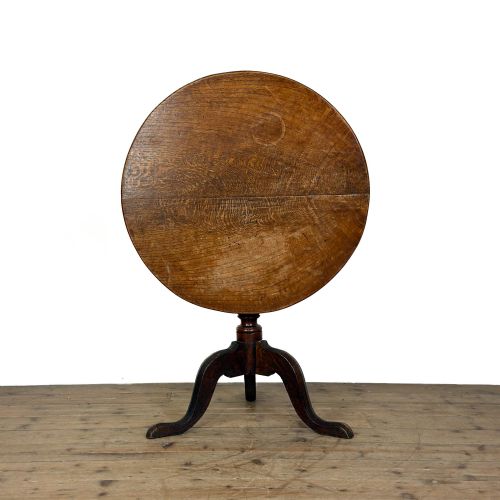
Origins span formal English workshops and provincial country houses, yielding variations from finely carved George III pieces to simpler elm, fruitwood, and oak iterations. Makers utilised both native timbers and imported dense woods to create portable stands suited to shifting positions near a hearth or window.
Materials and Technique
Carpenters constructed these tables predominantly using solid mahogany, oak, walnut, elm, and fruitwood, sometimes enhancing surfaces with parcel gilt or boxwood inlay. Timber selection dictated whether the piece could sustain sharp edge-carving, such as pie crust borders, or required the stability of dense grain for slender turned pillars.
Construction relied on precise joinery to unite the three-legged base with the central shaft, frequently employing birdcage mechanisms or snap-top catches to allow the top to pivot and fold flat. Legs were typically dovetailed or tenoned into the central block, forming a stable tripod stance that prevented rocking on uneven floorboards.
Some tilt-top mechanisms include tiny original wooden catches that still click shut with absolute precision after more than two centuries.
Judging Quality
Distinctions in standard rest upon the crispness of carved detail on the knees and feet, the selection of figured timber veneers like burr oak or red walnut, and the integrity of the tilting mechanism. Superior specimens exhibit balanced proportions between the top diameter and the spread of the tripod base, ensuring both aesthetic harmony and physical stability.
Lesser examples display plain turned shafts with utilitarian fixings and heavier, unrefined timber scantlings that lack the elegance of proportion found in pieces attributed to skilled cabinet makers. The finesse of the edge moulding, whether a raised tray rim or a carved pie crust outline, marks the division between everyday utilitarian items and high-status furnishings.
Gillow
The Georgian Tripod Candle Table Glossary
- Tripod table
- A small freestanding table supported by a central pillar resting on three legs. This configuration provided reliable stability on uneven historical floor surfaces.
- Tilt top
- A tabletop hinged to the pillar allowing it to pivot vertically into a flat position when not in use. This mechanism enabled compact storage against room walls.
- Pie crust rim
- A raised, decoratively carved tabletop edge featuring alternating curves and indentations resembling pastry work. This feature prevented glassware and candles from sliding off.
- Snap top
- A sprung wooden catch secured beneath the surface that locks a tilting tabletop firmly into a horizontal position. It prevented accidental tipping during use.
- Occasional table
- A small, portable piece of furniture moved around a room as needed for specific tasks. These served diverse functions for tea, reading, or illumination.
Georgian Tripod Candle Table: Frequently Asked Questions
What was a tripod candle table used for?
These small tables held lighted candles or oil lamps close to seating areas before electric lighting became common in homes. Their compact surfaces also accommodated wine glasses, books, or small decorative objects.
Because of their lightweight construction, occupants easily carried them from room to room to provide focused illumination wherever needed during evening hours.
How do I tell an 18th-century table from a later copy?
Examine the timber shrinkage, hand-cut joinery marks beneath the top, and the wear patterns around the pillar block and leg joints. Eighteenth-century examples show authentic patination and tool marks consistent with manual woodworking.
Later Victorian and Edwardian reproductions often utilise machine-cut components, different internal fixings, and timber finishes that lack the depth accumulated through centuries of polishing.
Why do some tables have tilt tops?
Tilt-top mechanisms allowed servants or residents to fold the tabletop flat against the central pillar when the furniture was not actively in use. This clever design saved valuable floor space in crowded period parlours and drawing rooms.
It also protected the polished wooden surface from accidental damage while the room served other functions throughout the day.
How do I care for antique mahogany and walnut?
Keep these timber surfaces away from direct sunlight and strong heat sources like radiators to prevent the wood from drying out and splitting. Apply traditional beeswax periodically to nourish the grain and maintain the natural lustre.
Avoid using modern silicone sprays or excessive water, wiping spills immediately with a soft, dry cloth to preserve the historic finish.