
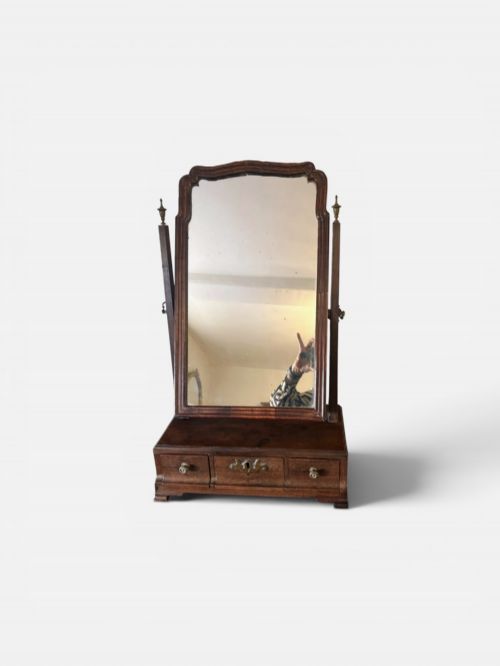

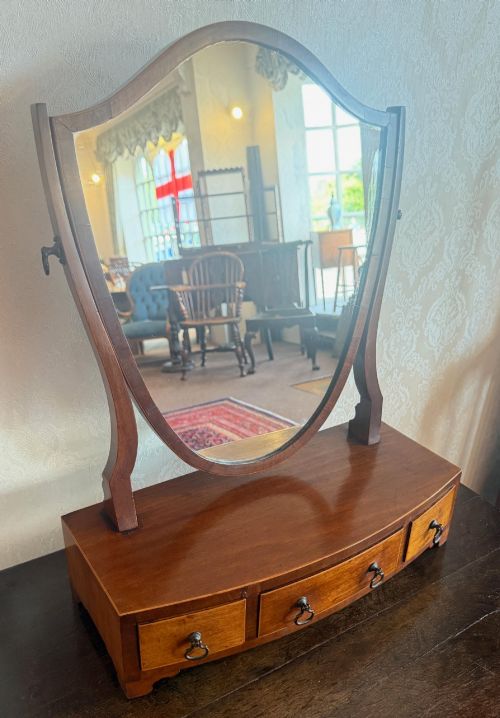
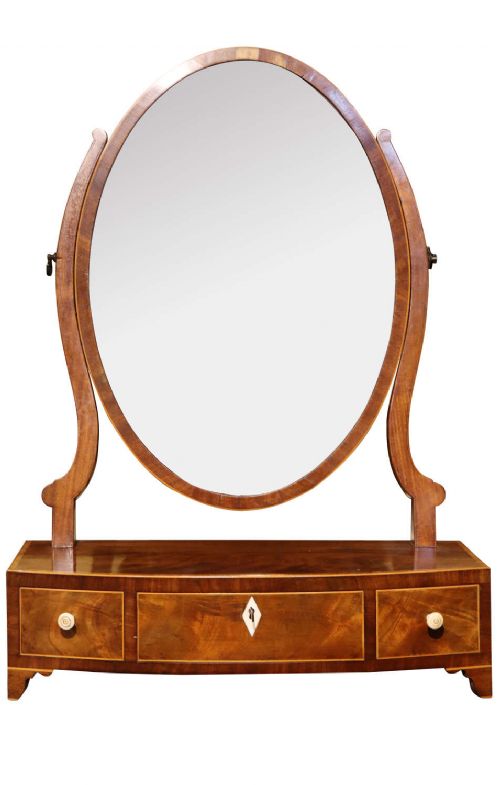


Georgian Toilet Glass Drawers
Georgian toilet glass drawers bring practical tabletop reflection and compact storage together in mahogany, walnut, and rosewood forms.
Georgian Toilet Glass Drawers
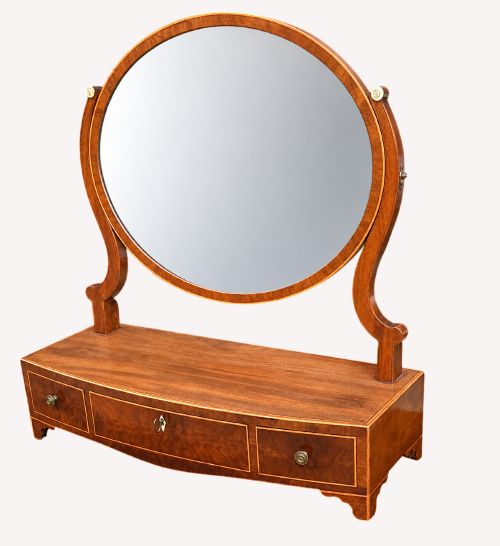
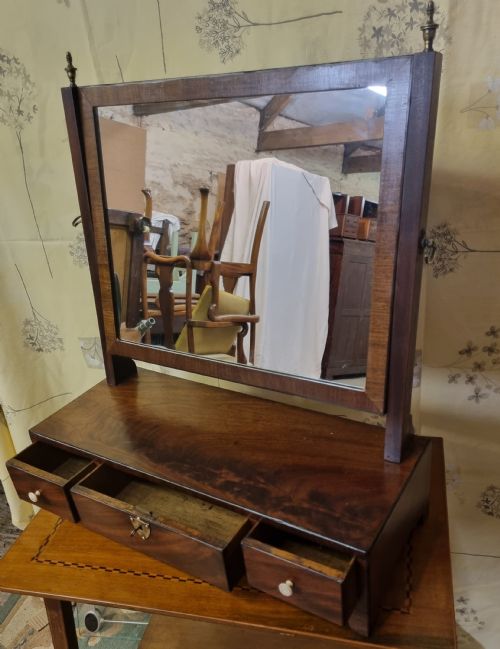
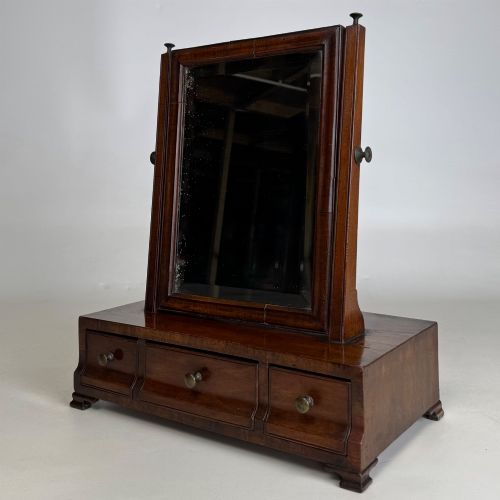
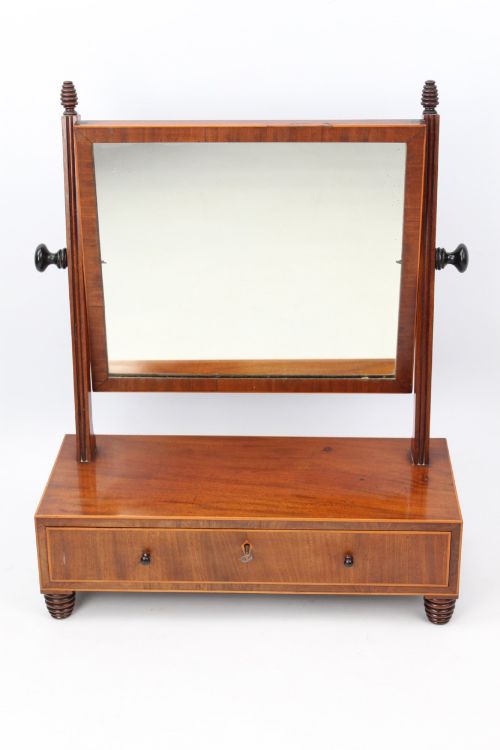
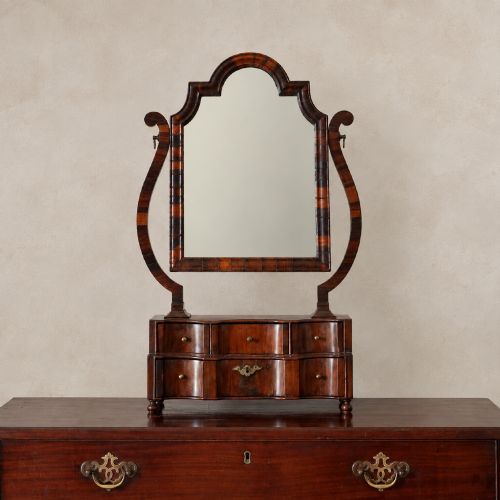
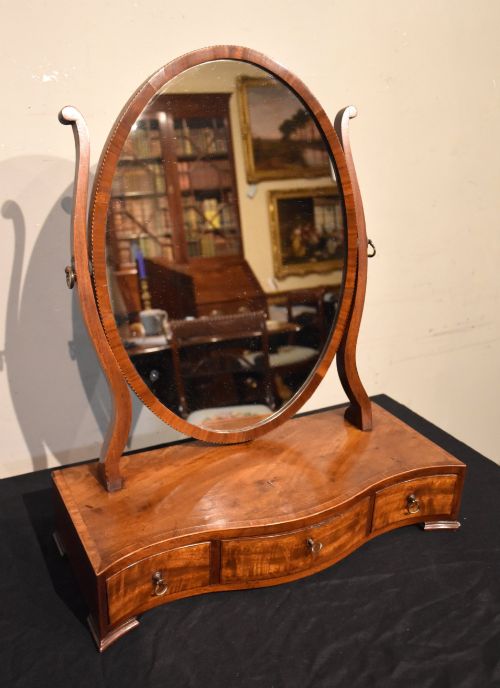
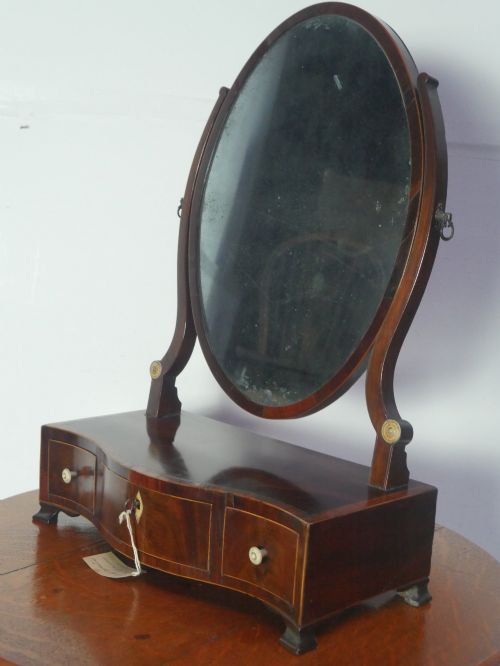
When you search for georgian toilet glass drawers, you encounter compact tabletop mirrors designed for dressing tables and vanity use. These pieces combine a swiveling mirror glass plate with a small wooden base containing one or more fitted drawers for small personal items.
The selections on this page span the eighteenth and nineteenth centuries, including Georgian, Regency, and Queen Anne periods. You will regularly find forms described as dressing mirrors, toilet mirrors, and swing mirrors alongside vanity boxes.
Mahogany predominates among the surviving examples, often paired with walnut, satinwood, and boxwood inlay. Makers constructed these mirrors to sit securely upon a chest or dressing table, offering adjustable angles for grooming and hair styling.
Materials and construction
Cabinet makers built these pieces primarily using solid mahogany and walnut timbers, frequently applying decorative veneers and crossbanding to the base structures. Boxwood and ebony stringing details appear alongside marquetry inlays on select pieces.
The mirror plates themselves consist of traditional mirror glass held within pivoted wooden frames connected to upright arms. Brass support knobs, finials, and occasionally bone escutcheons complete the moving and locking hardware of the drawer sections.
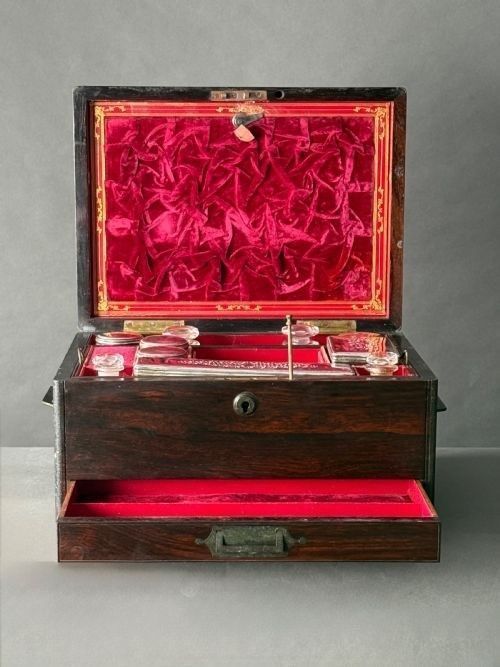
Listings feature mahogany, walnut, and rosewood forms spanning the Georgian, Regency, and Victorian periods.
Distinctions in quality
The refinement of the base timber selection dictates much of the distinction between standard and superior pieces. Finer mirrors employ choice cuts of burr maple, highly figured mahogany, or intricate walnut grain paired with precise dovetail joinery in the small drawers.
Proportion and decorative restraint also separate exceptional examples from simpler utilitarian versions. Serpentine and bow-front shapes require advanced woodworking skill, whereas straight-fronted variants represent more straightforward workshop production.
The Georgian Toilet Glass Drawers Glossary
- Toilet glass
- A period term for a dressing table mirror with integrated drawers. These items sat on top of a larger table to provide both reflection and storage.
- Swing mirror
- A mirror plate mounted on pivots between two upright arms allowing the glass to tilt. This mechanism lets the user adjust the angle of reflection.
- Serpentine front
- A furniture front curving outward in the centre and inward at the sides. This flowing shape demands advanced woodworking skill from the cabinet maker.
- Crossbanding
- A border of veneer laid across the grain of the primary wood. This technique creates a neat framing effect around drawer fronts and table edges.
Georgian Toilet Glass Drawers: Frequently Asked Questions
What is a toilet glass?
A toilet glass is a historical term for a dressing table mirror featuring a built-in base with small drawers. These pieces were designed to sit upon a chest or table for daily grooming.
The glass plate pivots within upright arms so the user could tilt the reflection as needed. The integrated drawers held small personal items, jewellery, and cosmetics.
How do I date a Georgian mirror?
Dating involves examining the timber species, secondary woods, construction methods, and hardware styles. Walnut predominates in earlier pieces, while mahogany becomes standard later in the eighteenth century.
Cabinet making techniques such as hand-cut dovetails on the drawers also offer clues to the period of manufacture. Surviving labels or distinct regional traits can further narrow down the origin.
Where should I place a toilet mirror?
These mirrors suit dressing tables, sideboards, or chests of drawers where their compact footprint adds both function and period character. They require a stable surface with adequate depth to support the base.
Positioning them near natural light enhances their utility for daily use. Ensure the placement protects the antique wood and mirror glass from direct, harsh sunlight.
Are the mirror plates original?
Many antique mirrors retain their original glass, though some have received replacement plates due to breakage or silver degradation over the centuries. Original glass often exhibits minor foxing, distortion, or light surface marks.
Replacing a mirror plate was a common maintenance practice rather than a modern restoration. Close inspection of the backing boards and securing pins helps determine the history of the glass.