

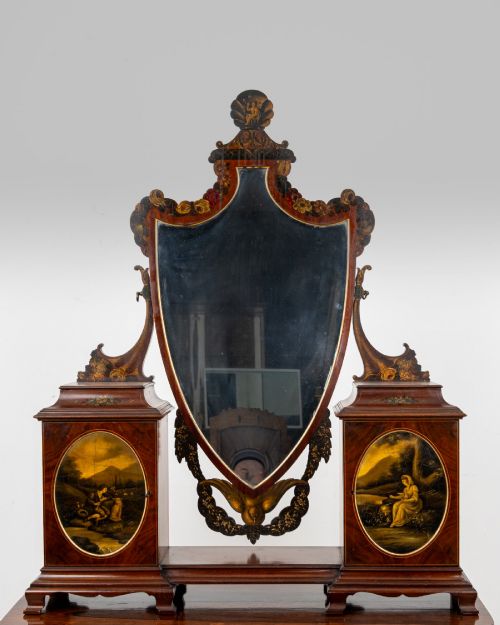


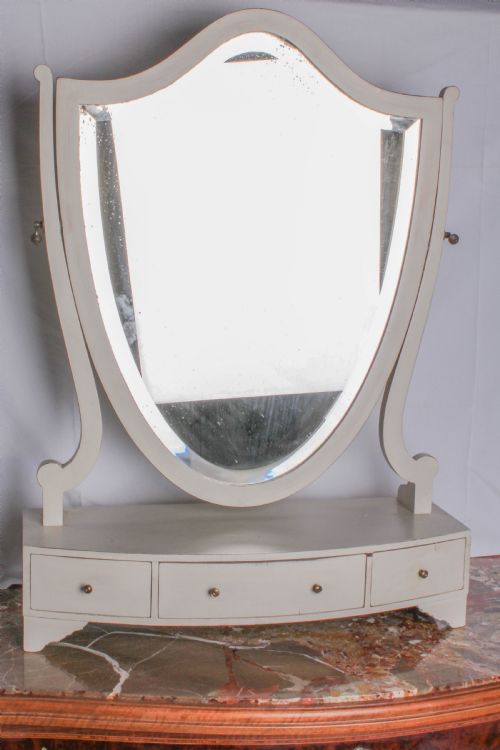


Shield Shape Vanity Mirror
These shield shape vanity mirror examples range from Georgian mahogany toilet glasses to Edwardian inlaid pieces, offering an adjustable reflection for any dressing table.
Shield Shape Vanity Mirror
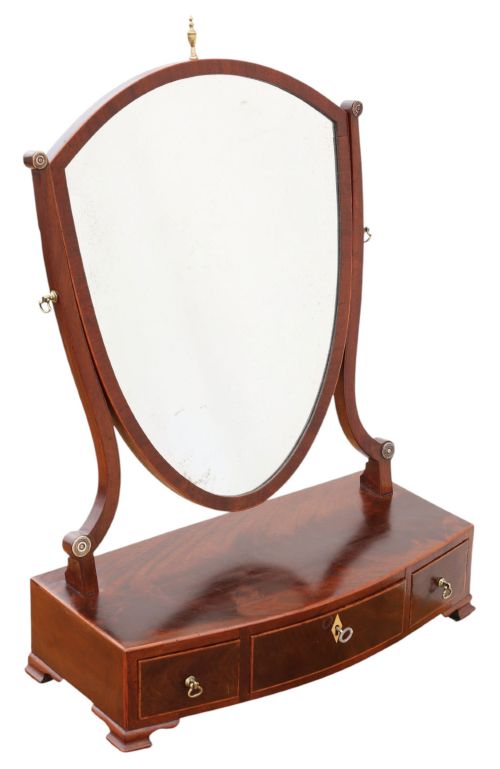
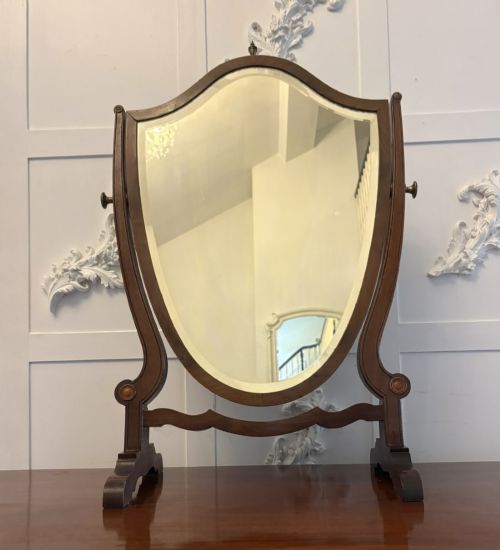
A shield shape vanity mirror sits on dressing tables, chest tops, or shaving stands to aid grooming and adornment. They appear across multiple eras, including Georgian, Victorian, Edwardian, and the Arts and Crafts period.
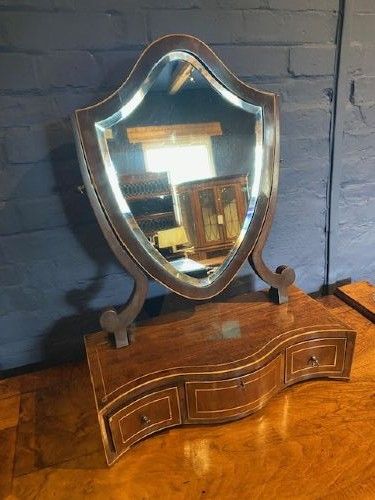
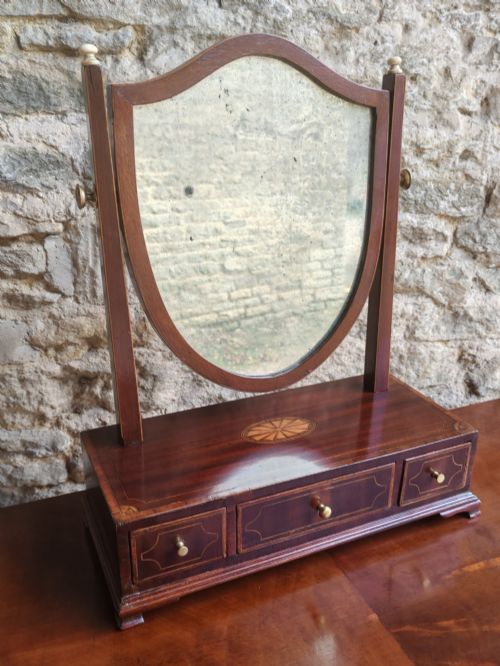
The characteristic shield plate pivots between upright supports mounted on a box base or feet. These foundational stands frequently incorporate serpentine shapes or small drawers for storage.
How they were made
Cabinetmakers constructed the frames and stands primarily from timber such as mahogany, sometimes adding satinwood inlay or paint. Metal components like brass and copper form the pivoting fittings, brackets, and occasional frames.
Glass provides the reflective surface, paired with wood, bone, and velvet depending on the period. Artisans joined the structural elements using traditional woodworking techniques suitable for table top furniture.
Shield Shape Vanity Mirror Retail Price Guide 2026
Typical asking prices for shield shape vanity mirror among the pieces listed under this phrase on Sellingantiques today, from the lower quarter to the upper quarter. They describe what is for sale here now, not the wider market.
Some Edwardian models doubled as hiding spots for precious trinkets by sneaking tiny drawers right beneath the glass.
What varies in quality
The refinement of the timber grain and the precision of the inlay set finer examples apart from simpler utilitarian pieces. Mahogany selection and cabinetmaking skill dictate the structural integrity of the base and uprights.
Original mirror glass and authentic brass or copper fittings elevate a piece above those with replaced components. The subtlety of the serpentine curves on the base demonstrates the maker's proficiency.
The Shield Shape Vanity Mirror Glossary
- Toilet mirror
- A smaller mirror designed to sit on a table, chest, or dressing surface rather than hang on a wall.
- Cheval mirror
- A full-length freestanding mirror supported by a frame with four legs, allowing the glass to tilt fully.
- Serpentine
- A furniture front or base line curving outward in the centre and inward at the sides, common on 18th-century pieces.
- Satinwood
- A durable, yellowish-orange exotic timber often utilised for decorative stringing and inlay work on mahogany surfaces.
- Inlay
- A technique where pieces of contrasting wood or other materials are inserted into depressions to form a decorative pattern.
Shield Shape Vanity Mirror: Frequently Asked Questions
Where should I place a shield shape vanity mirror?
These mirrors suit dressing tables, chest tops, and sideboards where their pivoting glass provides a functional angle for daily grooming.
Ensure the supporting surface is stable and deep enough to accommodate the box base or feet securely.
How do I adjust the mirror angle?
Most designs utilise lateral brass or copper screw pins fitted into the upright supports. Tightening or loosening these side fittings allows the glass to tilt smoothly.
Support the frame with one hand while adjusting the fittings to protect the historic timber joints.
What periods do these mirrors represent?
The selection spans several distinct eras, including 18th-century Georgian and George III designs, 19th-century Victorian works, and Edwardian pieces.
Arts and Crafts examples also appear, showing alternative materials like copper framing.
How do I identify a Georgian mirror?
Georgian and George III pieces typically feature solid mahogany construction, precise joinery, and delicate serpentine box bases with small drawer compartments.
They rely on traditional cabinetmaking methods without modern mechanical fasteners.