
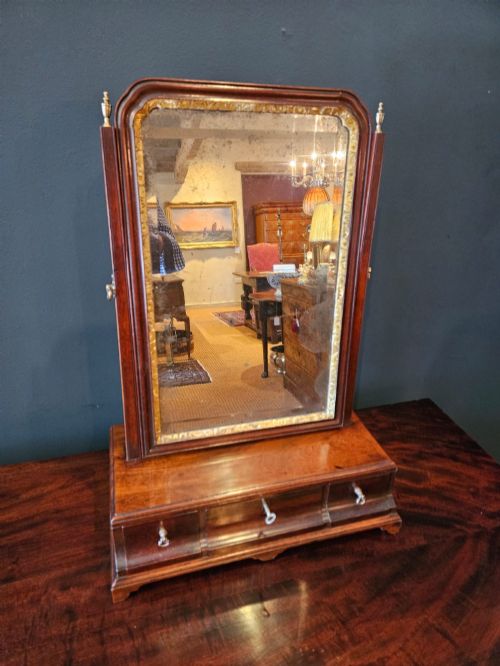
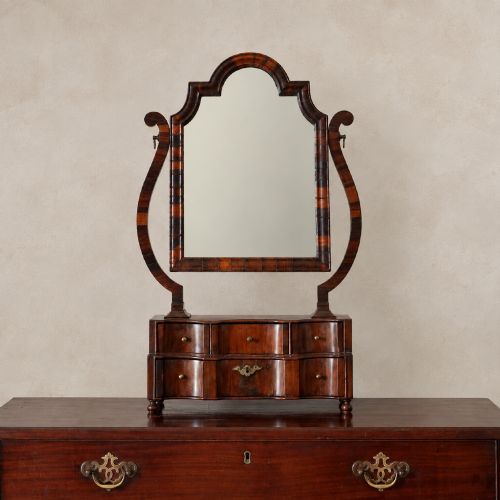
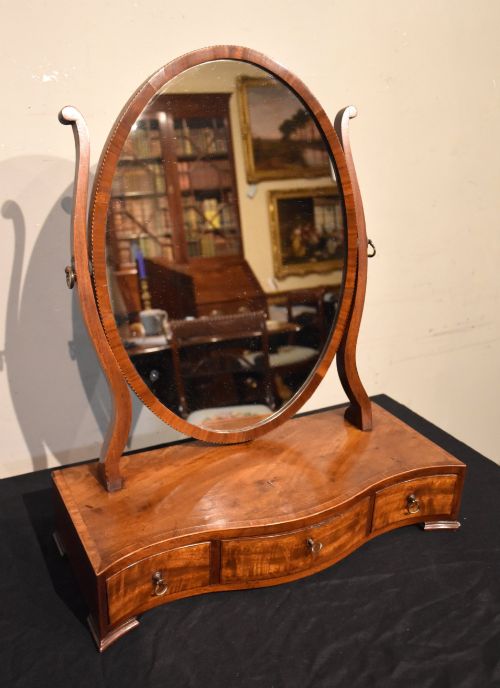
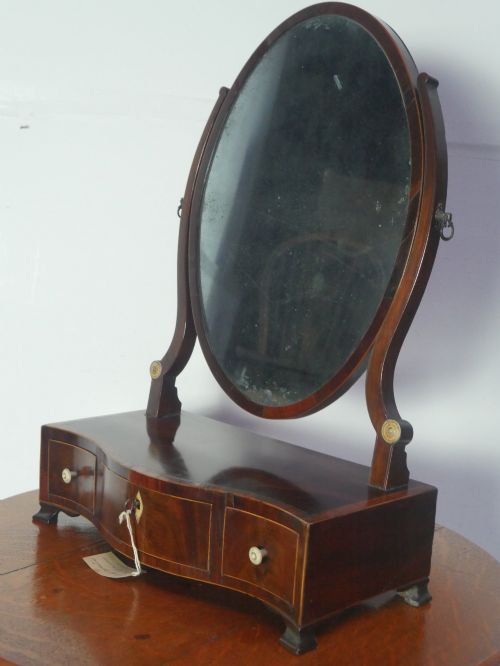
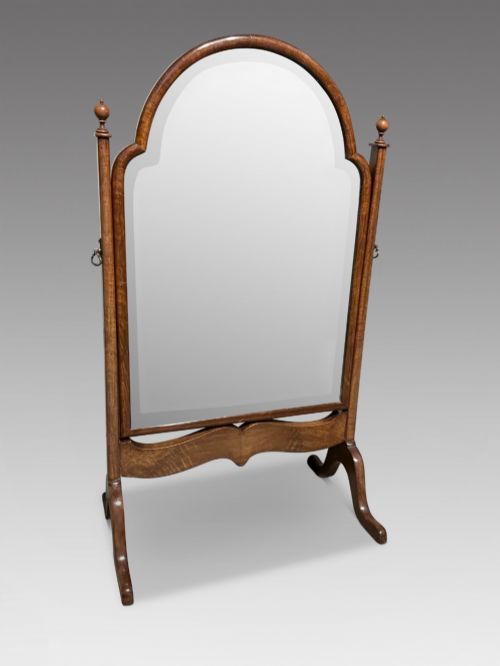
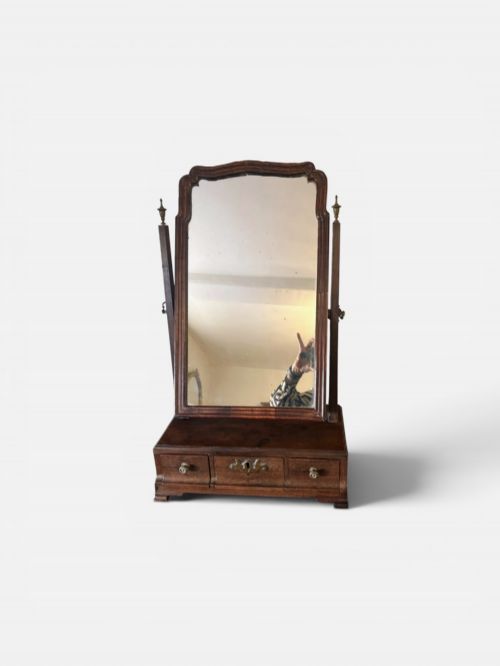
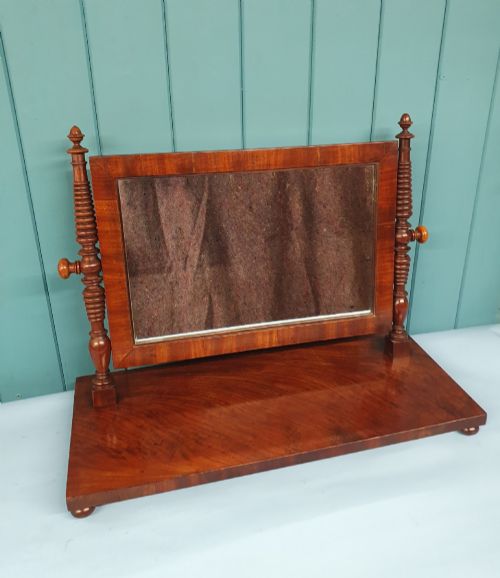

Georgian Tabletop Swing Mirror
Georgian tabletop swing mirror pieces bring functional elegance to a dressing space through pivoted plates and fitted box bases.
Georgian Tabletop Swing Mirror
Most examples found here date from the eighteenth and nineteenth centuries, spanning distinct periods from Queen Anne and George II through to the Regency era. Mahogany remains the most common timber, often accompanied by walnut, satinwood, and occasional marquetry inlay.
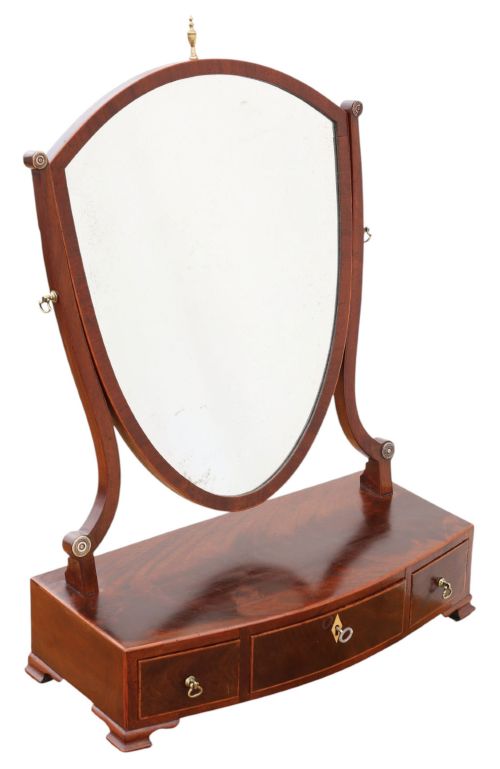
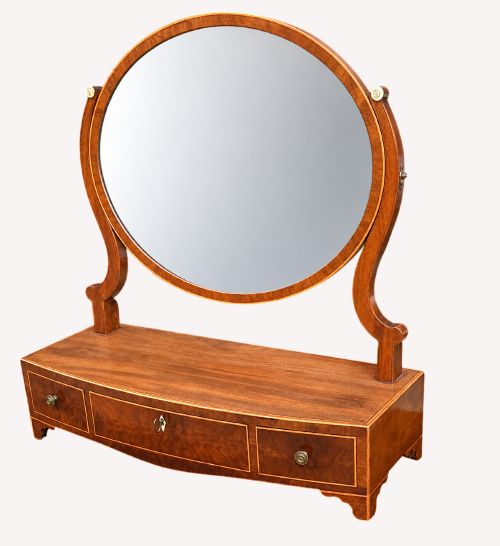
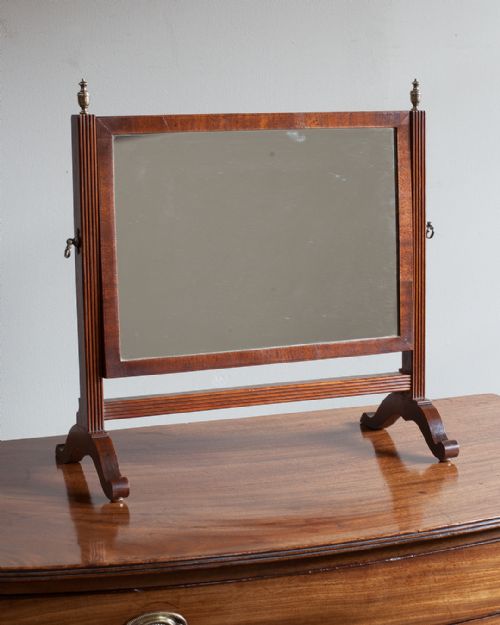
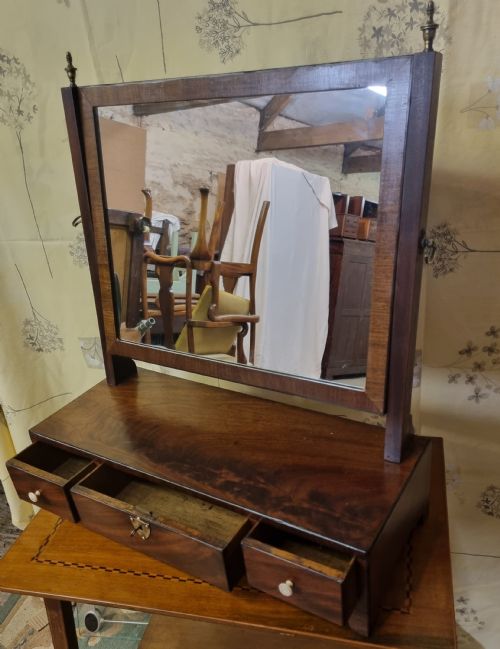
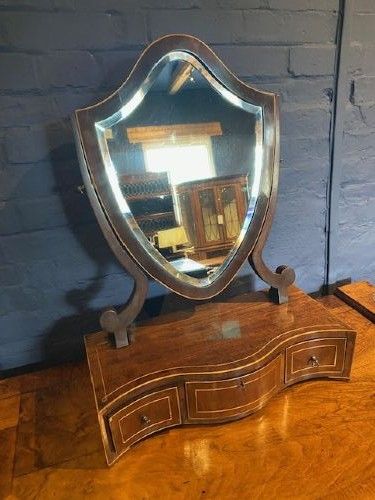
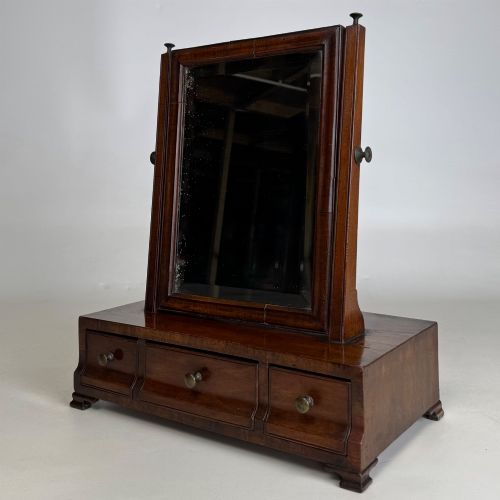
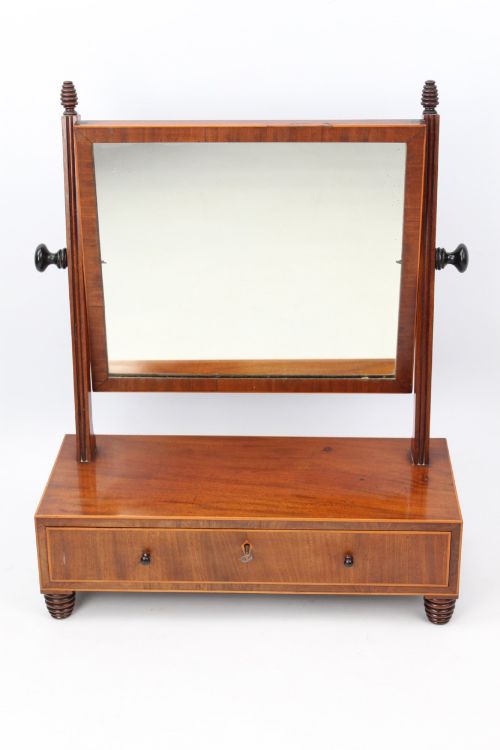
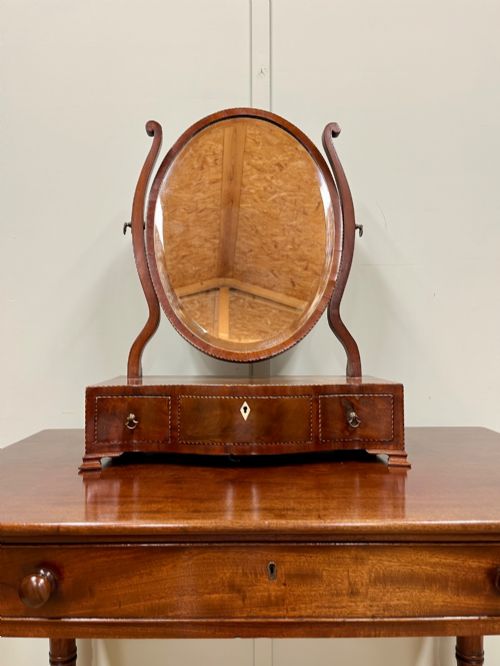
Makers produced these dressing glasses in various plate shapes, including rectangular, oval, and shield configurations. The base serves both to anchor the swinging frame and to store small personal items within tidy, partitioned compartments.
Materials and construction
Cabinetmakers utilised dense timbers such as mahogany and walnut, frequently selecting figured grains, flame veneers, and crossbanded borders to enhance the visual depth of the box base. Secondary woods often included native conifers or oak for internal drawer construction and framing.
The pivoting mechanism typically relies on brass screw pins, plates, and threaded nuts recessed into the upright arms and the sides of the mirror frame. Glass plates were traditionally silvered by hand, held securely within rebated wooden frames using small wooden pins or glue blocks.
Tiny hidden compartments inside the miniature drawer boxes once guarded secret love letters and rouge pots.
Assessing quality and proportion
Quality rests heavily on the harmony of proportion between the height of the mirror plate and the scale of the box base beneath. Superior pieces display crisp mouldings, fine dovetail joints on the drawers, and well-matched timber veneers across the primary facade.
The weight and finish of the brass hardware contribute significantly to the overall merit of an item, as cast brass screw caps and finials indicate careful attention to detail. Original mirror glass, whilst prone to foxing and gentle clouding, holds greater desirability than modern plate replacements.
The Georgian Tabletop Swing Mirror Glossary
- Shield mirror
- A dressing glass featuring an upright plate shaped like a heraldic shield, popular during the later eighteenth century. This configuration rests upon slender horn supports attached to the base.
- Toilet mirror
- A traditional term for a small dressing table glass designed to sit upon a chest of drawers or washstand. The descriptor relates to the dressing of hair and person rather than sanitary facilities.
- Crossbanding
- A decorative technique where narrow strips of veneer are laid with the grain running perpendicular to the surrounding surface. This frames the primary drawer fronts and box tops.
- Serpentine front
- A furniture front curved with a convex centre flanked by concave wings, adding fluid movement to the base of the mirror. This profile demands high skill in joinery and veneer application.
- Parcel-gilt
- Partially gilded woodwork where thin layers of gold leaf highlight specific carved details such as mouldings or ears on the frame. This technique lifts dark mahogany and walnut surfaces.
Georgian Tabletop Swing Mirror: Frequently Asked Questions
Where should I place a tabletop mirror?
These mirrors find a natural home atop a chest of drawers, sideboard, or dedicated dressing table where the height allows a comfortable view. Positioning the piece near a window helps maximise the available light reflected by the glass.
Ensure the surface is stable and deep enough to support the footprint of the box base safely. Avoid placing them in rooms subject to dampness or direct, harsh sunlight to protect the wood and silvering.
How do the swing mechanisms work?
The glass frame pivots between two vertical upright posts using threaded brass screw bolts and tightening nuts inserted through the sides. Adjusting these screws alters the tension, allowing the mirror to hold a preferred angle.
Over-tightening can strain the surrounding wood or brass threads, so gentle handling ensures the longevity of the pivots. Many period examples retain their original brass hardware, which moves smoothly when properly lubricated with age-appropriate care.
What is the difference between a toilet mirror and a dressing mirror?
The terms are largely interchangeable within historical inventories, generally referring to any portable mirror placed on furniture for personal grooming. Historically, toilet mirrors often designated smaller versions equipped with compact drawer bases.
Both types serve the same primary function of providing an adjustable reflection while offering shallow storage beneath. Regional preferences and changing domestic fashions dictated whether makers favoured the label dressing glass or toilet mirror.
How do I care for antique mirror glass?
Historic glass plates often display natural foxing, small spots, and soft distortion that reflect their age and method of manufacture. Cleaning requires a soft, dry cloth or a minimal amount of gentle glass cleaner applied to the cloth rather than directly onto the plate.
Keep moisture away from the edges where the silvering meets the wooden rebate to prevent further deterioration. Embracing the mellow character of the original glass preserves the historic integrity of the piece.