


Georgian Table Spoon
When you search for a georgian table spoon, you are looking at substantial dining silver spanning the eighteenth and early nineteenth centuries.
Georgian Table Spoon
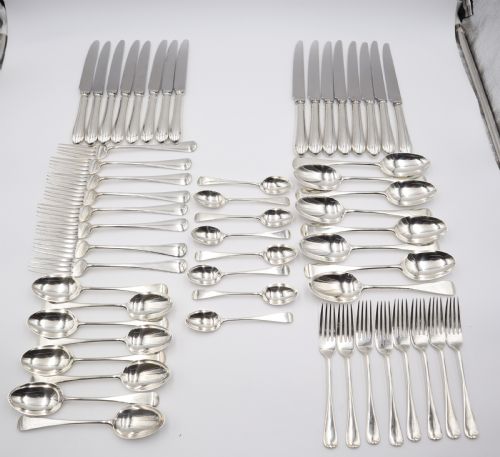
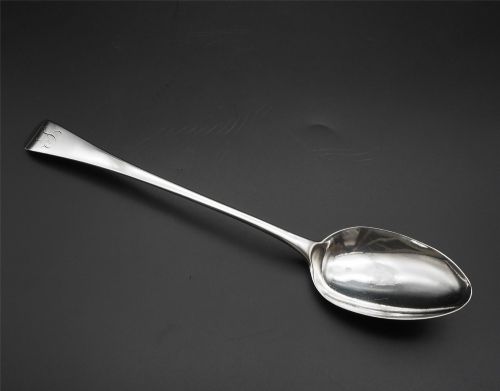
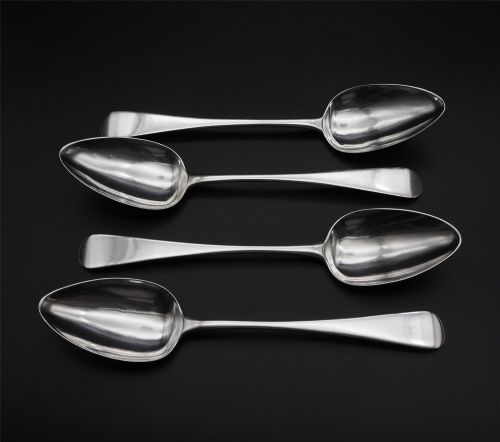
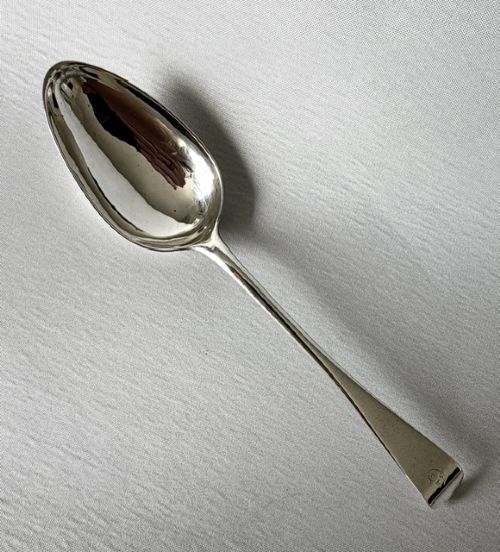
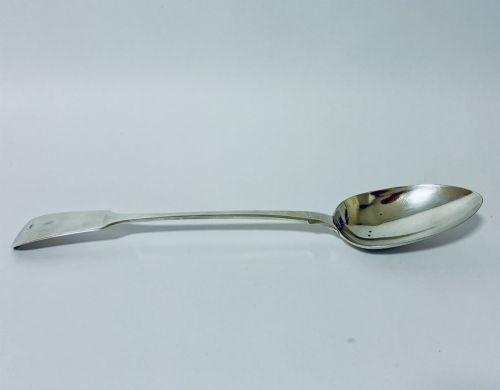
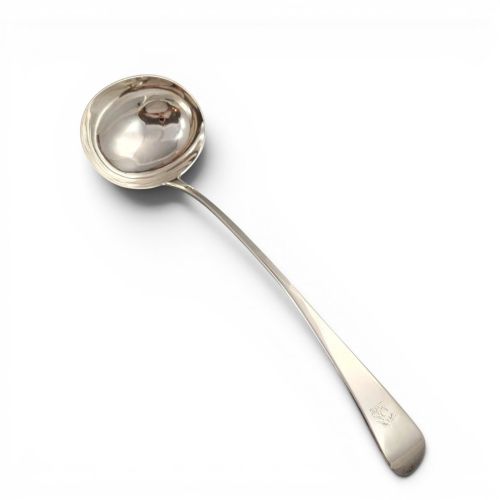
A georgian table spoon is a primary form of domestic silver found across the eighteenth and early nineteenth centuries, often appearing alongside related serving utensils, basting spoons, and soup ladles. These pieces were made for dining use, later adapted into berry spoons, or collected as part of larger flatware sets.
The pieces on this page mostly span the Georgian, 18th Century, and Victorian periods, reflecting stylistic shifts from early rat tail designs to later fiddle pattern and crested variants. Buyers encounter individual spoons, matched pairs, and complete cased sets originating from London, Dublin, Edinburgh, and provincial assay offices.
How they were made
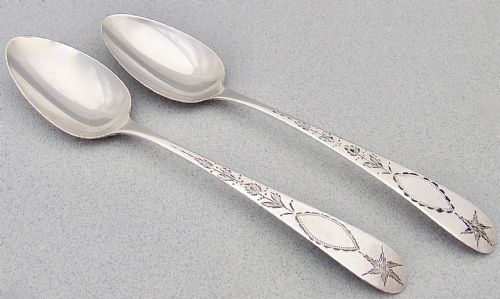
Silversmiths formed these utensils from sterling silver or Britannia standard silver, hammering and shaping the metal into bowls and stems before applying punches for hallmarks, makers' marks, and city marks. Many examples feature engraved family crests, threaded borders, or chased fruit and leaf decoration added later during the Victorian era.
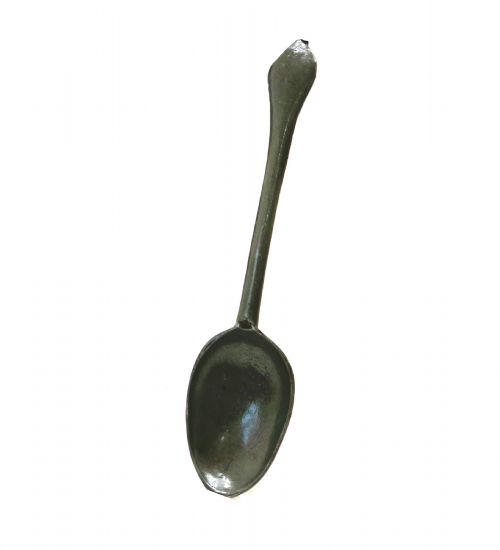
Listings feature sterling silver, pewter, and steel materials across Georgian, Victorian, and Edwardian periods.
What varies in quality
The distinction between ordinary dining silver and superior examples lies in the crispness of the hallmarks, the weight of the metal, and the clarity of any engraved armorials or crests. Heavy gauge silver maintains its structural integrity and bowl depth through centuries of use.
Provenance and origin also influence desirability, with provincial pieces, Dublin or Edinburgh assay marks, and specialised forms such as marrow scoops or straining spoons commanding particular attention from collectors.
Alfred Marston·John Pittar·Andrew Archer·William Scarlett·John Locker·John Wilks·James Tait·Charles Stuart Harris·Josiah Williams and Co·Paul Storr·David Willaume·Charles Houghman·Henry Day·George Smith III·John Henry Lias·Bateman·William Marshall
The Georgian Table Spoon Glossary
- Rat tail
- A tapering tongue of metal extending down the back of the spoon bowl from the stem. This feature strengthens the joint on early eighteenth century silver.
- Hallmark
- A series of official stamps indicating the silver standard, assay office, maker, and date of manufacture. These marks provide the primary evidence for dating flatware.
- Berry spoon
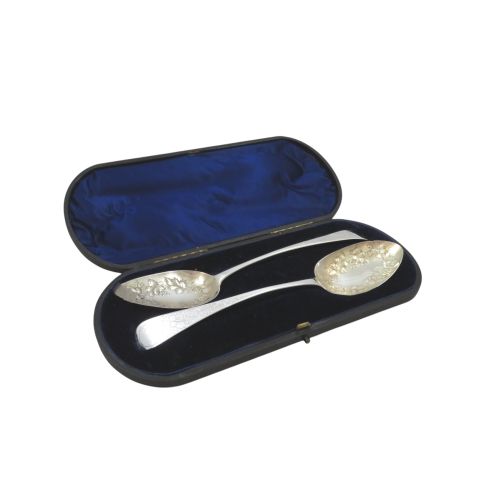
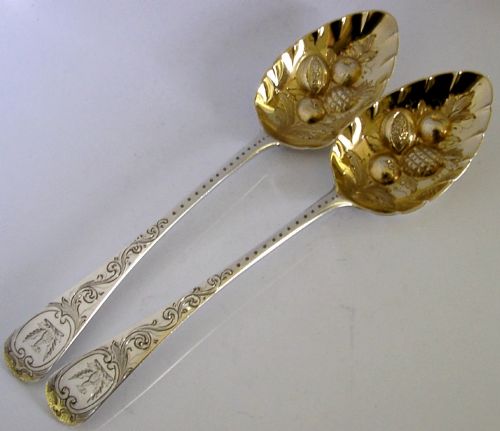
- A table spoon chased and engraved with fruit and foliage, often during the Victorian period. These pieces frequently survive in fitted cases.
- Basting spoon
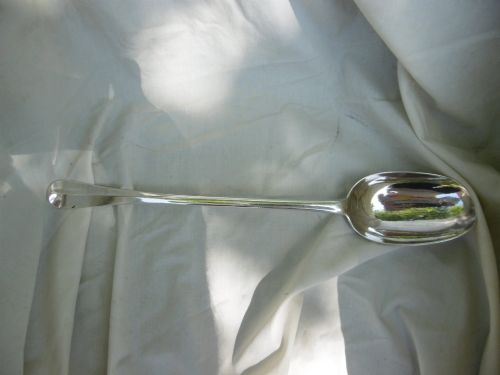
- A large utensil designed for culinary service at the table or hearth. They exceed standard table spoons in length and bowl capacity.
- Old English pattern
- A traditional flatware handle style with a downward-curving end introduced in the mid-eighteenth century. It remains a standard form in silver cutlery.
Georgian Table Spoon: Frequently Asked Questions
How do I know my spoon is Georgian?
Examine the handle style and inspect the hallmarks stamped into the silver stem. Official assay office marks and maker's initials provide the definitive date of manufacture.
Early pieces often feature distinct elements like rat tails or Hanoverian stems, while later Georgian items adopt Old English or fiddle patterns.
Were these spoons used for eating?
Table spoons of this period served multiple dining purposes, including eating larger courses, serving from communal dishes, and measuring liquids.
Over time, many standard table spoons were retrofitted with chased fruit decoration to serve specifically as berry spoons during dessert courses.
What is the difference between a table spoon and a basting spoon?
Basting spoons are substantially larger in length and bowl capacity than standard dining table spoons. They were manufactured for kitchen use or for serving large joints of meat at the table.
Table spoons were intended for individual place settings or general serving tasks during formal meals.
Why do some spoons have crests engraved on them?
Gentry and aristocratic families commissioned silversmiths to engrave their family crests or coats of arms onto the handles of their silver flatware. This practice denoted ownership and added distinction to dining services.
Crests often help trace the provenance of a piece to a specific household or geographic region.