


Georgian Style Satinwood Bookcase
A georgian style satinwood bookcase brings refined timber and classic neoclassical lines into a room, offering both display and storage for a serious collection.
Materials and Construction
Makers utilised satinwood as a primary veneer or solid timber, prized for its golden sheen and smooth grain. This was frequently combined with mahogany, boxwood, and harewood to create contrasting borders and decorative stringing.
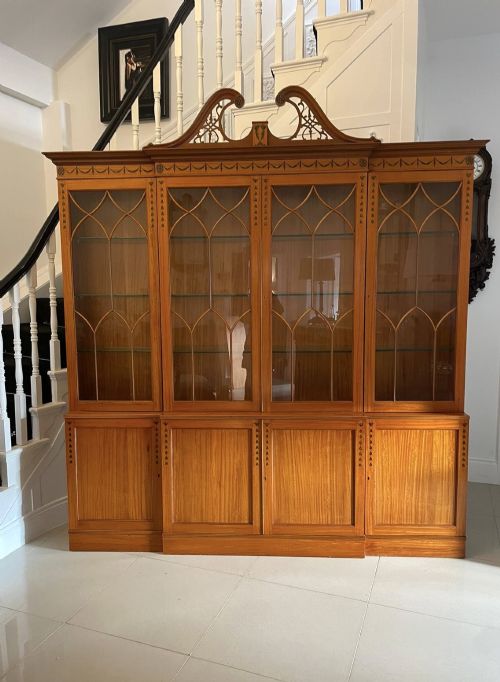
Surface ornamentation relied heavily on marquetry and original painted decoration, depicting classical motifs, urns, and floral scrolls. Glazed doors utilised brass fittings and delicate wooden astral bars to divide the glass panes.
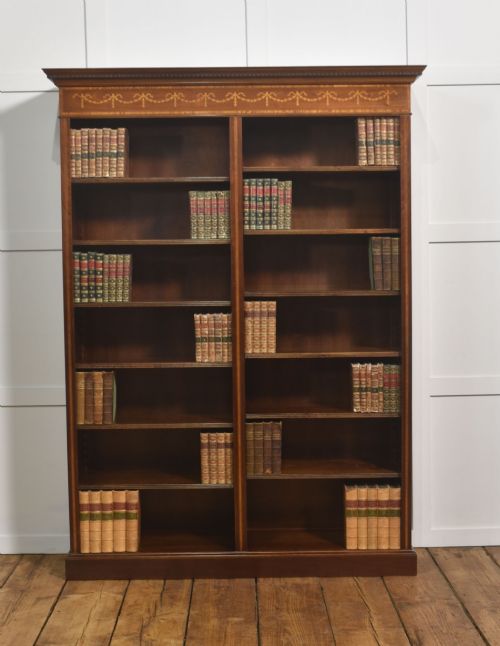
Structural carcasses were built using traditional joinery methods, supporting heavy book collections while displaying intricate inlay work across the friezes, doors, and plinths.
Distinctions in Quality
The standard of execution in the marquetry and painted decoration marks the primary division between ordinary pieces and exhibition quality work. Finer examples display crisp, hand-cut inlay and meticulously preserved original paintwork rather than later embellishments.
The choice and figuring of the satinwood veneer dictate the visual impact of the cabinet, with superior pieces showing an even, shimmering grain across large unbroken surfaces like breakfront doors. Cabinetmakers who executed works for prominent firms ensured that internal drawer construction and brass hardware matched the external polish.
Proportion and architectural balance separate standard revival pieces from those of exceptional design. Pieces retaining their original glass, brassware, and fitted writing interiors command greater respect from collectors.
Materials documented across the pieces include satinwood, mahogany, boxwood, harewood, brass, and painted or marquetry decorations.
Gillows·Waring & Gillow·Edwards & Roberts
The Georgian Style Satinwood Bookcase Glossary
- Satinwood
- A tropical timber known for its lustrous, golden-yellow appearance and smooth texture. It is frequently used as a veneer on high-status neoclassical and revival furniture.
- Marquetry
- The art of applying pieces of veneer to a structure to form decorative patterns and pictures. Craftsmen use various tinted woods to achieve tonal depth.
- Breakfront
- A piece of furniture whose front projects forward in sections, typically with a central section flanked by recessed or advanced wings. This architectural arrangement adds depth and formal presence.
- Astral Glazing
- Glass doors divided by narrow wooden bars into geometric or gothic arch patterns. These bars provide structural support while framing the contents of the bookcase.
- Secretaire
- A desk or cabinet featuring a pull-down writing flap that conceals small drawers and pigeonholes. It combines the storage function of a bookcase or chest with a compact writing surface.
Georgian Style Satinwood Bookcase: Frequently Asked Questions
How do I distinguish eighteenth-century pieces from later revivals?
Distinguishing the original eighteenth-century pieces from late Victorian or Edwardian revivals requires close examination of timber seasoning, secondary woods, and construction marks. Earlier pieces exhibit hand-cut dovetails and structural wear consistent with extended age.
Revival pieces often utilise machine-prepared timbers and display the characteristic styles of the Sheraton Revival or Edwardian periods, even when incorporating genuine older aesthetics.
Were these bookcases meant for formal libraries?
These cabinets served primarily in formal libraries, drawing rooms, and studies of prosperous households to protect valuable leather-bound volumes from dust and light. The glazed doors kept books secure while allowing titles to remain visible.
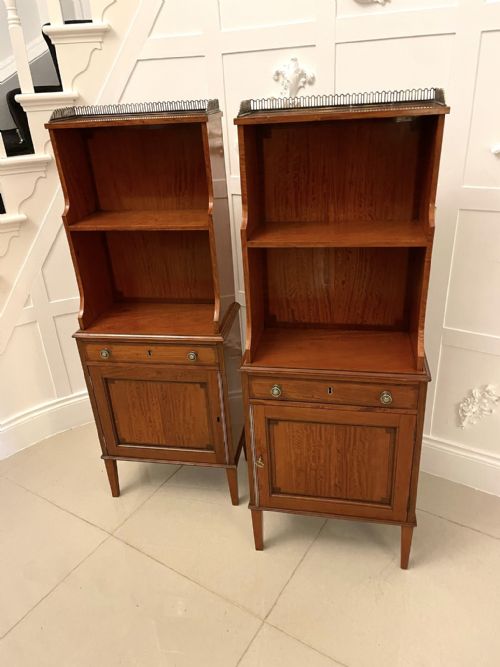
Smaller variants like corner cabinets and hanging shelves accommodated more intimate domestic spaces where floor area was limited.
How should I care for satinwood veneer?
Satinwood requires stable environmental conditions away from direct sunlight and extreme humidity fluctuations to prevent the delicate veneers from lifting or fading. Regular dusting with a soft, dry cloth preserves the polished surface.
Avoid silicone-based polishes and excessive moisture, opting instead for traditional beeswax applied sparingly by experienced hands.