


Georgian Style Mahogany Table
When you search for a georgian style mahogany table, you encounter an enduring domestic form that spans formal dining furniture and intimate wine stands.
Georgian Style Mahogany Table
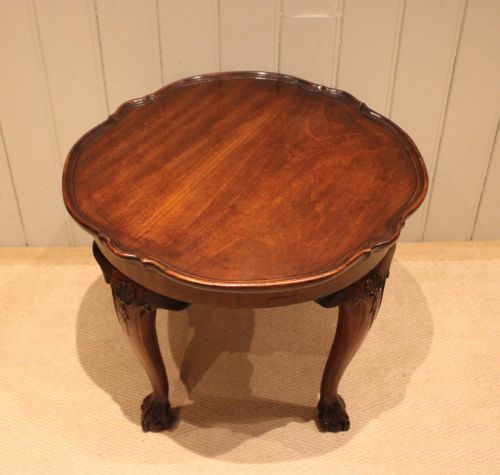
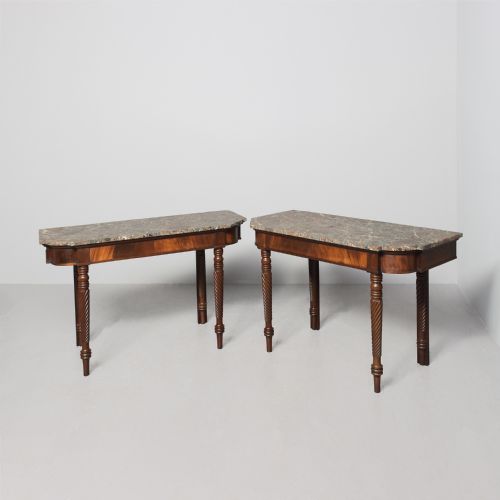
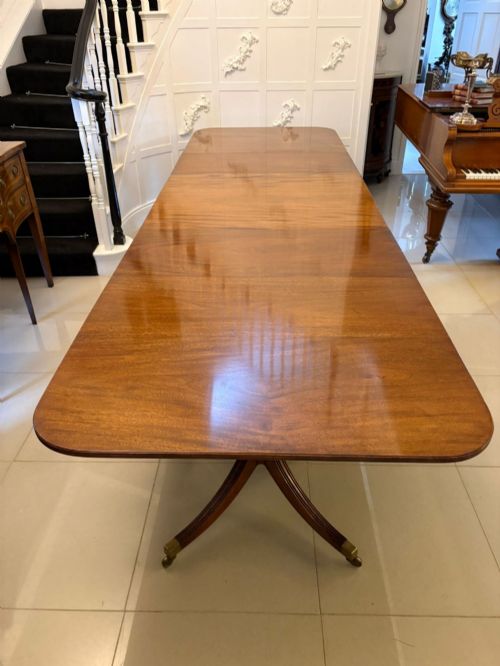
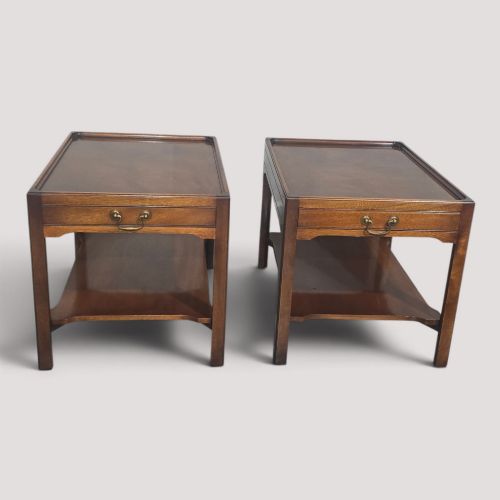
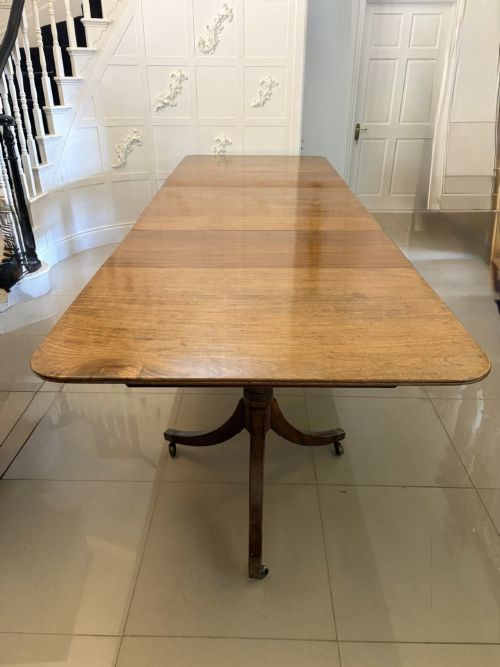
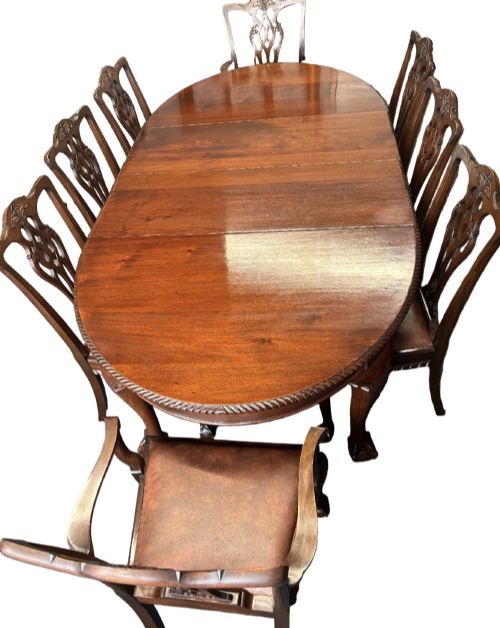
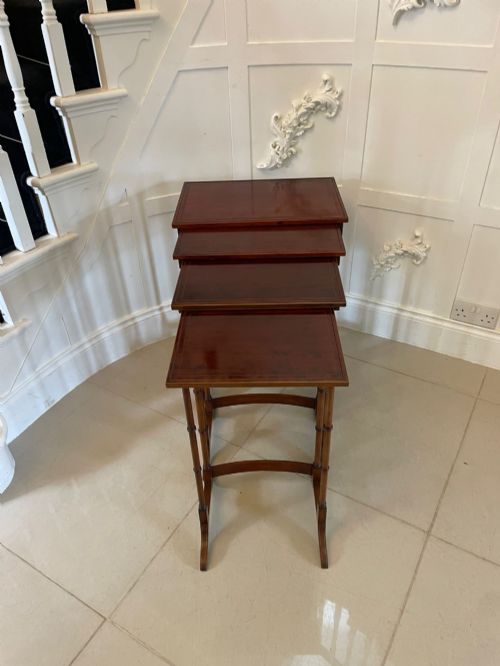
A georgian style mahogany table encompasses a wide domestic vocabulary, ranging from grand multi-pedestal dining formats seating sixteen guests to compact tripod wine tables and bedside stands. Buyers frequently meet console tables, pembroke designs, and twin-pillar dining variations across nineteenth-century originals and twentieth-century revivals.
The selection bridges genuine eighteenth-century craftsmanship and later interpretations, such as Edwardian and 1920s revival pieces that adopt classical proportions. Dining formats and small occasional pieces dominate the offerings, built to serve specific functional roles in period and contemporary interiors.
How they were made
Cabinet makers relied primarily on solid and figured mahogany timber, often enhanced by contrasting boxwood inlay, satinwood detailing, or parcel gilt accents. Structural stability in dining tables relied on heavy timber pedestals and pillar mechanisms, while smaller items utilised tripod supports and birdcage mechanisms.
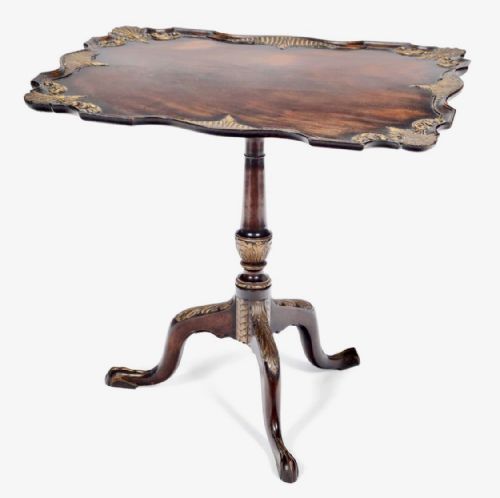
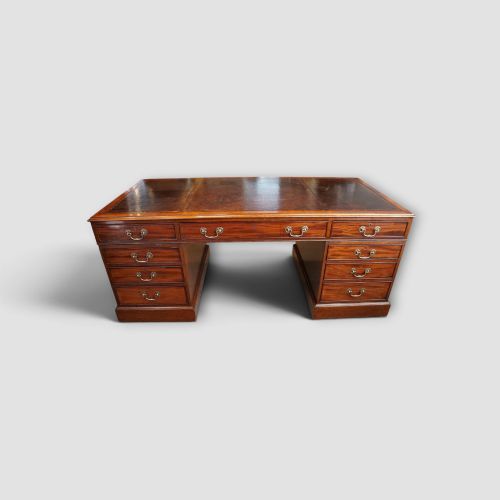
Surfaces frequently incorporated fine leather inserts, brass hardware, and hand-carved decorative elements such as claw and ball feet. Joinery techniques ensured durability across extending dining frames and delicate side tables alike.
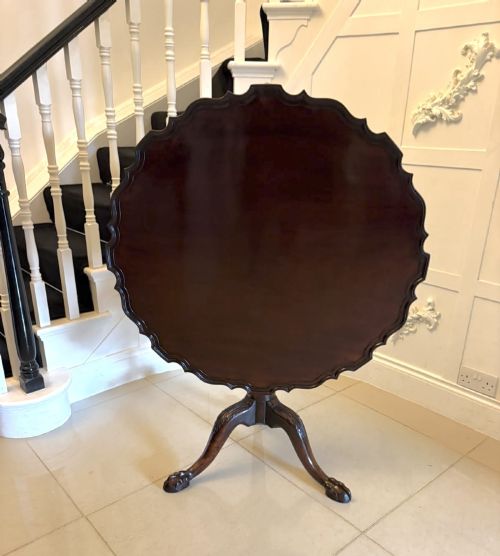
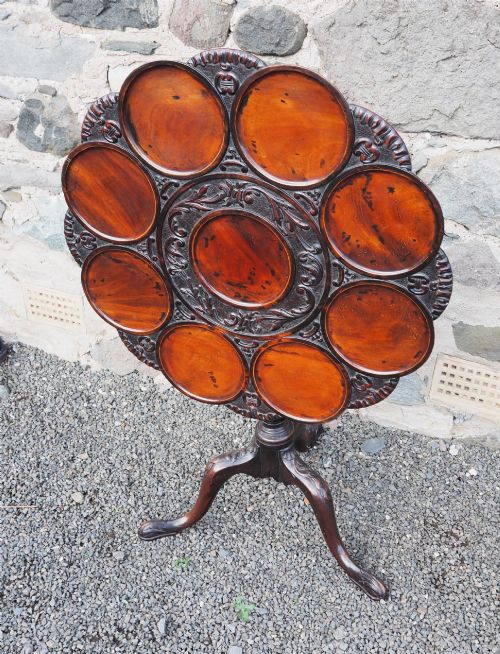
Several tilt-top tables retain their original birdcage mechanisms, ready to pivot upright and play hide-and-seek with the wall.
What varies in quality
The grading of a georgian style mahogany table depends upon the selection and figure of the timber veneer, where rich grain patterns distinguish superior examples from plain stock. Detail in carving, such as crisp foliage or well-defined claw and ball feet, separates standard workshop output from exceptional cabinet work.
Engineering integrity in moving parts, including smooth extension actions on multi-pillar dining tables and tight-fitting birdcage mechanisms on tilt-top tables, marks the upper tier of production. The integration of secondary timbers and refined inlay work further elevates the standing of a piece.
The Georgian Style Mahogany Table Glossary
- Tripod table
- A small freestanding table supported by three pillar legs radiating from a central column. These versatile items often feature tilt-top mechanisms for storage.
- Pedestal table
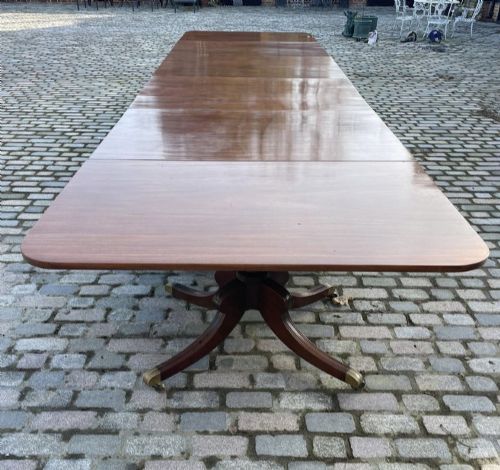
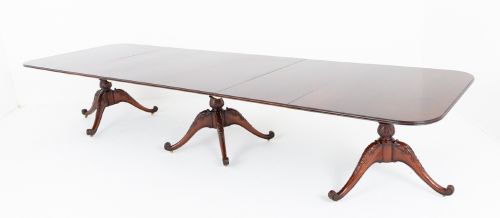
- A table supported by one or more central columns resting on a platform base or feet rather than four corner legs. Multi-pillar formats provide stability for large extending dining tables.
- Pembroke table
- A drop-leaf table with hinged flaps on either side, designed for occasional use. It frequently incorporates a small drawer and tapered legs.
- Birdcage mechanism
- A wooden framework beneath a tilt-top table top that allows the surface to pivot and rotate. This clever assembly locks the top flat when in use.
Georgian Style Mahogany Table: Frequently Asked Questions
How do I seat twelve people?
Multi-pillar extending dining tables accommodate large gatherings by utilising removable leaves supported by central pedestals.
These formats allow the frame to expand or contract while maintaining balance across the floor.
How do I identify a revival piece?
Revival items from the Edwardian era or the 1920s replicate eighteenth-century proportions using machine-assisted cuts and standardised hardware.
Examining the interior secondary timbers and drawer construction reveals whether a piece dates to the Georgian period or later.
Where do console tables fit?
Console tables sit flush against walls in hallways, drawing rooms, or dining spaces to display decorative objects or serve refreshments.
Their shallow depth provides functional surface area without obstructing household walkways.