
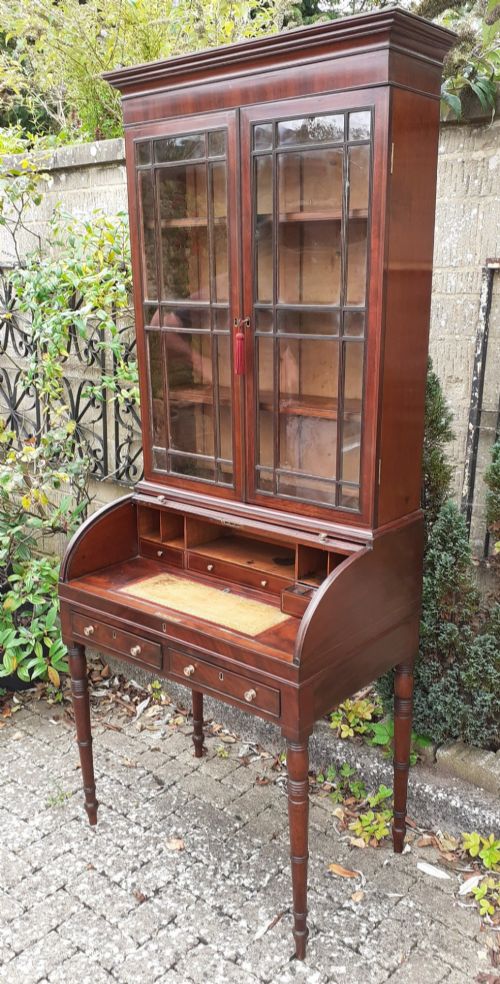

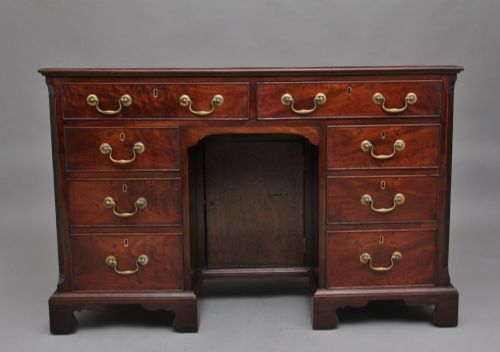
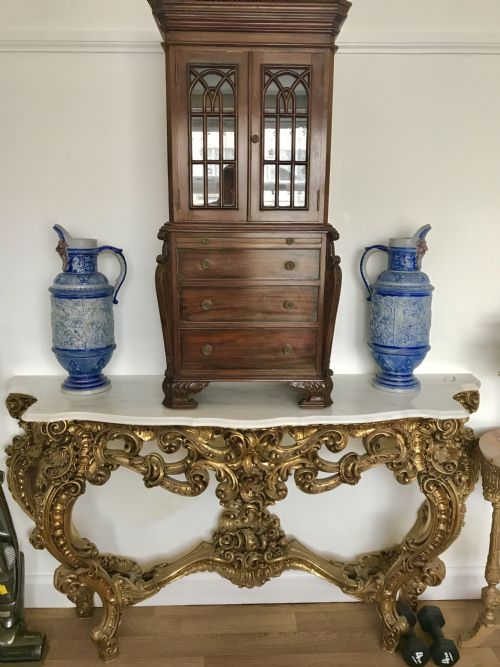
Georgian Style Mahogany Bureau
A georgian style mahogany bureau brings sloping-lid writing storage and fitted interior drawers into domestic spaces with lasting architectural presence.
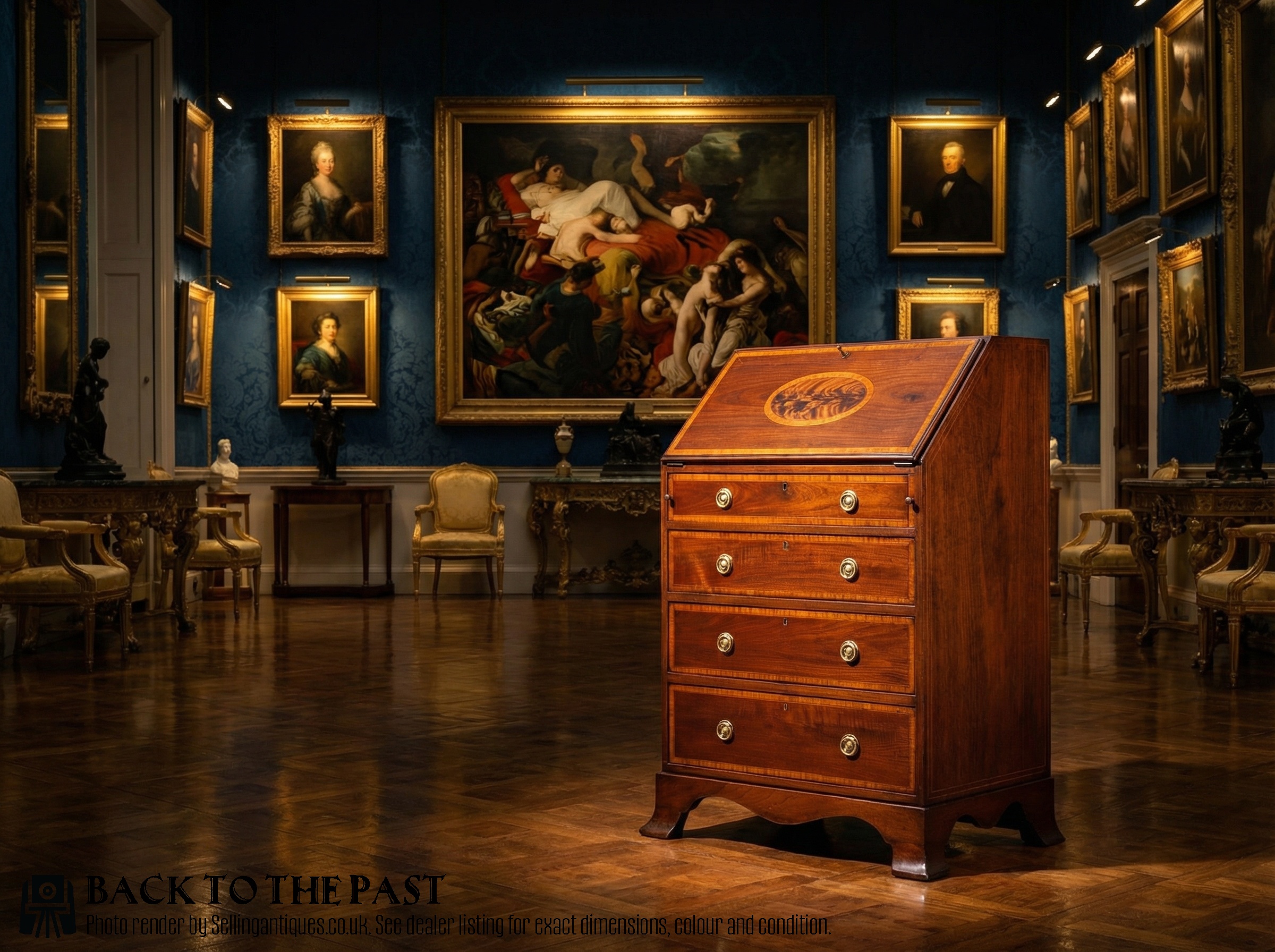
Georgian Style Mahogany Bureau
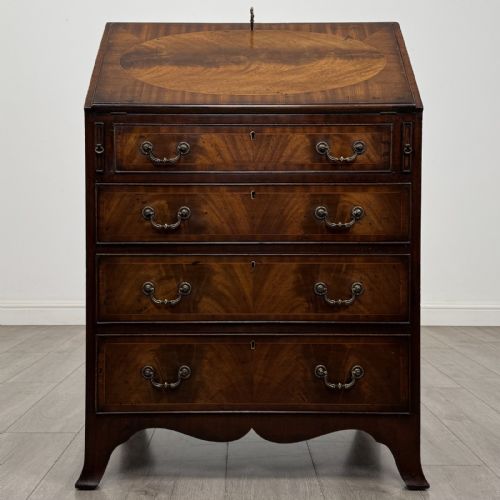
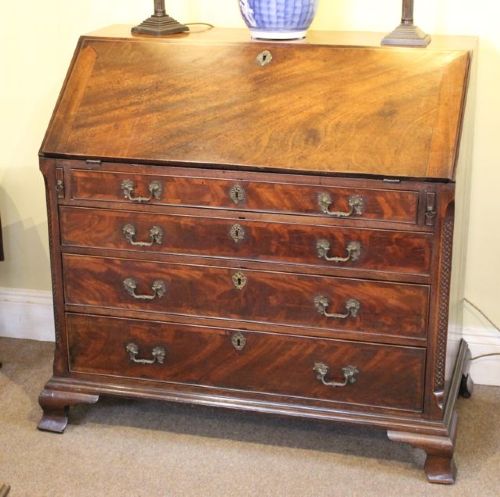
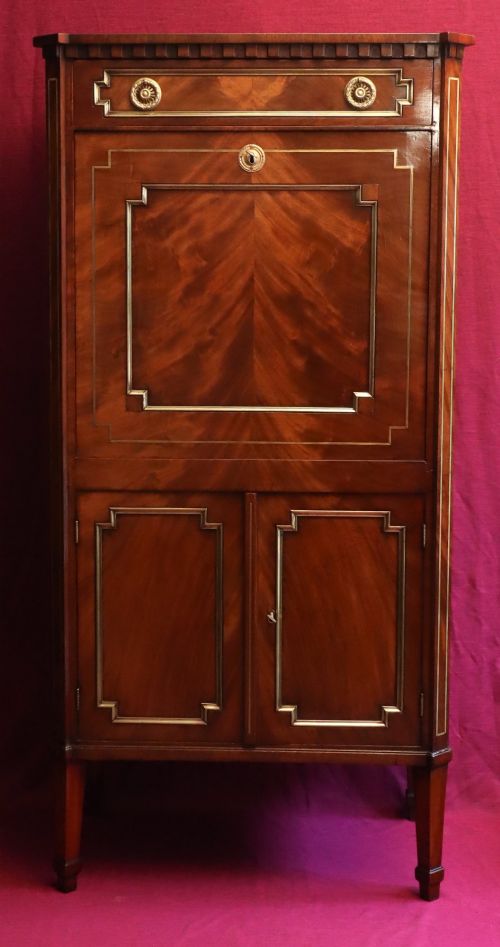
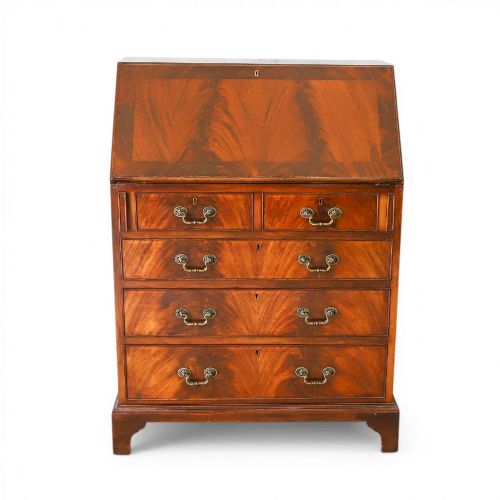
When searching for a georgian style mahogany bureau, buyers encounter fitted writing furniture originating across the 18th century, the Regency era, and later Revival periods. These pieces combine a sloping fall-front writing flap with internal pigeonholes and small drawers above larger storage drawers or kneehole configurations.
The selections span authentic period pieces from the 18th century alongside later Edwardian and 19th and 20th century revivals, including bureau bookcases and smaller writing desks. The most common forms on this page pair the classic slant-front writing compartment with stacked drawer units or upper glazed bookcase cabinets.
Materials and Construction
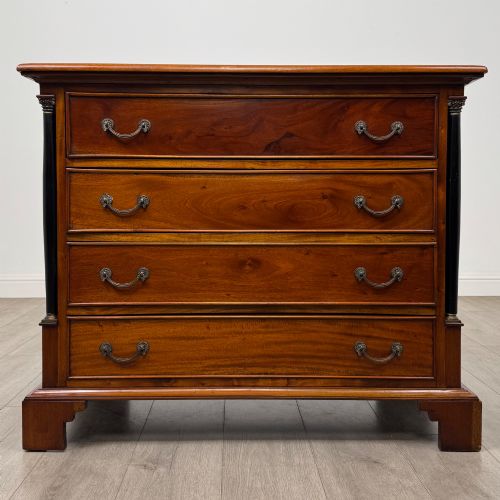
Makers utilised solid and veneered mahogany timber, occasionally highlighting figured grains like flame mahogany, supported by secondary structural woods such as oak and pine. Brass hardware, including handles and escutcheons, provides functional contrast alongside occasional inlay work in satinwood.
Listings feature mahogany, satinwood, oak, pine, brass, and glass across Georgian, Victorian, Regency, and Edwardian periods.
Execution and Detail
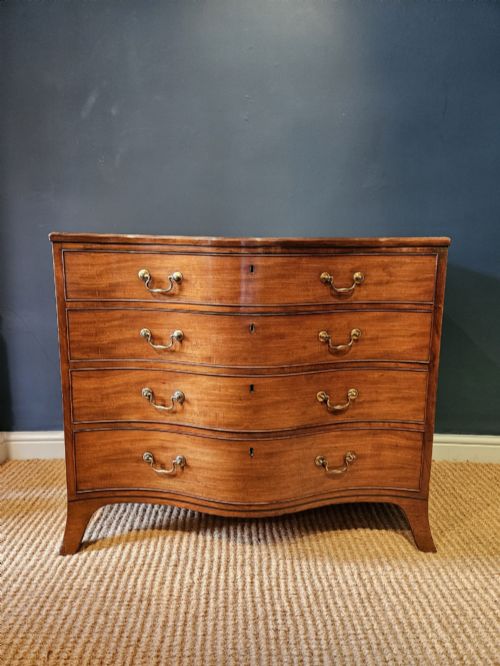
Quality separates along the crispness of internal drawer arrangement, the subtlety of wood figuring, and the integrity of structural joinery. Finer examples display carefully matched timber grains across the fall-front and drawer facades, maintaining clean lines in the serpentine or straight profiles.
The execution of interior secret compartments and the retention of original brass fittings influence the standing of a bureau. Later revival interpretations vary according to the fidelity of their period proportions and the depth of colour achieved in the polish.
Tudor & Burrey·Mawer & Stephenson
The Georgian Style Mahogany Bureau Glossary
- Bureau
- A writing desk featuring a sloping hinged lid that opens to reveal a fitted interior of small drawers and pigeonholes. In British usage, this form differs from a flat-topped writing table.
- Fall-front
- The angled or vertical board that drops down to form the writing surface of a bureau. It conceals the internal stationery compartments when closed.
- Secretaire
- A piece of furniture containing a concealed writing drawer or fitted drop-front compartment disguised as a standard drawer chest or bookcase base.
- Serpentine
- A front profile characterised by a convex central section flanked by concave curves. This shaping demands advanced cabinet-making skill.
- Pigeonhole
- Small vertical compartment within a desk interior used for sorting letters and papers. These often frame a central locking cupboard or secret drawer.
Georgian Style Mahogany Bureau: Frequently Asked Questions
How do I distinguish an 18th century bureau from a revival piece?
Authentic 18th century pieces exhibit hand-cut joinery, period timber shrinkage, and secondary woods appropriate to regional English workshops. Revival pieces from the Edwardian era often display standardised machine-cut components and lighter internal constructions.
Examining the drawer linings and timber ageing beneath the polished exterior provides clear indicators of the true manufacturing period.
What is the difference between a bureau and a secretaire bookcase?
A standard bureau relies on a sloping fall-front lid for writing, whereas a secretaire bookcase conceals its writing surface behind a drawer facade that pulls forward and drops down horizontally.
Both forms frequently incorporate glazed upper shelving for book storage, but the internal mechanism of the writing desk remains the defining distinction.
How should I care for a mahogany bureau surface?
Maintain the French polished finish by dusting regularly with a soft, dry cloth and avoiding placement near direct heat sources or strong sunlight. Excessive moisture damages the timber and polish layer.
Apply high-quality beeswax sparingly when the wood appears dry to preserve the natural lustre and warm colour of the mahogany.
Where were these desks typically placed in a Georgian home?
These pieces served administrative functions in private studies, libraries, or family bedrooms where correspondence and household accounts were managed. The lockable fall-front kept private documents secure.
Their compact footprint allowed them to sit against parlour walls without obstructing domestic traffic.