
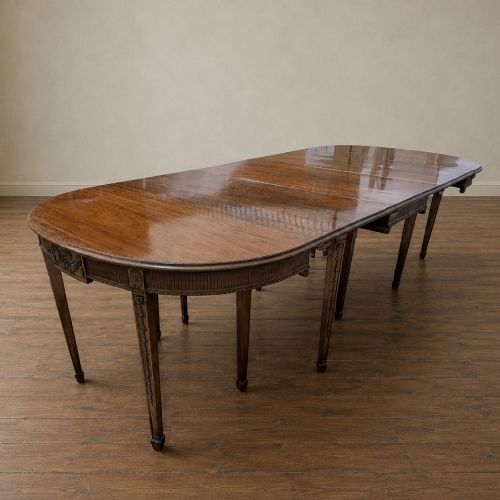
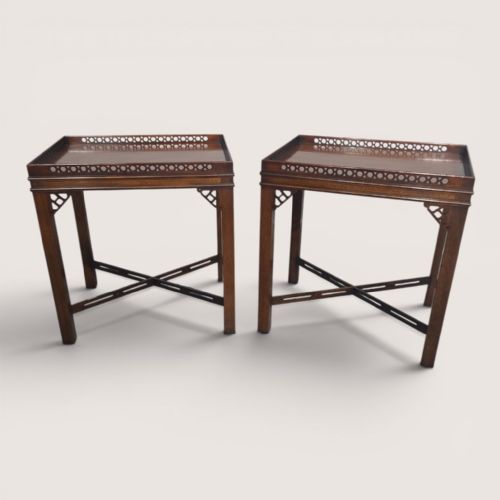
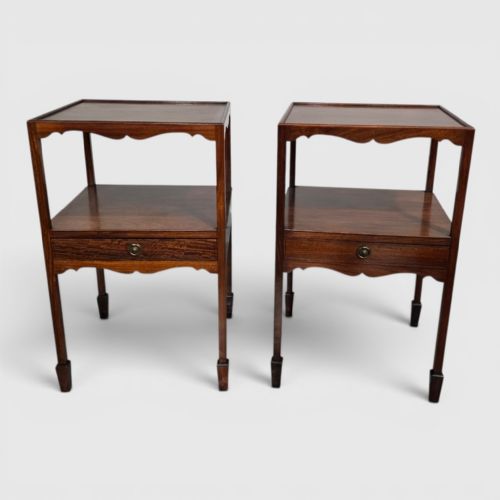
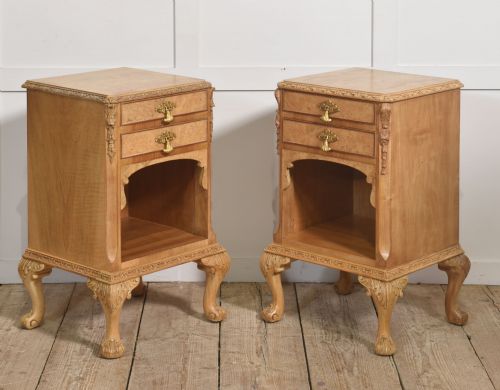


Georgian Style End Tables
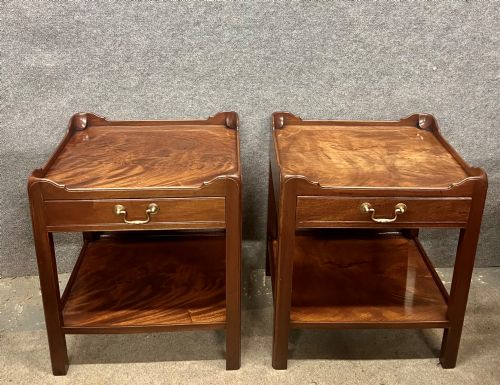
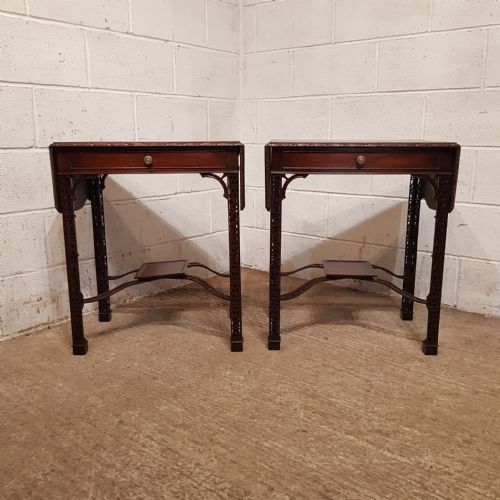
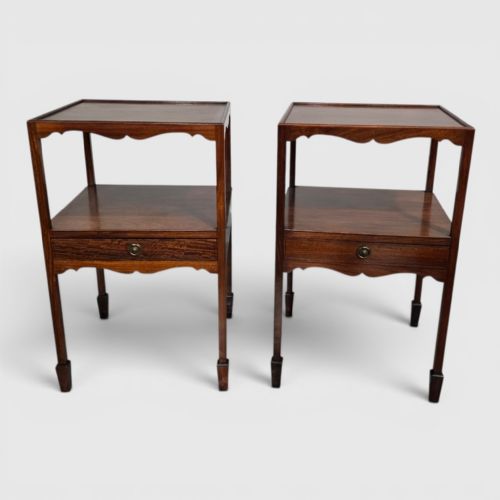
Georgian style end tables bring compact elegance and proportion to a room, ranging from mahogany lamp tables to walnut bedside cabinets.
Georgian Style End Tables
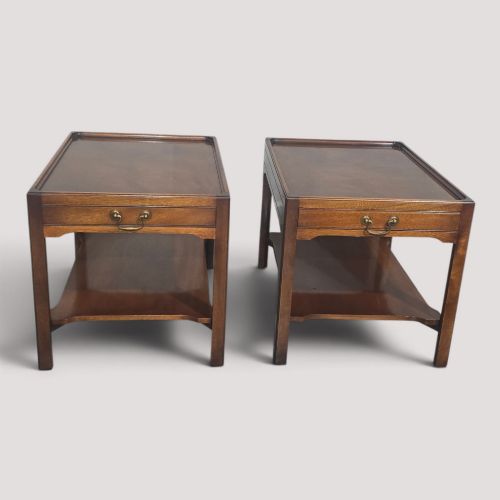
When you search for georgian style end tables, you encounter a selection of compact furniture designed for practical placement beside seating or beds. The examples here span multiple centuries, including actual 18th century pieces alongside Edwardian, 19th century, and early 20th century revivals from 1900 to 1930.
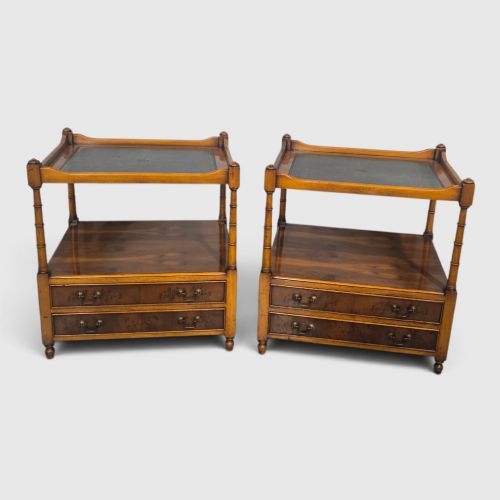
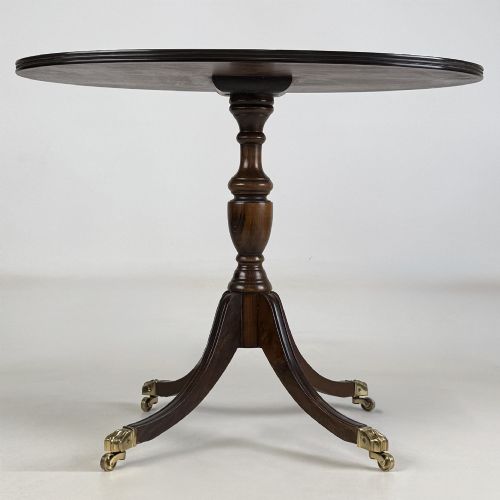
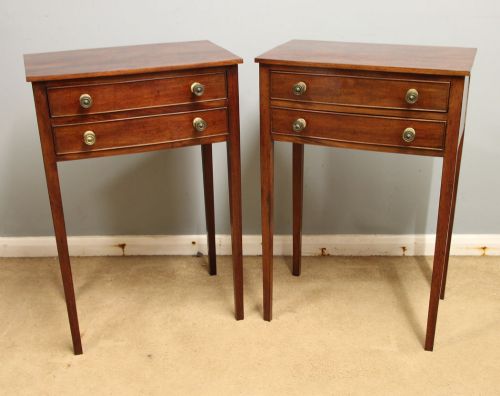
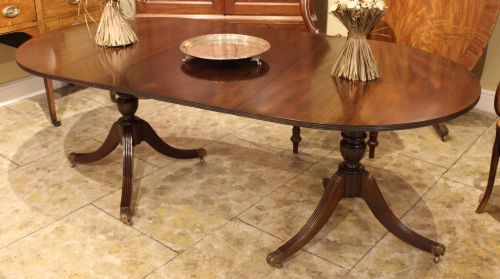
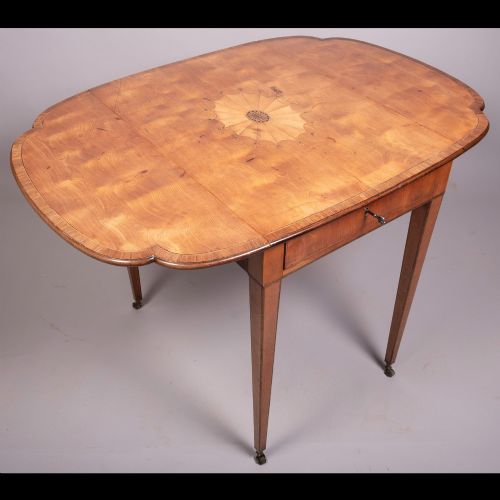
The primary forms you meet on this page are lamp tables, side tables, and bedside tables, often appearing as matched pairs. Makers of these periods also produced specialised variants such as pembroke tables, dropleaf tables, console tables, sofa tables, and nests of tables.
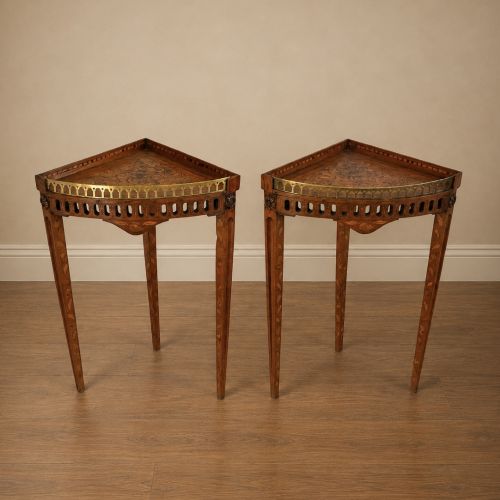
The aesthetic draws heavily on classical proportions and revival movements, incorporating Chippendale style details, marquetry inlay, and brass galleries. These tables serve a functional role as surface space while carrying distinct historical character through their timber and joinery.
How they were made
Cabinet makers utilised dense hardwoods, predominantly mahogany, alongside walnut, burr walnut, yew, oak, and satinwood for visible surfaces. Inlaid pieces feature contrasting veneers and marquetry work, while specific examples incorporate brass galleries and leather inset tops.
Construction methods rely on traditional framing and joinery to support drop leaves, hinged tops, and occasional drawers. Surfaces receive polishing or painted finishes that accentuate the grain patterns of figured walnut, oak, and mahogany.
Listings for georgian style end tables span the 18th century, 19th century, Edwardian period, and the 1900s through to the 1930s.
What varies in quality
The standard of timber selection determines the visual impact, particularly in figured walnut, burr oak, and flame mahogany veneers. Finely matched grain patterns and crisp inlay work separate superior examples from plainer production.
Construction integrity shows in the stability of structural joints, the precision of brass galleries, and the execution of carved details in revival pieces like Chippendale style tables. Original hardware and sound mechanisms on drop leaves or drawers also influence the overall standard.
The Georgian Style End Tables Glossary
- Mahogany
- A durable tropical hardwood prized for its reddish-brown colour and stability. It forms the primary material for the majority of these tables.
- Marquetry
- The art of applying pieces of veneer to a structure to form decorative patterns. Georgian style pieces often utilise this for tabletop ornamentation.
- Pembroke table
- A small form of table with hinged drop leaves on either side. These typically feature one or more small drawers.
- Drop leaf table
- A table with a fixed centre section and hinged leaves that fold down. This design allows the footprint to expand or contract according to space.
- Brass gallery
- A low decorative railing surrounding the perimeter of a tabletop. It prevents items from sliding off the edge.
Georgian Style End Tables: Frequently Asked Questions
What are georgian style end tables used for?
These tables function primarily as surface space for lamps, books, or drinks beside seating and beds. Their compact proportions allow them to fit easily into smaller areas of a room.
They also serve decorative purposes, displaying ornaments or filling awkward corners with period character and polished timber.
How do I identify a revival piece?
Revival pieces from the Edwardian era or the early 20th century imitate the aesthetics of the 18th century Georgian period. Examining the internal secondary woods, joinery techniques, and hardware helps distinguish the date of manufacture from the original period.
Many listings specifically denote styles such as Chippendale revival or Regency style to indicate their later production dates while maintaining classical forms.
Are these tables usually sold as pairs?
A significant portion of the inventory consists of matched pairs, particularly lamp tables and bedside cabinets. This makes them suitable for placing symmetrically on either side of a bed or sofa.
Single tables also appear frequently for use in smaller spaces or as standalone occasional pieces.
What timbers were used?
Mahogany is the most common timber found across these listings, appearing in solid form and as veneers. Burr walnut, satinwood, yew, and oak also feature prominently.
Some examples incorporate decorative elements like leather tops, brass galleries, and painted finishes.